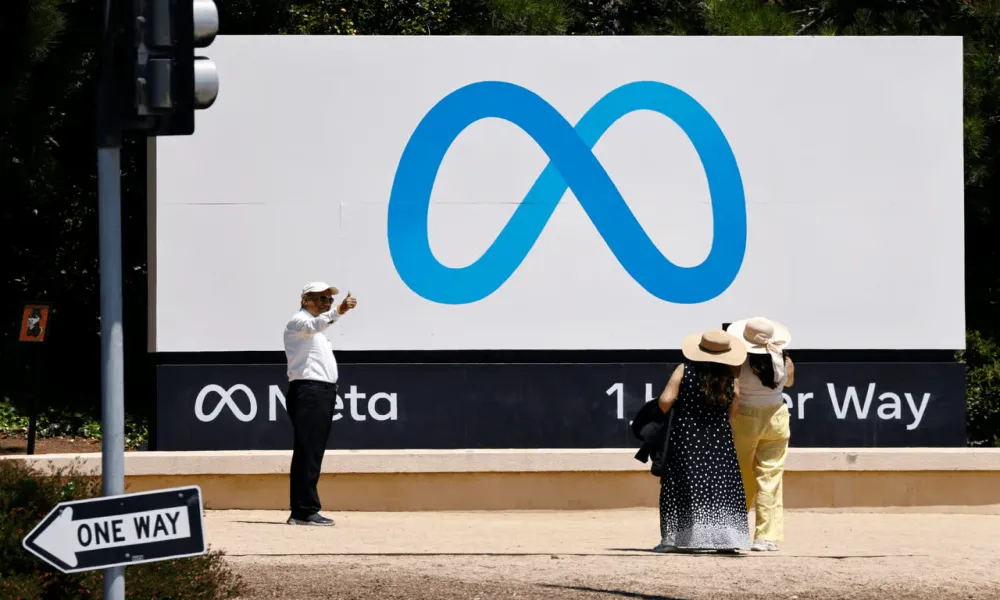

Meta chief executive Mark Zuckerberg and his top lieutenants gathered in January at his Hawaii compound for their annual leadership retreat, where they devised a sweeping plan to remake work at the company around artificial intelligence, according to a Reuters investigation based on internal documents and interviews with more than 20 people familiar with the matter.
The plan, code-named Project OT, for Organisation Transformation, envisioned an "AI native" future in which artificial intelligence would take over much of the daily work currently done by thousands of employees, with smaller groups of staff overseeing the technology. According to internal planning documents reviewed by Reuters, executives explored scenarios that would have cut the size of some teams by as much as 60%, in a restructuring that one human resources executive projected could rival or exceed the roughly 25% of staff Meta cut three years earlier.
Two-wave plan unravels
The restructuring was designed to unfold in two stages, an initial round of layoffs in May followed by a second wave in November, according to internal documents seen by Reuters. But hours before the first wave was due to take effect on 19 May, Zuckerberg changed course and called off planning for the November cuts. Meta proceeded the following day with layoffs affecting 10% of its workforce, but the second wave never materialised.
By that point, Reuters reports, Meta employees were in open revolt, with many convinced the company's AI push was aimed at replacing them. Internal data was also beginning to suggest that the autonomous AI "agent" technology underpinning the strategy was falling short of expected productivity gains, while some investors were questioning the returns on Meta's heavy AI spending.
Responding to the investigation, Meta confirmed the existence of Project OT, describing it as a year-long effort focused on cost-cutting, redesigning team structures and shifting staff toward priority areas such as producing training data for its AI models. The company acknowledged the most drastic scenarios involved cutting some teams by up to 60%, but declined to say which units were involved and said several major ones were excluded. It said the scenarios always included the option of redeploying staff rather than laying them off, and that it never intended to cut 60% of its entire workforce. "We didn't move forward with every scenario from the exercise, and it was never assumed we would," the company said in a statement to Reuters.
The 'AI-native playbook'
According to Reuters' reporting, the push was shaped by Meta executives' fascination with how AI startups in Asia had structured themselves, following research trips last year by figures including Chief Data Officer Alex Schultz and Head of Product Naomi Gleit. Gleit told Reuters she had spent considerable time in Meta's Singapore office and that practices there had "inspired some of the teams in California and New York."
Under the approach, traditional team structures of 10 to 20 specialists were to be replaced with small "pods" of three to five people, given the generic title of "builder," reporting up to a single unit head overseeing between 30 and 50 staff, with layers of middle management eliminated. By June, Reuters found, at least 11 units, including engineering and research teams, had adopted the pod structure.
Employees revolt
Reuters reports that alarm spread among staff after the outlet first reported in March that Meta was planning layoffs potentially affecting 20% or more of the workforce, a report Meta dismissed at the time as "speculative." Internally, executives told senior managers to prepare staff for roles that would "evolve" because of AI, according to a talking-points document seen by Reuters. In April, Reuters reported further details confirming the 10% first-wave cut for 20 May, alongside plans for additional reductions later in the year.
Anger deepened after Reuters reported that Meta had mandated tracking software on US employees' devices to capture keystrokes and mouse movements to train its AI agents, with many staff fearing they were training their own replacements. According to internal posts reviewed by Reuters, employees flooded the company's internal network with complaints, and some directly confronted Chief Technology Officer Andrew Bosworth, who was overseeing the AI transformation.
Staff morale fell sharply over the period, with Meta's internal Pulse survey showing favourable sentiment dropping from 74% to 55%, Reuters reports. At the same time, internal data cited by Reuters suggested the technology itself was struggling: code changes to internal platforms rose 220% year-over-year, according to a post by Bosworth, but changes that actually reached Meta's users increased by only 36%. Major technical and security incidents rose 40% from the previous year, with time spent by staff resolving them up 70%, and hackers exploited a new AI-powered customer support tool in June to access high-profile Instagram accounts, including a dormant Obama White House page.
Aftermath
Following the May layoffs, Zuckerberg told remaining staff in an internal memo that he did "not expect other company-wide layoffs this year" and pledged greater stability. Executives subsequently paused the mouse-tracking programme, let some reassigned engineers return to their previous teams, and moved to boost morale through improved office perks. In July, Zuckerberg told employees at a town hall that AI agent technology had not "accelerated" as fast as he had anticipated, while predicting improvement within three to six months.
Reuters notes that Meta has since launched a public relations campaign, including a "betting on people" advertisement and a lengthy essay by Zuckerberg on the future of AI, positioning the company as focused on empowering workers rather than automating jobs. The company is reported to be planning at least $130 billion in AI infrastructure spending this year, a figure analysts expect to consume its operating cash for 2026, according to LSEG estimates cited by Reuters. Reuters says it was unable to determine what ultimately prompted Zuckerberg's reversal or what the company's current plans are for further restructuring its workforce.
Source: Reuters