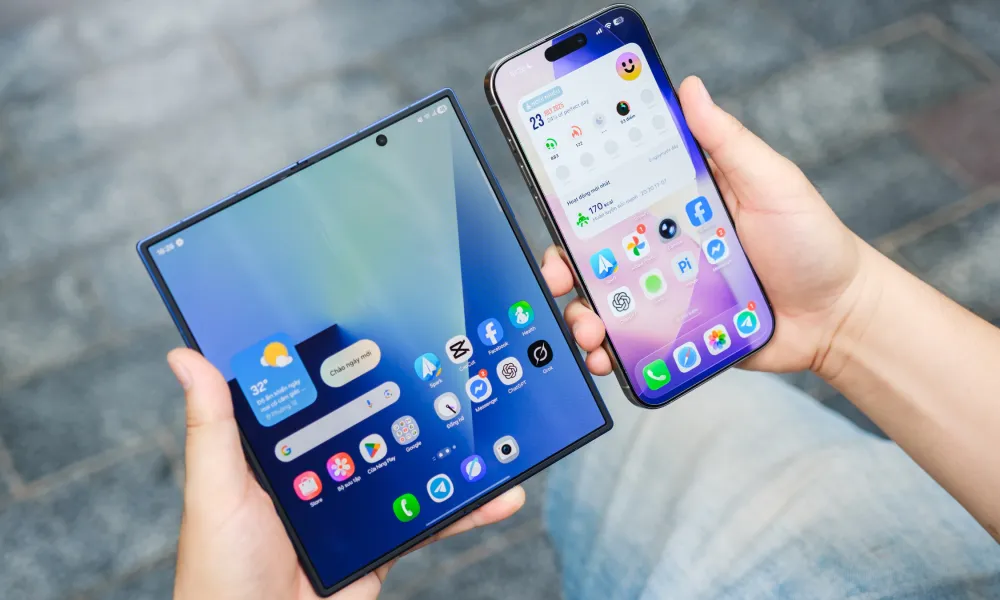



Apple is expected to unveil its most significant change to the iPhone's design on Wednesday, introducing a foldable smartphone with a bendable display that opens and closes like a book, the New York Times reported, citing three people familiar with the work who spoke on condition of anonymity.
The device would mark the first major departure from the iPhone's design since Apple introduced the product in 2007, according to the newspaper. Although the phone has slimmed down, rounded its edges and shed its home button over the years, it has remained a rectangular piece of glass over a glass or metal back, the New York Times reported.
A test for Apple's new chief executive
The launch, at Apple's annual product event in Cupertino, California, will also test whether John Ternus, who became Apple's chief executive last week, can restore momentum to the company's product launches, the New York Times reported. Once known for showy live events with enthusiastic crowds and musical performances, Apple's autumn product launches have in recent years become lower-key marketing showcases built mostly around recorded demonstrations, according to the newspaper.
Ternus takes over a company that has faced sustained criticism for losing its edge as an innovator, the New York Times reported. "The company has done incredibly well, but at the end of the day, they haven't created new categories" of products, Bob O'Donnell, founder of the research firm TECHnalysis Research, told the newspaper. A foldable iPhone, he said, would show "a side of Apple that we haven't seen in a long time."
Apple declined to comment on the event, according to the New York Times, though multiple publications, including Bloomberg, have previously reported on the company's work on a foldable iPhone.
A late but polished entry to the foldable market
Apple would be entering a market it did not pioneer. Samsung introduced the first major foldable, the Galaxy Fold, in 2019, followed by Motorola's clamshell-style Razr in 2020, and Google's Pixel Fold in 2023, the New York Times reported. Early foldable devices were expensive and suffered from software and durability problems, according to the newspaper.
Consumer interest in foldables has so far remained limited. Manufacturers shipped nearly 20 million foldable devices last year, less than 2% of all smartphone shipments, according to data from Counterpoint Research cited by the New York Times. Apple itself is expected to ship more than 12 million foldable units next year, representing 5% of all iPhone shipments, according to the same research firm.
A premium price tag
The base model is expected to cost at least $2,000, nearly double the starting price of the current high-end iPhone 17 Pro, at $1,099, because of the more complex and costly components involved, David Vogt, an analyst at the investment bank UBS, told the newspaper. Apple typically benefits from a so-called halo effect, in which a customer visiting a store for an iPhone also buys accessories such as AirPods or an Apple Watch, Vogt said, but he cautioned that the foldable's price could instead create "a wallet issue" that discourages additional spending.
Prices for the foldable and any other devices unveiled on Wednesday could be pushed higher still by a memory chip shortage linked to the artificial intelligence boom, the New York Times reported. Apple raised prices on its Mac and iPad lines in June, citing rising memory and storage chip costs, according to the newspaper. In July, the company also introduced a leasing programme allowing customers to pay for iPhones and other devices in monthly instalments.
Will consumers care about foldability?
The launch will also test how much consumers value new features when deciding whether to upgrade, the New York Times reported. About two-thirds of iPhone buyers last year said they purchased a new device because their previous phone was broken, lost or stolen, while only 14% cited new features as their reason, according to a survey by the research firm Consumer Intelligence Research Partners cited by the newspaper.
"Foldables haven't made that much of a difference" for other manufacturers, Michael Levin, a partner at Consumer Intelligence Research Partners, told the New York Times, suggesting some consumers may see the format as "gimmicky" or "niche." The real question facing Apple, he said, is "why is foldability the feature that makes people want to upgrade?"
Source: The New York Times