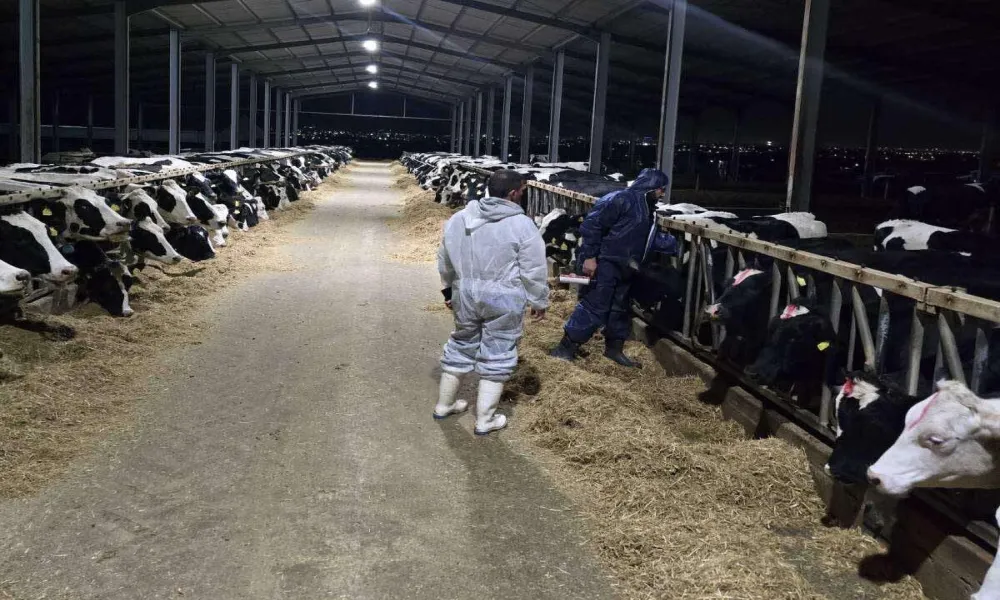

Plans to reopen the first livestock farms affected by foot-and-mouth disease in Cyprus have been delayed following the announcement of five additional cases and around 3,000 further animal culls on 11 October.
The latest development has disrupted the original timetable set by the Veterinary Services, which had aimed to allow the first affected farms to resume operations by the end of November.
However, the cases do not involve newly infected animals. According to Dimitris Epaminondas, a Veterinary Services officer and president of the Pancyprian Veterinary Association, the animals had tested positive for foot-and-mouth disease antibodies during the summer, but the results were not officially announced at the time as the authorities sought clarification from the European Commission.
The delay has also prevented the introduction of so-called sentinel animals, which are used to help establish whether the virus remains present in affected premises.
The installation of these animals had been scheduled to begin in October, following the completion of procedures to destroy potentially infectious materials at the affected farms.
Further culls and disinfection required
The five cases were reported in Avgorou, Dromolaxia, Alethriko, Aradippou and Pentakomo.
Following the announcements, further culling and disinfection measures are required before the affected premises can be considered for reopening. Two of the five farms will also undergo a reassessment: one keeping sheep and goats and another breeding a rare variety of red cattle.
Even after the sentinel animals are introduced, the farms will need to complete a monitoring period of approximately 40 days, during which the animals will be tested twice.
Authorities must also establish that the surrounding area is free of the virus before giving the final approval for operations to resume.
Culling began last week in Pentakomo and Avgorou, with work in the Larnaca area due to follow.
Farmers demand action over lost income
Meanwhile, livestock farmers continue to face significant income losses and are pressing for their businesses to resume operations as soon as possible.
Agricultural organisations have raised concerns about the financial impact of the delays, arguing that compensation should also cover income lost while farms remain closed.
All livestock farmers have received compensation for animals lost to the outbreak, with the exception of four farms. According to the report, the payments were withheld following a legal opinion from the Law Office of the Republic, after cases were identified involving the unlawful possession of animals and discrepancies with their registration in the Veterinary Services' database.
At a meeting involving the relevant stakeholders on 20 October, agricultural organisations gave the authorities a 20-day deadline to reactivate the affected farms.
They warned that, if operations had not resumed by then, they would seek the introduction of payments to compensate farmers for their lost income.
Second vaccine dose reaches 96% coverage
The vaccination campaign is nearing completion, with 96% nationwide coverage achieved for the second, booster dose of the foot-and-mouth disease vaccine, Epaminondas said.
The remaining 4% comprises farms where the second dose is still pending, accounting for 3%, and farmers who have refused vaccination, representing 1%.
These cases mainly involve farms with small numbers of animals scattered across Cyprus.
Sampling has also progressed significantly, with coverage reaching 70%.
“This is a process that began in June and will be completed by the end of the year. We hope that no further positive cases will be found by then,” Epaminondas said.
The authorities' ability to reopen affected farms will depend on the completion of culling and disinfection, the monitoring of sentinel animals and confirmation that the virus has been eliminated from the relevant areas.