
Researchers at the CYENS Centre of Excellence in Cyprus are developing technologies that combine Artificial Intelligence (AI) and Augmented Reality (AR) to support industrial inspection and maintenance. Their prototype allows technicians to visualise industrial infrastructure in the real world while interacting with an AI assistant through natural conversation.
The challenge in industrial maintenance
Industrial maintenance is becoming increasingly complex. Technicians are expected to work with sophisticated equipment, interpret large amounts of technical information and make decisions quickly, often in environments where stopping to search through manuals or consult an expert is not practical.
The research is led by Prof. Fotis Liarokapis, Research Director at CYENS and Group Leader of the Extended Experiences (EX) Research Group.
How the prototype works
Instead of interrupting a task to search through technical manuals, reports or computer screens, workers can ask questions using their voice and receive information while continuing their work. According to the researchers, this is particularly useful in industrial settings, where technicians often have their hands occupied and need to remain focused on their surroundings.
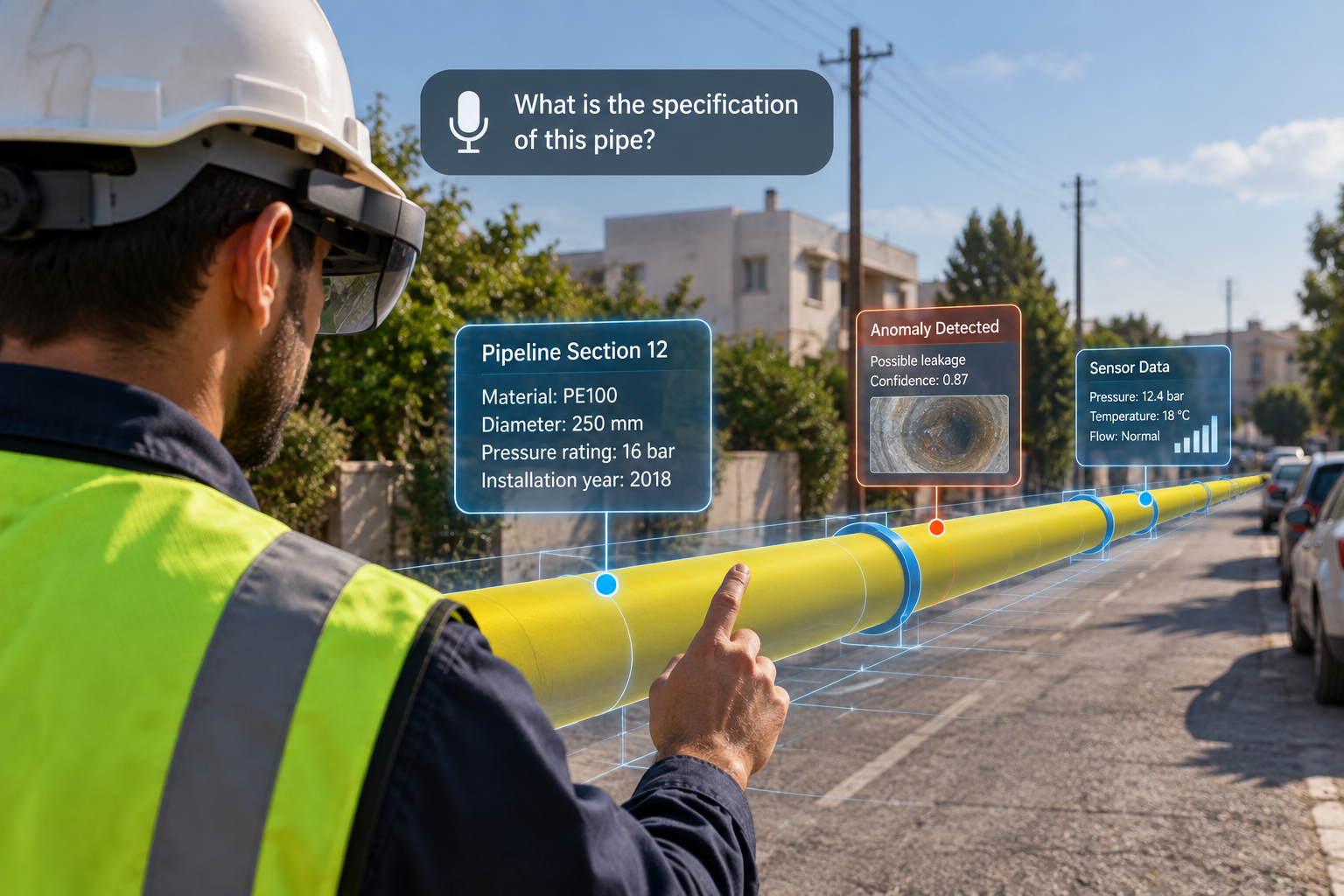
Through an AR-capable device, workers can see a digital representation of a pipeline positioned within the real environment, together with information about sensors and detected anomalies. They can then ask about maintenance procedures, component specifications, sensor readings or potential problems, and receive spoken responses from the AI assistant.
Underground pipelines as a test case
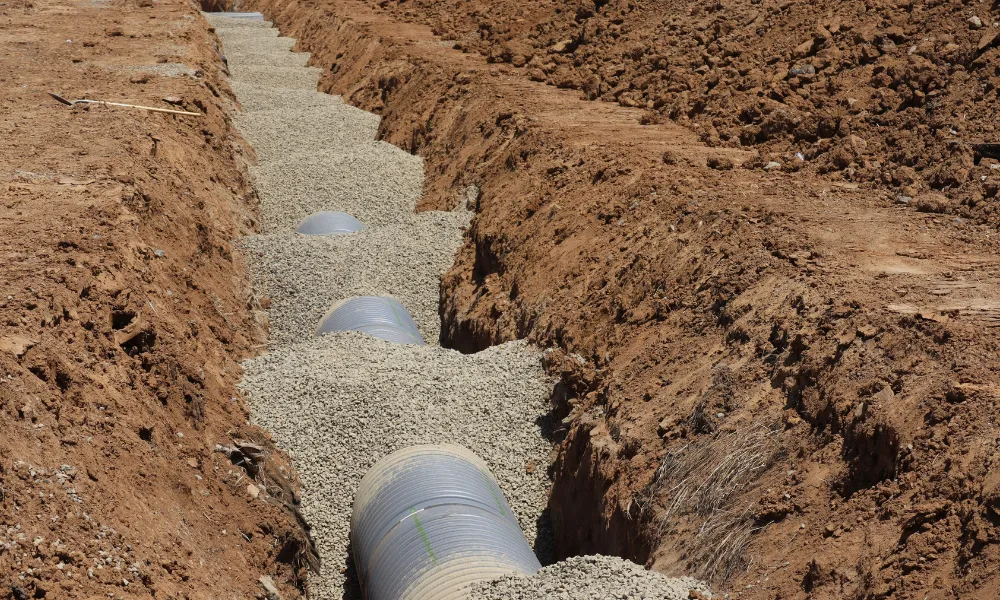
To demonstrate the technology, the researchers focused on underground water-pipeline inspection and maintenance. Inspection robots can identify leaks, corrosion or structural damage inside pipelines, but maintenance teams must then work out where these problems are located in the physical environment.
The prototype uses AR to display underground pipelines and related information directly within the technician's surroundings, making normally invisible infrastructure visible.
Potential for training
The researchers say the approach could also support industrial training. Less experienced technicians could ask questions when they encounter unfamiliar situations, while experienced workers could quickly confirm specifications or access additional information without leaving the work area. In this way, learning becomes part of the job itself, with technical knowledge available at the moment it is needed.
An early-stage technology
The technology is still at an early stage and will require further evaluation in realistic industrial environments.
The researchers emphasise that AI should support rather than replace human expertise, particularly in safety-critical work, where incorrect or misunderstood information could have serious consequences.
Part of the European XR5.0 project
The research is being carried out within the European XR5.0 project, which explores how Extended Reality and related digital technologies can contribute to the future of European industry.
A people-centred approach
As with other research led by Prof. Liarokapis and the Extended Experiences Research Group, the focus is on making advanced technologies practical and accessible to the people who will use them, rather than simply developing new digital tools. The same approach is reflected in the group's work in agriculture, where AI and immersive technologies are being developed to strengthen rather than replace human knowledge and expertise.
More information on the project is available at xr50.eu.