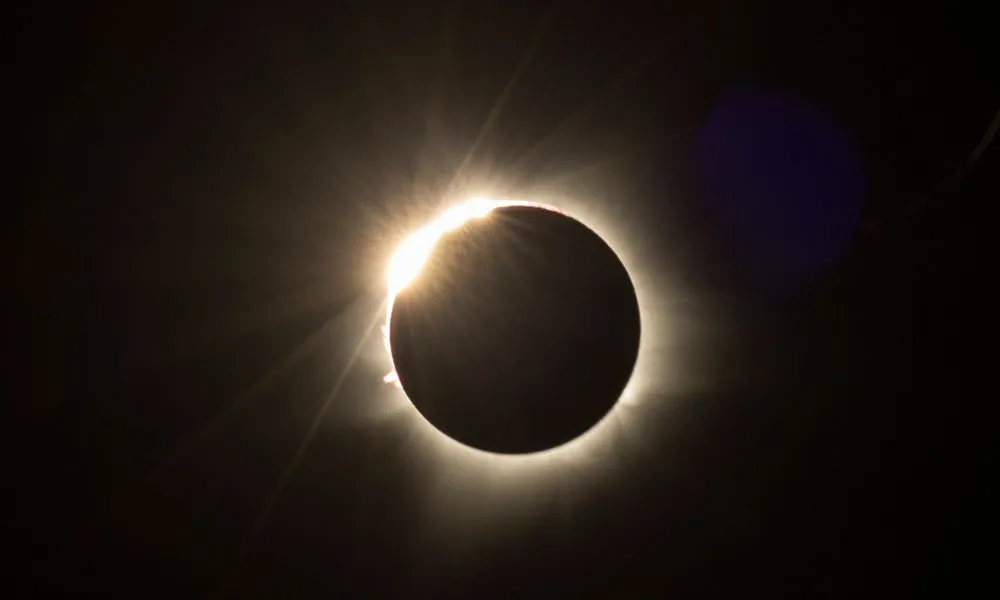

It will be the first such event in more than two years, following the widely observed eclipse of 8 April 2024.
A rare astronomical event
‘A total solar eclipse is one of those rare moments when millions of people can look up together in awe and curiosity,’ said Carole Mundell, ESA’s Director of Science.
‘It connects us to the universe and reminds us that the desire to explore and understand is one of humanity’s greatest strengths.’
Where it will be visible
The 2026 eclipse will be fully visible in parts of:
- Greenland
- Iceland
- northern Spain
- north-eastern Portugal
In these regions, the Moon will completely cover the Sun, briefly darkening the sky.
A partial eclipse will also be visible across areas of Europe, Africa and North America.
Europe’s first in years
The last total solar eclipse visible from mainland Europe occurred in 2006, according to the European Space Agency.
This August’s event will be the first visible from mainland Spain since 1905, and the first in a series of three eclipses expected to be observed in the country by 2028.
Source: lifo.gr