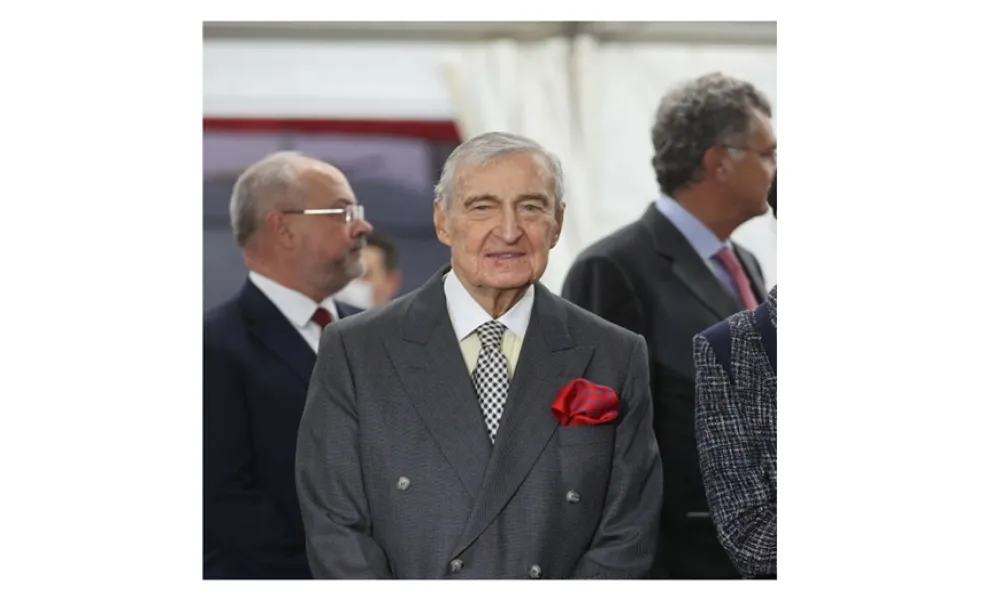

Turkish prosecutors have initiated an official investigation into Rahmi Koç, the 95-year-old honorary chairman of Koç Holding, following comments made during a public gathering in Izmir. The prominent industrialist, who heads one of the most powerful corporate empires in the country, is accused of publicly insulting a social group.
The legal action stems from a joke Rahmi Koç delivered concerning a Kurdish woman visiting a doctor. In the anecdote, when the doctor instructed the woman to strip behind a screen for an examination, she replied, "Doctor, you strip first." The Izmir Chief Public Prosecutor’s Office initiated the probe independently, a move that quickly drew public commentary from high-ranking government officials.
Government responses and political fallout
Justice Minister Akin Gürlek addressed the case publicly, stating that the scales of justice do not weigh individuals based on their wealth, title, or social status. Concurrently, Ömer Çelik, the spokesperson for the ruling Justice and Development Party, argued that using ethnic descriptions in a derogatory context directly contradicts national values.
The investigation has triggered intense political debate due to the central role Koç Holding plays in the national economy. The conglomerate operates extensively across energy, financial services, automotive, and healthcare sectors, and has historically formed the core of Turkey's secular business elite, a group that has frequently maintained a political distance from President Recep Tayyip Erdoğan.
Economic implications and judicial independence
The decision to investigate the country's leading corporate figure has drawn criticism from political opponents and business circles. Bilal Bilici, a Member of Parliament for the opposition Republican People's Party, criticised the state reaction by comparing it to American authorities launching criminal investigations into figures like Warren Buffett or Elon Musk over an inappropriate joke.
The controversy unfolds at a sensitive time for Ankara, as the government actively attempts to attract international capital and wealthy foreign investors. President Recep Tayyip Erdoğan recently announced a series of tax incentives for individuals relocating their tax residency to Turkey.
However, international economists and investors continue to voice concerns regarding judicial independence and institutional predictability in the country. Critics frequently highlight the World Justice Project Rule of Law Index, which ranked Turkey 118th out of 143 countries, as evidence of systemic institutional challenges that continue to influence the domestic investment climate.