
Justice Minister Costas Fytiris is expected next week to bring before the Cabinet his proposal for the reassessment of the guard details assigned to political figures, elected representatives and state officials. It is a first-rate opportunity to correct a long-standing distortion, one that offends the public's sense of justice.
Mr Fytiris has already revealed his intentions, asking the Chief of Police to replace the 24-hour static guard at his own residence with closed-circuit surveillance and smart cameras. Other current and former state officials also have static guards. For this reason, the reassessment includes measures to strengthen the security of their residences through the use of technology, so that the police officers performing these duties can be released and deployed to cover operational needs.
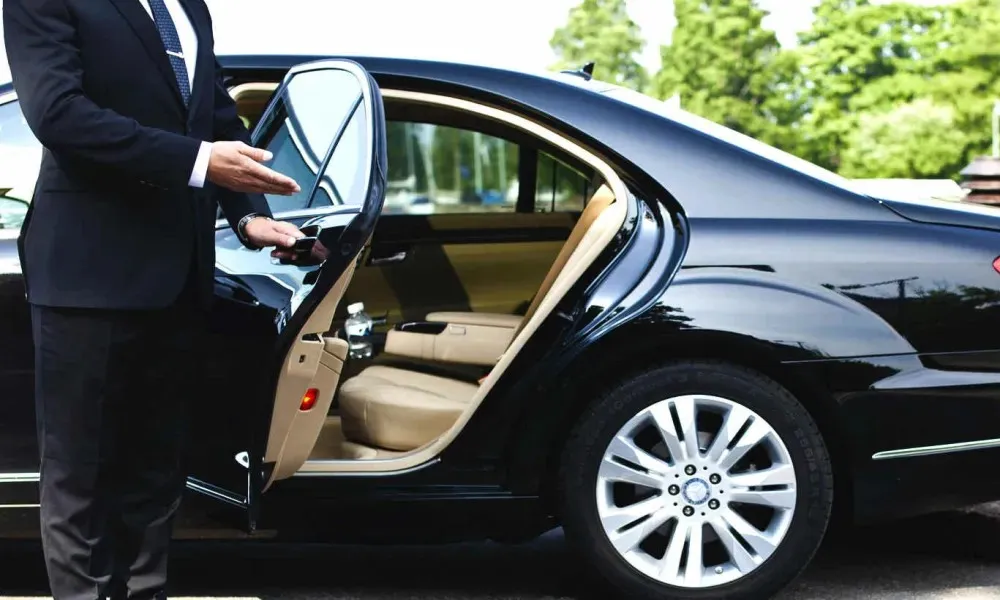
Also under Mr Fytiris's microscope are the escort details, that is, the police officers who accompany politicians and other officials, performing the duties of guard and driver.
The question is whether the Cabinet will adopt the proposal of Mr Fytiris who, publicly at least, appears determined to take the scissors to the guard details of politicians and officials.
Guards in proportion to electoral strength
As the Audit Office rightly pointed out in an earlier report on the Police, while the guarding of officials and politicians ought to be governed by a clear legislative framework, in practice it is handled on the basis of subjective and non-transparent risk assessments which are not adequately documented. This, according to the Audit Office, can be inferred from the fact that the number of officers guarding the leaders of political parties "happens" to be proportional to their parliamentary strength. Thus, the state's assumption of responsibility for guarding officials and politicians ends up taking the form of an entitlement. Hence the phenomenon observed whenever a new party enters Parliament: police officers are assigned to guard its president. And again, entirely by coincidence, the largest guard details belong to the leaders of the biggest parliamentary parties.
It is worth noting that in the United States there is legislation governing the guarding and protection of state officials, which clearly specifies that protection is provided only to the sitting President and Vice President and to former Presidents. This protection is not treated as a permanent privilege that follows someone for life.
Assistants and odd jobs
There are cases of politicians, current and former officials, who have far more police officers at their disposal than are actually required, with the result that they are put to work even on personal tasks.
Characteristic was the revelation by Politis a few years ago, when police officers serving as a politician's guards were found, while on duty, picking olives in his olive grove. An incident that captured in the most vivid way how an institution created for the protection of persons can degenerate into the provision of personal favours.
And that is not all. It is an open secret that in certain cases escort officers perform duties that have nothing to do with security: they drive the officials' service or private vehicles, carry shopping, serve family needs or take on personal errands. These are practices that insult both the police officers themselves and the taxpayers who pay for their service.
Let them pay
The protection of those genuinely under threat is non-negotiable. Where there is documented information or objective evidence that a politician or state official is a target, the state has an obligation to provide the necessary security without compromise.
Equally non-negotiable, however, is society's right to know that police resources are being used rationally. A guard detail cannot be a status symbol, nor a privilege deriving from an office.
If some wish to have personal drivers, escorts or assistants for their daily lives, they have every right to hire them with their own money. If the bill proves too heavy, they can drive themselves and carry their own shopping, as the rest of us mere mortals do. It is not the taxpayer's obligation to fund the personal conveniences of politicians and former officials.
The government now has the opportunity to end a practice that over the decades was transformed from a security measure into a privilege for the few.