
Temperatures in Cyprus are climbing in step with the rest of the world, and the island is feeling the consequences on the ground. Annual average temperatures recorded between 2016 and 2024 were around 1.35°C warmer than the historical average, with July heating up fastest of all. That warming is lengthening and intensifying the fire season, and new international research suggests that a careful choice of which trees to plant, and where, could help communities hold the line.
A study with lessons beyond its borders
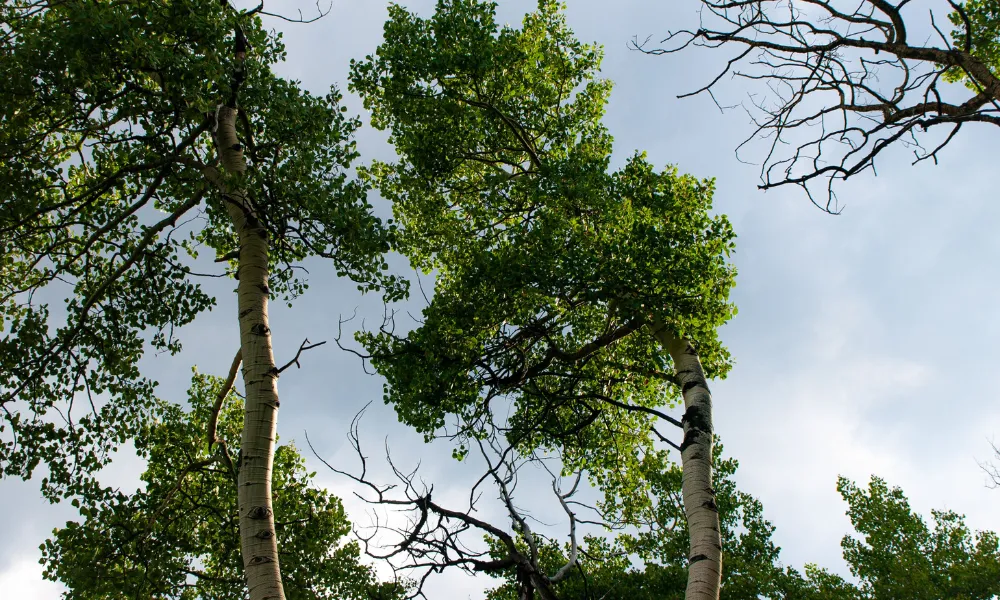
The research, published in the journal Forest Ecology and Management, was carried out by a team at McGill University in Canada alongside the Canadian Forest Service. Led by Flavie Pelletier, a recent PhD graduate in Natural Resource Sciences, it examined how trembling aspen, a common deciduous tree, behaves when wildfire reaches it. The finding was clear: large stands of aspen repeatedly slowed fires that tore through neighbouring conifer forest.
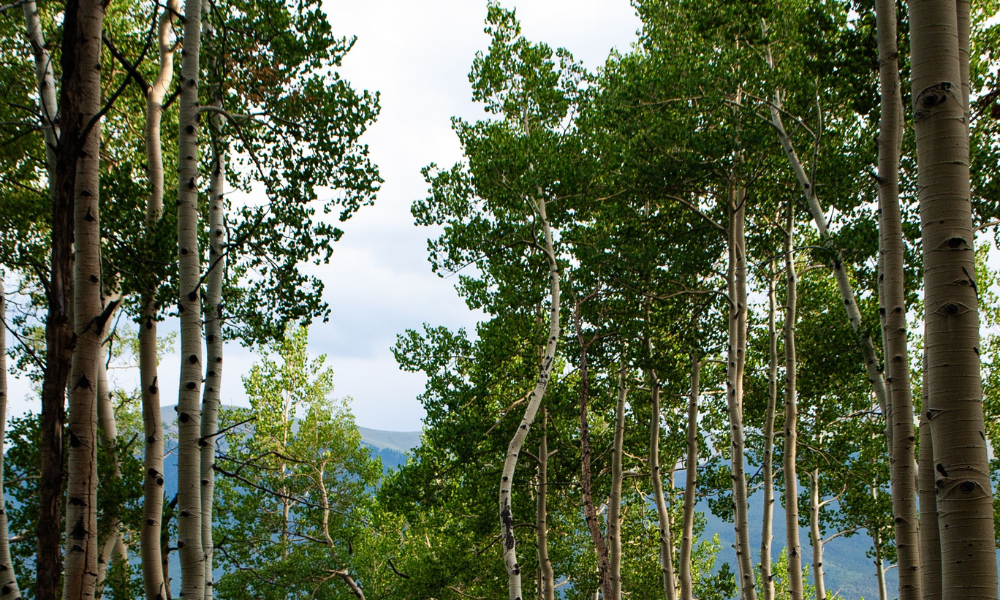
While aspen itself does not grow in Cyprus, the underlying principle travels. The study offers national-scale evidence that the species composition of a landscape, not only the weather, shapes how far and how severely a fire spreads.
Why some trees resist fire
Individual aspen trees are not tough. Their thin bark leaves them vulnerable, and a hot enough fire will kill a single tree. The strength appears at scale. Aspen leaves hold high levels of moisture, making the canopy difficult to ignite, and the trees lack the flammable resin that helps conifers burn hot.
The researchers used satellite imagery from NASA's Landsat programme and the European Space Agency's Sentinel-2, matched against forest maps, to track where fires stopped. Across the study area, aspen was found far more often along the edges of burns than inside them, indicating that fires kept running until they met aspen and then struggled to push through.
Bigger patches, gentler fires
The size of a wooded patch proved decisive. The larger the block of aspen, the lower the severity of the fire that reached it, because there was less conifer fuel to sustain the flames. Crucially, that protective effect held even during Canada's record 2023 fire season, when fire weather was extreme.
"This is the strongest indicator that aspen serves as a fire barrier," Pelletier said. "The bigger the aspen patch, the lower in severity the fire tends to be. Even with higher fire weather, as during the historic 2023 fire season, aspen's ability to slow fire progression appears stable."
What it means for Cyprus
Cyprus is acutely exposed. Despite covering less than 10,000 square kilometres, the island ranks second among 24 European countries for the ratio of burned area to land mass, according to a review of national wildfire risk. In July 2025, a fire north of Limassol became the deadliest in decades, killing two people and destroying around 125 square kilometres of countryside during a heatwave that pushed temperatures above 44°C. Scientists with World Weather Attribution concluded that climate change made the conditions behind those fires roughly 10 times more likely.
The practical message from Pelletier's team is that mixed woodland stands a better chance of surviving a fire than a single-species block, and that species choice matters when planting near homes and critical infrastructure. Cyprus already has fire-adapted native species, including Calabrian pine, mastic and kermes oak, that have evolved to recover after fire. The study strengthens the case for planning landscapes around resilience rather than commercial value alone.
Not a cure, but a tool
The researchers were careful not to overstate their findings. Aspen is not fireproof, individual trees still die, and severe conditions can carry flames straight through a stand. Whether the barrier effect holds as the climate continues to warm remains an open question, since drought and heat stress could weaken the trees themselves over coming decades.
For now, the evidence points one way. As Pelletier put it, there is value in retaining mixed woodland "because mixed stands that include aspen may be less likely to be entirely lost in a fire". For an island entering each summer hotter and drier than the last, that is a lesson worth studying.
With information from Forest Ecology and Management, McGill University and World Weather Attribution