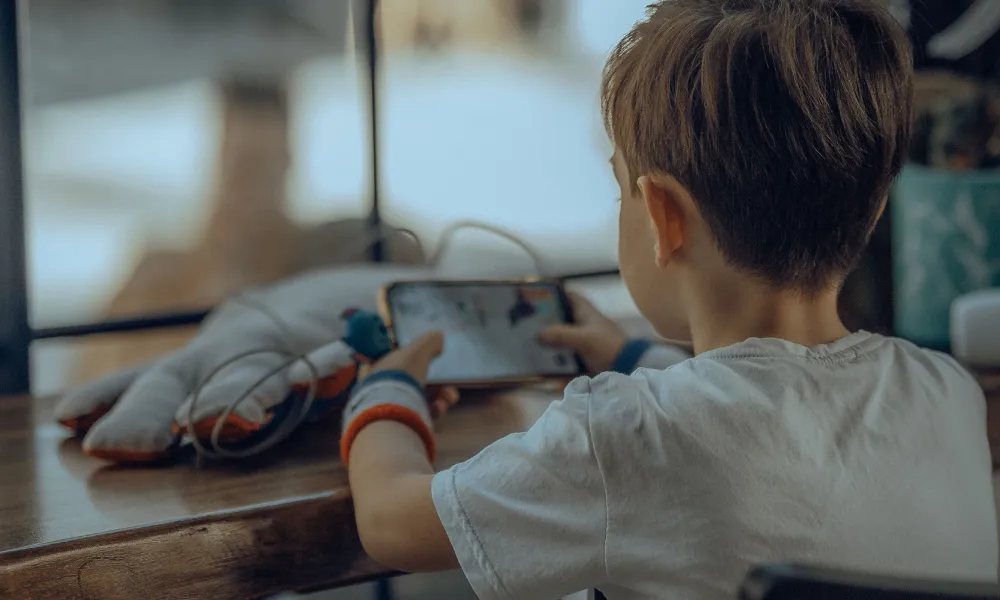

The shared family meal, long regarded as a daily anchor for conversation and connection, is increasingly accompanied by a glowing screen. A new survey by researchers at the University of Arizona found that more than 70% of families use some form of media during mealtimes, a figure covering phones, televisions, tablets and handheld game consoles.
What the study measured
The team surveyed parents raising children aged four to 10, asking who used media during meals, on which device, and how often. The analysis also weighed demographic factors including age, sex, ethnicity, number of siblings and whether the household had one parent or two, while devices were split into large-screen and small-screen groups for comparison.
"Family mealtime is a special-case scenario. It is an important moment for family members to sit together, have food, share their life, and connect with each other," said Jiawen Wu, the study's lead author.
Present at the table, absent in attention
The researchers noted that physical presence at the table does not guarantee engagement. A parent absorbed in a phone can be in the room while mentally elsewhere, meaning the body stays put while attention drifts away.
Parents and children behave differently
One of the study's most unexpected findings was that parent media use and child media use during meals did not track together. "That's surprising because we had assumed that media use would covary among parents and children," said Matthew Lapierre, the study's senior author and associate professor.
According to Wu, this suggests clinicians may need to treat parents and children as separate cases, since changing a parent's routine will not automatically reset the child's habits.
Ethnicity the strongest predictor
The factor that predicted behaviour most reliably was the family's ethnicity. African American parents reported more shared media use and less solo use, with children usually watching alongside them. Asian American households showed the opposite pattern, with parents and children tending to use devices individually.
"We have evidence that shared use and individual use could have different impact on children, as shared use can also be a means of parental influence in children's media behavior," Wu said.
Screen size shapes the table
The hardware itself influenced whether media brought a family together or divided it. Parents leaned most heavily on smartphones, while children moved easily between playing games and watching videos.
"All forms of media use can affect communication at the table, so the best advice is to turn off the media devices before mealtime. However, with TV, since everyone is watching it, it can at least become a source of conversation," said co-author Cecilia Sada Garibay, a PhD student in the Department of Communication.
Not all bad news
The researchers stopped short of concluding that screens ruin dinner. Lapierre said there is reason to suspect media affects children and families in unwelcome ways, but stressed the evidence remains far from settled. The study, he added, was designed to help health professionals identify families to discuss mealtime media habits with, rather than to hand down strict rules.
The study is published in the journal JAMA Pediatrics.