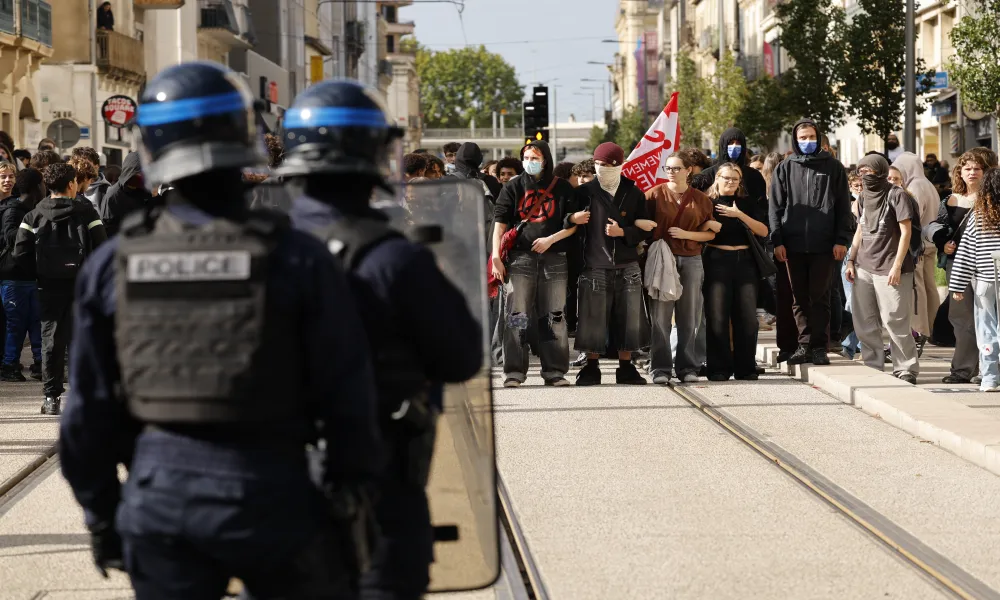

A 15-year-old student taking part in a protest over France's run-down and understaffed schools was left with a mutilated hand on Monday in the northern town of Lens, after picking up a police stun grenade from the ground, a local official told reporters. According to the French newspaper La Voix du Nord, the official said an investigation has been opened into the incident.
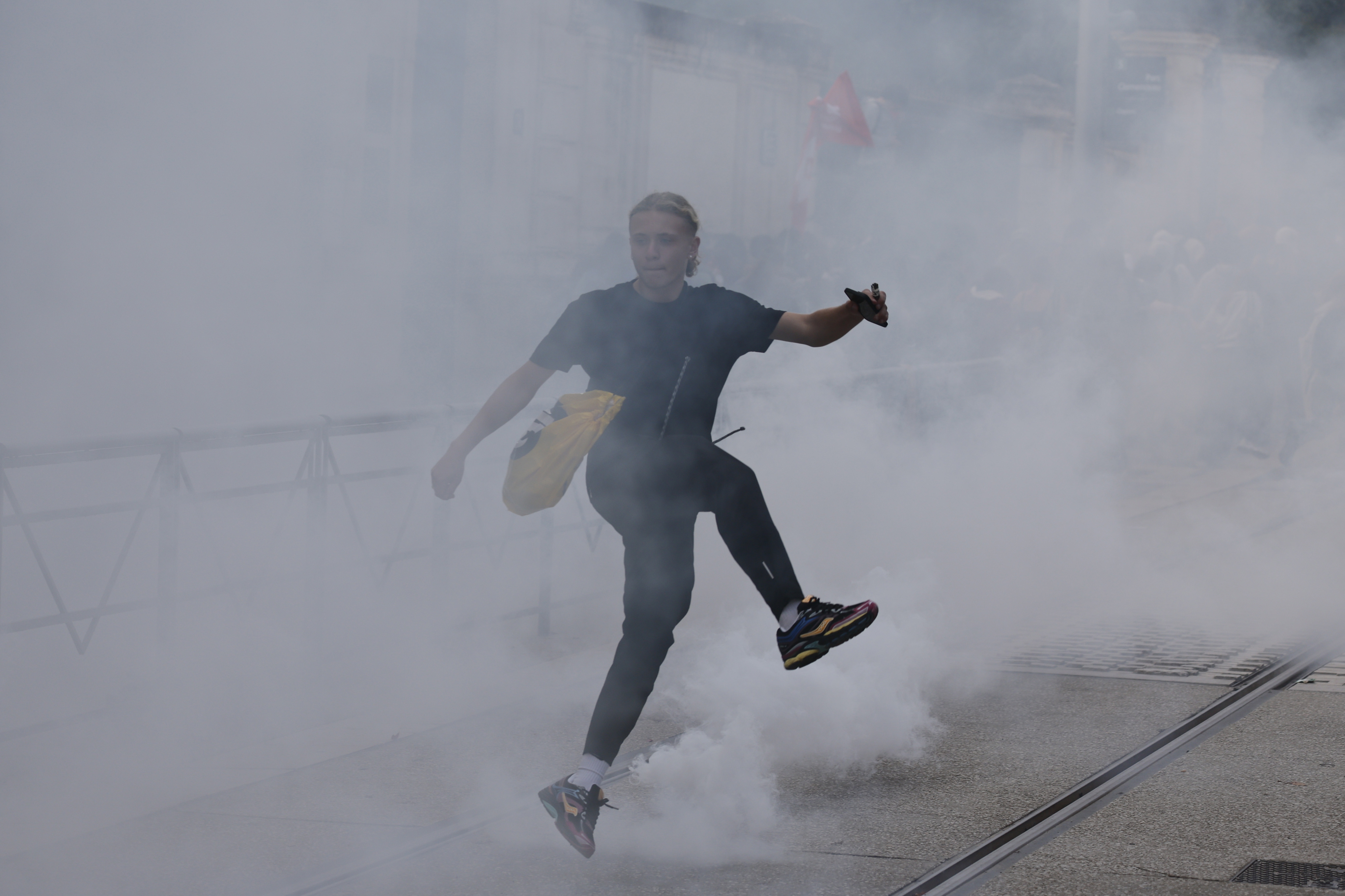
The injury comes as a new round of student protests gets under way in France, days after unrest in several cities, with authorities preparing for further school blockades.
Calls for mass protests on Tuesday
Student organisations have called for demonstrations on Tuesday 6 October, when large turnout is expected. Some students say they are ready to join the protests "in a show of solidarity with all the other lycées and with the teachers" working in difficult conditions.
Several trade unions have also called for strike action and participation in the student protests.
Police unions' concerns
Police unions have described the coming week as one of high tension and have expressed fears of further incidents.
"On Snapchat I saw particularly worrying messages, calling on students to 'prepare for war', to fill their bags with objects that can be used as projectiles and to wear masks," Jean-Pierre Cloez, union representative for Alliance Police Nationale in northern France, told BFMTV.
Since the start of the lycée blockade movement, 824 people have been arrested in the Paris region, 85% of them minors, according to the Paris police.
The 'rioters pay' bill
Government spokesperson Maud Bregeon announced on Monday, speaking to Europe 1/CNews, that the so-called "rioters pay" bill will be examined on 27 October.
According to Ms Bregeon, the bill introduces "a form of collective responsibility", as it provides for compensation to be claimed for damage, including through the withholding of social benefits, from individuals belonging to a group that caused destruction, even if they did not commit the act themselves.
"If you take part in a violent protest and, after a police warning, you remain there, then you may be considered jointly responsible," she explained.
The French government presented the bill to the Council of Ministers in mid-September and decided to place it on the parliamentary agenda following the escalation of incidents at student protests in recent days.
"No one any longer understands why the state, and therefore taxpayers, should pay for the destruction caused by a violent minority," the government spokesperson said.
School closures
France's Minister of National Education, Édouard Geffray, estimated on Sunday 4 October that around 400 to 500 lycées planned to suspend classes on Monday.
In the Paris region, more than a third of lycées, over 160 schools, were to remain closed on Monday, according to the president of the Île-de-France region, Valérie Pécresse.
Students' demands
The students are calling for more resources for their schools. They are protesting against the poor condition of school buildings, overcrowded classes and the gaps left by absent teachers who are not replaced, particularly in working-class neighbourhoods. They also oppose the inequalities which, they argue, are created by Parcoursup, the platform for admission to higher education.
Government response
In instructions sent to his ministers on Sunday evening, French Prime Minister Sébastien Lecornu called for classes to resume "everywhere" possible, while also presenting a timetable for addressing some of the students' demands.
The prime minister set out five main areas of action, drawn from issues raised by the academic councils for student life, with the "first decisions" expected by the end of the month.
On Tuesday 6 October, Mr Lecornu will also meet the presidents of the regions, with the renovation of school infrastructure as the main topic. He has given his ministers until the end of October to submit initial proposals for reforming the Parcoursup system.
With information from Le Monde, Franceinfo, L'Indépendant, Reuters