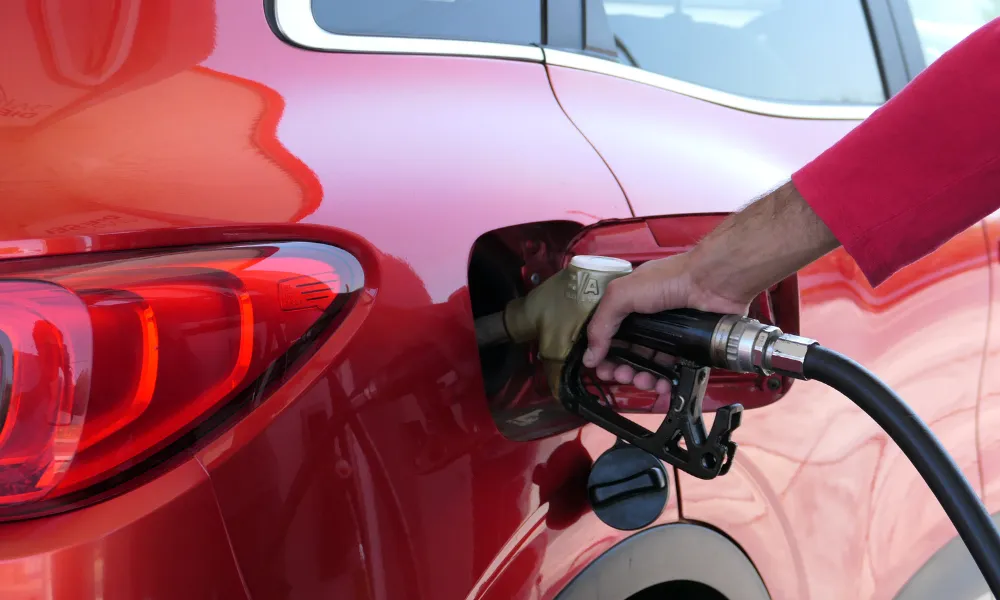



Drivers in Cyprus should not expect relief at the pump any time soon. Fuel prices could rise by a further 2-3 cents per litre this week, according to Christodoulos Christodoulou, vice-president of the Fuel Retailers Association, who told the Cyprus News Agency that the peak has not yet been reached.
"The forecasts are that we will not see anything soon that could lead to a reduction in fuel prices," he said.
Why prices are still rising
Mr Christodoulou said the assessment was based on the association's experience and the course of international oil prices. "For several days, oil was around 108-109 dollars and we believe that the prices corresponding to these levels have not yet been passed on to the market," he said.
The association also monitors prices at refineries in Greece, from which petrol stations buy directly. "We also monitor the refineries in Greece, the prices at which they sell and the conditions prevailing, namely whether they sell expensively or cheaply to petrol stations, since they buy directly from the refineries. We draw a conclusion from this," he said.
What drivers are paying now
According to the Consumer Protection Service's Fuel Price Observatory, the average nationwide price of road diesel stands at €2.028, ranging from €1.939 to €2.126.
95-octane unleaded petrol averages €1.744, with prices between €1.659 and €1.819. Heating oil averages €1.666, ranging from €1.529 to €1.769.
Mr Christodoulou said some retailers had raised prices more than others, although this did not concern many petrol stations. On heating oil, he said the subsidy would bring the price down to €1.63, but estimated that prices could rise further by 1 November.
Retailers under pressure too
Mr Christodoulou said retailers were facing serious difficulties because of the higher purchase cost. "Retailers are struggling as much as consumers are at this time, perhaps even more. We used to buy a load for around €40,000 and now we buy it for €65,000. Therefore, we inevitably need additional capital," he said.
With an average of two loads a week, a retailer needs around €50,000 in additional capital every week, he added. "There are difficulties. There are many retailers who cannot cope with this problem."
The profit margin for the vast majority of retailers is approximately 5 cents per litre, or about 2.8% gross, although it is higher for those who own their petrol stations.
Smaller fill-ups and trips to the north
Mr Christodoulou said people visiting petrol stations were now "very restricted" in their spending. "People are very careful and make sure they do not make unnecessary trips," he said.
Many motorists are putting in small amounts, such as €20, which buys around 12 litres of petrol or 10 litres of diesel.
He attributed the growing flow of motorists to the north over the past three months to high fuel prices, pointing to queues at the crossings that he said were constantly increasing.
The VAT argument
Mr Christodoulou said that when petrol cost €1.20 per litre, the state collected 19 cents in VAT, while now, with the price close to €1.90-€2, it collects 32 cents. "The Government could subsidise this difference for the public," he said.
He cited Greece as an example, where heating oil has been subsidised by 15 cents per litre, compared with 5 cents in Cyprus.
Consumers' Association: heating-oil subsidy too small
Marios Drousiotis, president of the Cyprus Consumers' Association, said any assistance was welcome given consumers' difficult financial situation. On the outlook for prices, he said: "We are going into the unknown with hope as our only guide," adding that "our assessment is that we will not see reductions".
The association is dissatisfied with aspects of the government's measures, particularly the heating-oil subsidy, which takes effect on 1 November rather than immediately.
Mr Drousiotis said heating oil had risen by 71 cents per litre since 1 March. "This is a huge increase," he said, noting that the state subsidy amounts to 6.3 cents, made up of a 5.3-cent tax reduction plus 19% VAT. "If we subtract 6 cents from the 71 cents, it is a drop in the ocean for consumers. The increase is huge."
He said the association had submitted its proposal at least three weeks earlier, warning about the increase. Because of it, he said, the state now collects 13.5 cents more per litre on heating oil than it did on 1 March.
"As an association, we say that, because heating oil has recorded the largest increase of all petroleum products, these additional revenues collected by the state on the increase, only on the increase, should somehow be returned to heating-oil consumers," he said.
Subsidies that did not reach the pump
Mr Drousiotis said that since April the association had been asking the Finance and Energy ministries to ensure subsidies reach consumers. According to him, this did not fully happen in April with the 8.33-cent reduction, because "it is up to the retailer whether they want to reduce the price".
An association survey in April found that 19 petrol stations had not reduced their prices at all, while 97 had reduced them by less than 8.33 cents. "We brought this to their attention and were told that it was not illegal," he said, adding that the loophole remains open because it is not covered by legislation.
He stressed that every reduction should be reflected in petrol-station prices, and said the road-fuel subsidy should be higher or another way should be found to provide greater assistance.
A total reduction of 8.33 cents currently applies to road diesel and petrol until the end of November.
Photovoltaics: a benefit with a catch
The association also disagrees with the reduction of VAT on photovoltaic installations from 19% to 9%. With an average installation cost of €5,000, new users benefit by about €500.
However, Mr Drousiotis noted that the state had abolished the Net Metering scheme, forcing consumers onto Net Billing. According to the association's calculations, the state will collect more from consumers over the 15-year contract than it gives through the VAT cut. "It is a subsidy, but you have removed other benefits from consumers," he said.
Household costs rising
Asked about household expenses, Mr Drousiotis said they were certainly increasing, given that since 1 March petrol has risen by 40.5 cents and road diesel by 61 cents per litre.