
The Limassol Permanent Assize Court has imposed life imprisonment on all four defendants in the killing of 55-year-old Thanasis Kalogeropoulos, who was shot dead in Agios Tychonas on 30 October 2023. The three-judge court unanimously found them guilty of premeditated murder, concluding that they took part in an organised, pre-planned murder plot in which each had a specific role.
The sentences
The four convicted men are Menelaos Polykarpou, 43, Charalambos Dimosthenous, 46, Zinonas Kyriakou, 24, and Menelaos Tziovanis, 23. Each was sentenced to life imprisonment for premeditated murder.
The court also sentenced all four to nine years’ imprisonment for conspiracy to commit murder, with the two sentences to run concurrently. For the remaining charges, the court ruled that the offences were included in the charge of premeditated murder, and no additional sentences were imposed.
An organised plan with specific roles
According to the ruling, the court concluded that the four took part in a common criminal plan that had been organised a considerable time before the murder. Although their actions did not take place at the same time, and not all of them were equally involved in carrying out the crime, the court found that they knew the purpose of the plan and contributed to its execution by taking on different roles.
As the ruling states, the four had “a specific plan which was comprehensive and coherent, and each had his own role and actions, and the corresponding contacts and communications”.
The court linked the individual actions and movements of the four to the preparation, the execution and the aftermath of the murder. In effect, it rejected the possibility that their recorded movements and communications were unrelated to one another.
The Skarinou villa as the base of operations
A villa in Skarinou owned by the second defendant played a central role in the case. According to the court’s findings, the four used it to plan and prepare the murder. The property effectively served as their “headquarters”, as it was used for several days both before and after the crime.
Particular weight was given to the location of the property, which is in an isolated spot. According to the court, its location, combined with the recorded vehicle movements and the presence of the convicted men, left no doubt that these movements were connected to the use of the villa and to carrying out the murder plan.
CCTV footage proved decisive, recording vehicle movements and the presence of the convicted men in the area of the property. Among other things, cameras in Skarinou recorded both the Mazda Demio used in the murder and the motorcycle used in the getaway.
The prosecution linked these recordings with the rest of the evidence, arguing that they confirmed the involvement of the four in the organised plan.
DNA evidence and identification of the first defendant
In the case of the first defendant, a key piece of evidence was the discovery of part of his DNA profile on a cartridge case found at the scene. The CCTV evidence also identified him as the rider of the motorcycle used in the getaway.
For the other three defendants, the court carried out an extensive assessment of the circumstantial evidence as a whole. It examined not only their individual actions, but also the overall picture that emerged when the facts were linked together. Particular weight was given to the consistency of the evidence, the sequence and chronology of events, each defendant’s knowledge of the murder plan, and his specific role and actions in carrying it out.
According to the reasoning of the ruling, the communications between the defendants, together with their movements and actions, could not be assessed in isolation or through a fragmented, microscopic examination of each piece of evidence. Instead, the court found that the picture emerging from the evidence as a whole had to be examined, taking into account how the pieces connected and the logical sequence of events.
As part of this assessment, the court also attached particular importance to the vehicle movements recorded at the isolated Skarinou villa. It took into account the location of the property, the presence of those involved, and the repeated vehicle movements to and from it, including those linked to the murder. The court found that the villa’s isolated location, combined with these recordings, left no room for any other logical explanation of the movements apart from their connection to the organised plan.
The court further noted that the evidence as a whole did not point to any other logical explanation that could justify the recorded actions and communications of those involved. On that basis, it concluded that the only possible conclusion was that defendants 2, 3 and 4 assisted, through their actions, in the commission of the murder, while knowing about the plan that had been devised.
On the basis of this overall assessment, the court found their guilt of premeditated murder proven beyond reasonable doubt.
CCTV footage and telecommunications data
A significant part of the ruling rested on the assessment of footage obtained from various CCTV systems. The court accepted all of this evidence, which was central to reconstructing the movements of those involved before and after the murder.
The telecommunications data of the four was considered equally decisive. It showed frequent communication between them, through phone calls, messaging apps, voice messages and other forms of electronic communication.
The period covered by these communications is particularly significant. According to the evidence assessed by the court, contact between those involved began on 6 September 2023, almost two months before the murder, which the court linked to the preparation of the criminal plan.
The communications continued after the murder on 30 October and went on until 4 November 2023, when the first arrests in the case were made.
The telecommunications data as a whole, together with the CCTV footage and the vehicle movements, formed the basis on which the prosecution linked the four to the preparation and execution of the murder.
The 21 shots and the killing
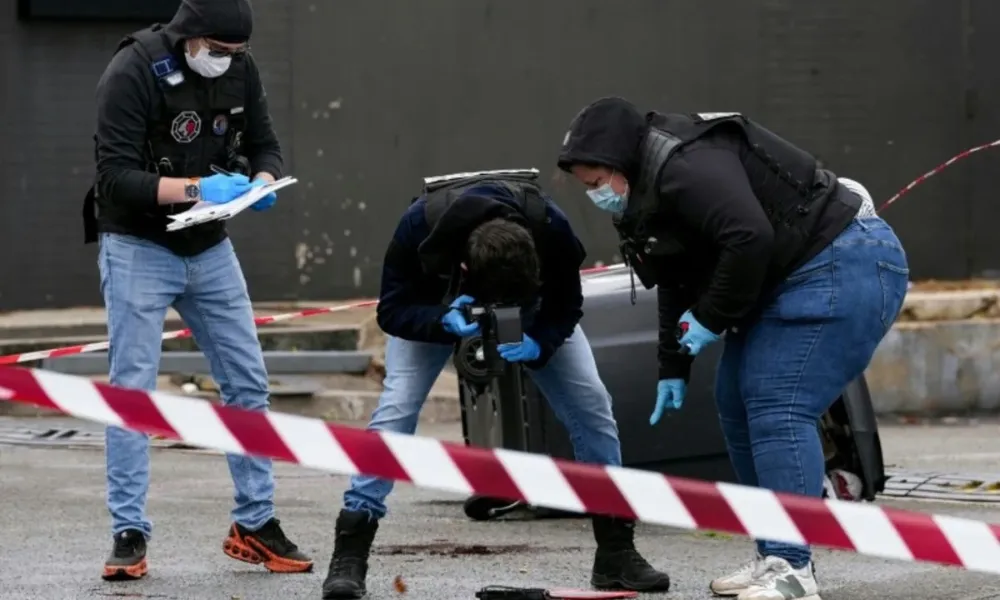
Thanasis Kalogeropoulos was killed on the morning of 30 October 2023 in the car park of a seaside restaurant in Agios Tychonas, when two people opened fire on him.
In total, 21 shots were fired at the 55-year-old businessman from two firearms, fatally wounding him.
The gunmen left the scene in the Mazda Demio, which was later found burnt out on a dead-end dirt road in Germasogeia. The two weapons used in the murder were found inside the vehicle.
A ruling of more than 600 pages
The unanimous ruling of the three-judge court runs to more than 600 pages, reflecting the extensive testimony and evidence presented during the months-long hearing.
In total, 75 witnesses testified before the court and 560 exhibits were submitted. The ruling was read out in summary form, focusing on the most important evidence and the court’s conclusions.
The four convicted men had denied the charges and chose to exercise their right to remain silent during the hearing. They had been held at the Central Prison on remand from their arrest until the end of the trial.
After the guilty verdict was announced, none of the defence lawyers wished to address the court in mitigation regarding the remaining charges.
Tight security at the court
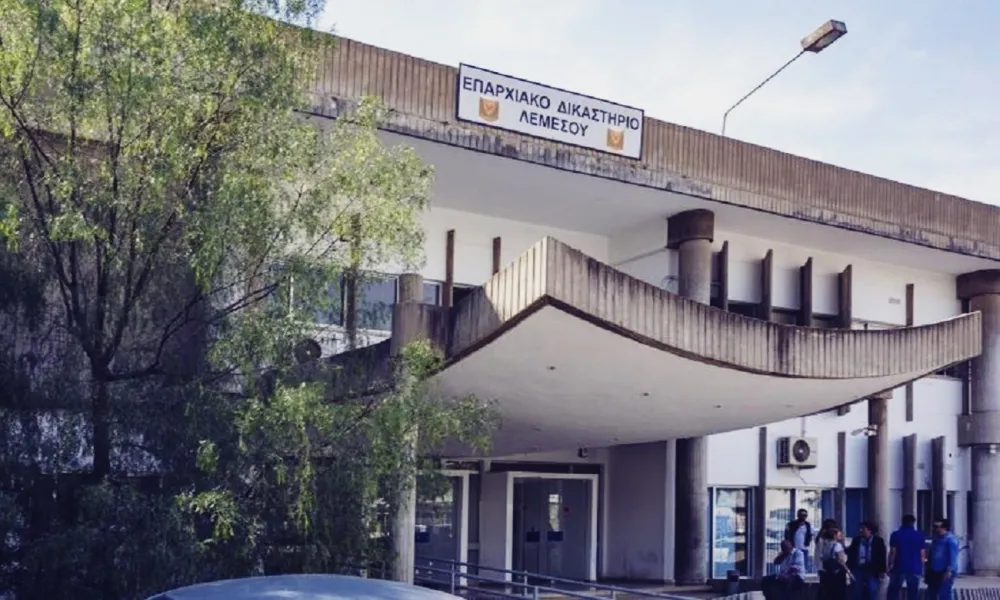
The proceedings took place under tight security, with a heavy police presence inside and outside the Limassol District Court.
Members of Thanasis Kalogeropoulos’s family and his friends were in the packed courtroom to hear the verdict.
During the hearing, one of the defence lawyers felt unwell, and the session was briefly suspended. The courtroom was cleared and an ambulance was called as a precaution, while the lawyer remained conscious. The proceedings resumed shortly afterwards.
The case was handled on behalf of the Law Office of the Republic by Counsel of the Republic Karnos Loukas.