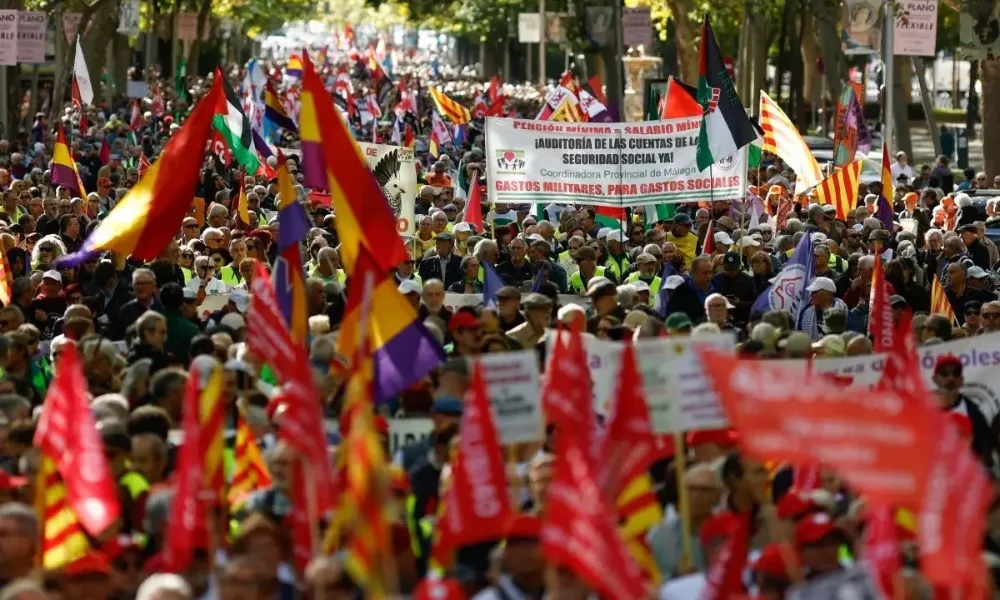

Workers across Spain held a general strike on Wednesday over the country’s severe housing crisis, despite heavy storms. The mass mobilisation came just three weeks before snap parliamentary elections on 29 November.
It is the first general strike in Spain since 2012, when workers protested against austerity measures during the eurozone debt crisis.
Unions and tenants’ associations behind the strike
The strike is backed by Spain’s two largest trade unions, UGT and CCOO, which represent more than one million workers. Tenants’ associations protesting against soaring rents and evictions are also supporting it.
🔴SPAIN 🇪🇸| A 24-hour general strike has been called for this Wednesday Nov, 11 in #Spain to demand, among others things, a better access to housing, lower rents, and an end to the forced evictions of residents. This is the first general strike in the country since 2012. https://t.co/mJQU9g2tRQ
— Nanana365 (@nanana365media) November 11, 2026
Prime Minister Pedro Sánchez is seeking to use public anger over housing ahead of the elections. His aim is to shift political debate away from corruption scandals involving people close to him and the deadly rail accident last month.
Participation varies by region
The unions said turnout varied from region to region, with the highest participation in coastal areas, where pressure on the housing market is greatest.
In Madrid, protesters dragged large recycling bins into the road to block traffic. In Barcelona, many shops pulled down their shutters for fear of unrest.
Shortage of 750,000 homes
According to the Bank of Spain, the country faces a shortage of around 750,000 homes, a figure expected to exceed one million by 2028.
As fewer people can afford to buy a home, demand has shifted to renting, pushing prices sharply higher. According to the Spanish Youth Council:
- the average rent now stands at €1,176
- this takes up almost 98.7% of a young person’s average monthly salary
“I am 36 years old and I still cannot live on my own,” said Jesús González, who works in the IT department of a Madrid hospital and joined the strike. “Rents and property prices keep rising non-stop. The situation is simply unsustainable.”
Employers call the strike counterproductive
Ángela de Miguel, vice-president of the main employers’ confederation CEOE, described the strike as counterproductive. She argued that the housing crisis also hurts small businesses, as the lack of housing makes it harder to recruit staff.
Speaking to public broadcaster TVE, she said the solution is to build more homes and cut taxes on construction and property transfers. According to her, these taxes have raised the final price of a new home by 40% over the past decade.
Political risk ahead of the vote
The general strike is the culmination of weeks of protests and occupations, sparked by the eviction and subsequent death of an 87-year-old woman in Madrid.
These protests, together with Parliament’s rejection last month of government decrees to curb evictions and contain rents, forced Mr Sánchez to call early elections.
The government blames the surge in rents and the housing shortage mainly on the right-wing opposition, which runs many regions and municipalities.
However, trade unionists and many protesters say they hold the central government equally responsible, both for the housing crisis and for the second fatal rail accident in the country this year.
With information from Reuters