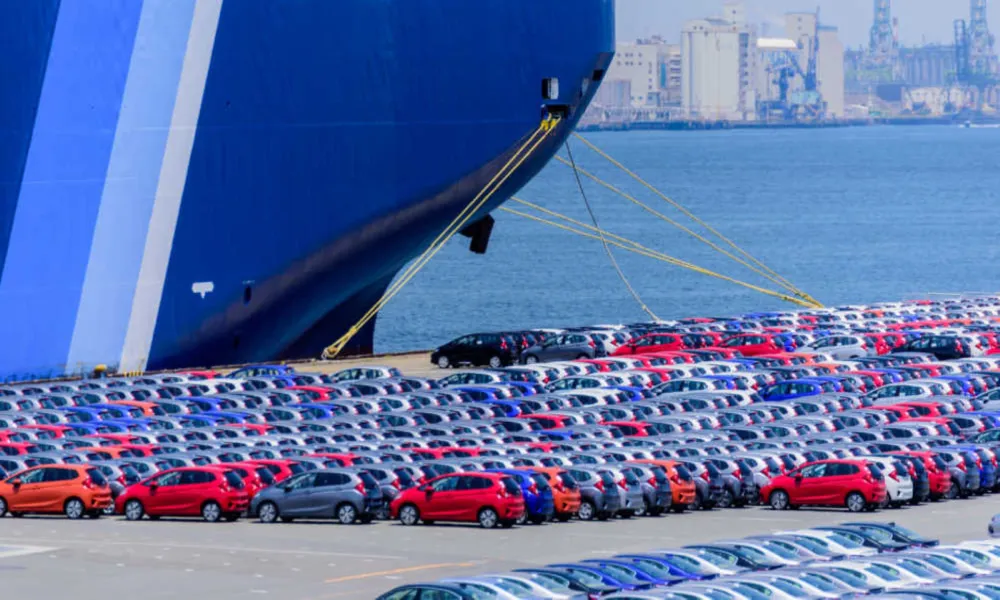



France and Germany have confirmed a common approach to securing the future of Europe’s automotive sector, under which the goal of a complete shift to fully electric vehicles by 2035 is abandoned. The compromise provides for a less substantial reduction in carbon dioxide emissions while supporting European production, ensuring that next-generation electric vehicles are developed and manufactured in Europe.
Joint statement by Paris and Berlin
In a joint statement, the two countries said they had agreed on a common approach aimed at securing the future of the sector.
“We have a clear ambition: to achieve the transformation of our automotive industry while maintaining our climate ambitions and production in Europe,” French President Emmanuel Macron said on X.
According to the joint statement, the plan sets out a European path to decarbonisation, with regulatory flexibility and incentives for investment, research, production and resilient supply chains.
Emissions target for 2035
According to a French-German document seen by Agence France-Presse on Thursday, carmakers will have to cut their CO2 emissions by 90% by 2035, without offsetting the remaining 10%. This differs from an initial European Commission proposal.
The document justifies the concession by citing the growing use of “renewable fuels”, including biofuels.
Concessions on both sides
To reach the compromise, France had to accept greater flexibility for vehicles with combustion engines, as requested by Germany to protect its automotive industry. The outcome has disappointed environmental organisations.
In return, Germany accepts a stricter definition of European preference. Under it, companies benefiting from public funds will be required to source components made in Europe or in certain partner countries.
The “Made in Europe” approach
The “Made in Europe” approach will cover production within the European Union and its close partners, such as Britain, Norway and Switzerland. It is aimed in particular at addressing the mass influx of Chinese vehicles into Europe.
Reaction from Lower Saxony
Lower Saxony Premier Olaf Lies, who sits on Volkswagen’s supervisory board, welcomed the agreement, calling it a strong signal for the European automotive sector.
He said it protects jobs at manufacturers, suppliers and plants in Lower Saxony, adding that the compromise would also strengthen emerging markets such as those for batteries and green steel.
Next steps at EU level
The agreement is expected to enable the European Union to make progress on its automotive package and on legislation on European preference. Negotiations on these issues are currently taking place among the 27 member states and in the European Parliament.
Source: CNA