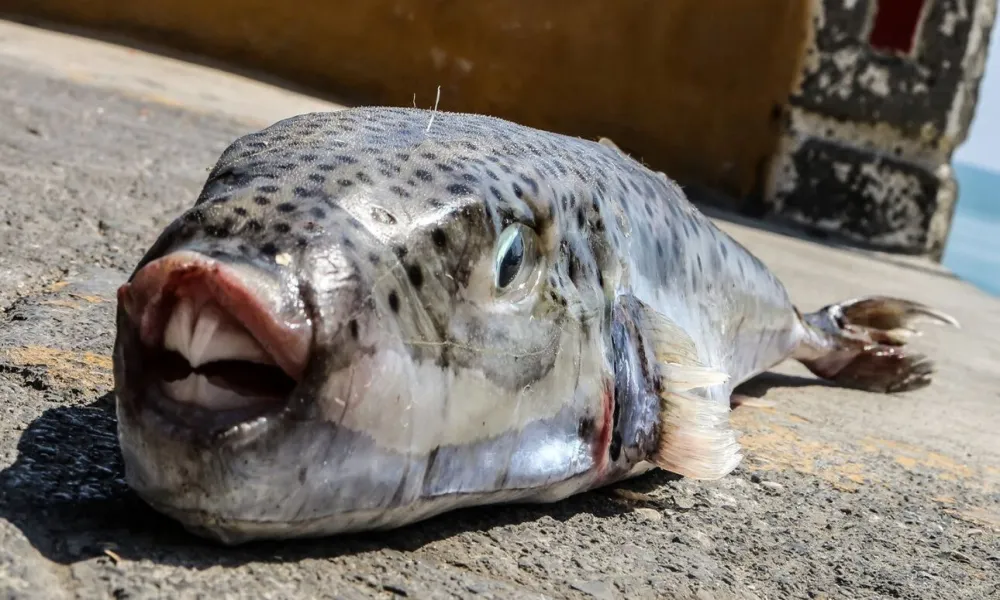
Cyprus’ Fisheries and Marine Research Department has sought to reassure the public over recent reports about the pufferfish known as Lagocephalus sceleratus, stressing that no attacks on swimmers have been recorded in Cyprus despite the species being present in local waters for at least 20 years.
In a statement issued to prevent public alarm, the department said the main danger to humans is linked to consumption of the fish, which is poisonous and strictly unsuitable for eating. It also underlined the serious damage the species causes to professional fishing, both by damaging fishing gear and by affecting catches.
Lagocephalus sceleratus is an invasive species of Indo-Pacific origin that entered the Mediterranean through the Suez Canal. It is considered one of the most harmful invasive fish in the region because of its rapid spread, broad diet, ability to adapt to different environmental conditions and limited natural predators in local waters.
The department said the fish contains a powerful neurotoxin, tetrodotoxin, in its tissues, which can cause severe food poisoning. For that reason, its consumption is banned. The species is also a strong predator, equipped with a powerful beak, and its spread has caused significant problems for coastal fishing.
To reduce its impact, the Fisheries Department has implemented mitigation schemes over previous programming periods and, since June 2024, has been running a grant scheme aimed at limiting the spread of the species. The scheme will continue until the end of 2029 and pays professional fishers €4.73 per kilo for targeted catches of lagocephalus.
The department noted that, like other alien species, lagocephalus has been established in Cyprus’ waters for years and is now part of the local marine ecosystem. Measures currently being taken focus mainly on reducing its impact on fisheries.
It repeated that swimmers face no particular danger on beaches. However, anyone who encounters the fish should avoid touching, disturbing or feeding it, as is the case with any wild species.
The department urged the public to rely on official sources, including its own website, for information about lagocephalus in Cyprus waters, in order to avoid unnecessary concern and panic.
Source: CNA