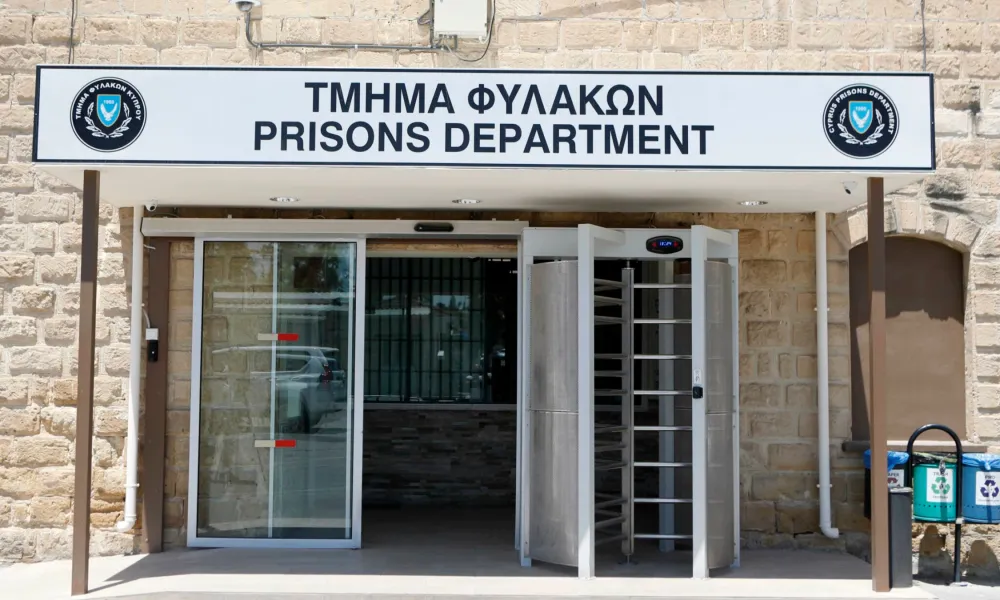

Cyprus’s Central Prisons have faced growing operational pressure in recent months as long-term staff absences affect day-to-day operations and security. Official data obtained by Politis show that some employees reported for duty on only four days during the first seven months of 2026.
The records cover 38 prison officers, 12 chief prison officers and four senior officers who each took at least 40 days of sick leave between January and July.
Staffing and financial impact
The absences have placed additional pressure on remaining prison staff, who must cover vacancies and manage heavier workloads.
They also carry financial consequences for the state. Beyond salaries paid during sick leave, staffing gaps create additional costs through overtime, replacements and other forms of cover.
The figures do not challenge employees’ right to sick leave when facing genuine health problems. However, the scale of the absences raises questions about the effectiveness of existing monitoring mechanisms.
Sick leave by rank
Senior officers: Four of the department’s eight senior officers recorded 208, 192, 178 and 151 days of sick leave respectively, amounting to 729 days. In one case, 208 days were recorded during a seven-month period comprising 212 calendar days.
Chief prison officers: Twelve employees recorded a combined 1,278 days of sick leave. Two recorded 211 and 210 days respectively, while another two recorded 172 and 160 days.
Prison officers: The 38 employees recorded a combined 3,541 days, averaging about 93 days per person. Eighteen recorded at least 100 days, while individual cases reached 197, 191 and 162 days.
Total number substantially higher
The figures cover only the 54 employees who took at least 40 days of sick leave between January and July. Absences of fewer than 40 days are not included.
The department’s actual total for the seven-month period is therefore substantially higher than 5,548 days.
How the current rules work
Labour Minister Marinos Mousiouttas recently told Alpha Kalimera that the issue was longstanding, with some public employees repeatedly absent for six or seven years.
Under current regulations, employees may receive up to 42 days of sick leave before being referred to a Medical Board. The board may grant up to six months of leave on full pay, followed by another six months on half pay if the illness continues.
“Someone is absent for six months, reports for work for one or two days and then becomes ill again, usually with the same condition. The cycle then begins again,” Mousiouttas said.
“In practice, they remain absent for long periods, beyond six months or a year, without any financial consequence under the current regulations.”
He stressed that the employee’s actions were legal, adding: “The question is why the opportunity exists for this to happen.”
Government prepares legislative changes
An interministerial meeting convened at the initiative of Justice Minister Costas Fytiris agreed that existing legislation should be amended to close loopholes allowing sick-leave rules to be abused.
The meeting included Finance Minister Makis Keravnos, Health Minister Neophytos Charalambides, Mousiouttas and senior officials from the four ministries.
Fytiris said the government was not seeking to challenge employees’ right to sick leave, but to ensure that it was exercised fairly, objectively and reliably, protecting both workers and the effective operation of public services.
During September, Fytiris is expected to meet unions representing the public and wider public sectors, once discussions between the ministries are completed and a final proposal has been prepared.