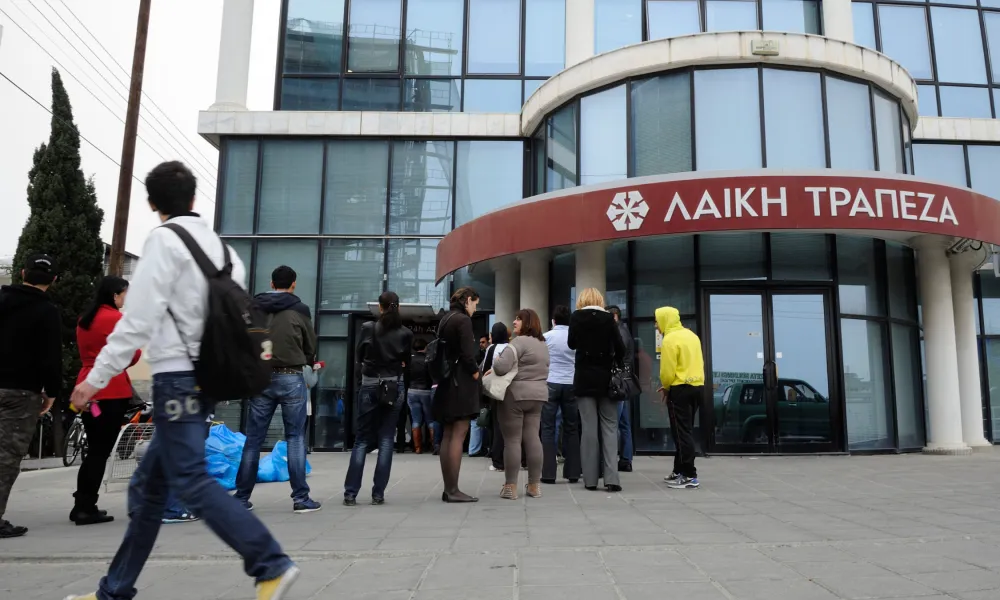

A rare successful claim arising from Cyprus’s 2013 bank deposit haircut turned on the state’s treatment of cases involving exceptional humanitarian circumstances. The Greek claimant family says the funds are essential for the round-the-clock care of their daughter, who sustained irreversible brain damage at a very young age.
The Republic of Cyprus now contests the size of the award and is seeking its partial annulment.
A rare successful claim
The case, Theodoros Adamakopoulos and others v Republic of Cyprus, was heard by the International Centre for Settlement of Investment Disputes (ICSID), a World Bank institution.
The proceedings initially had a far broader scope, with hundreds of depositors and investors from Greece seeking compensation from the Republic of Cyprus for losses suffered during the banking crisis and the restructuring of the country’s banking system.
The claimants argued, among other points, that the measures introduced in 2013 breached protections covering their investments.
The tribunal rejected the overwhelming majority of the claims. It largely upheld the Republic’s position that it had the authority to take measures to address the banking crisis.
One claim, however, was treated differently. It involved a Greek family that argued the funds affected by the haircut were directly linked to the increased and permanent care needs of their daughter, who has tetraplegia and requires continuous support.
The final award was issued on 17 March 2026. According to the family’s representatives, the amount awarded is close to €5 million and is necessary to provide long-term, round-the-clock care for their daughter.
Republic seeks partial annulment
Sources within the Legal Service told Politis that the Republic does not accept the amount awarded, which it considers excessive.
On 22 July, the Republic filed an application under the ICSID procedure seeking partial annulment of the award. The filing means the case remains open, at least regarding the size and implications of the compensation.
The family says the Republic is unjustifiably delaying enforcement of the ruling and has begun publicly pressing the government for payment.
Through its lawyers, the family has appealed to President of the Republic Nikos Christodoulides and Attorney-General Giorgos Savvides, asking for the funds to be released.
It argues that the case is not simply a financial dispute between an investor and a state, as the money is linked to the needs of a person with a severe and permanent disability.
Comparison with other humanitarian cases
A key element in the outcome appears to have been the comparison with other exceptional cases in which the Cypriot state intervened because of particular humanitarian circumstances.
These included the cases of children who lost their parents in the Helios air disaster. Funds belonging to relatives of victims were not initially exempted from the 2013 haircut. The Republic subsequently recognised the exceptional circumstances and provided ex gratia financial assistance to victims’ relatives.
The family’s lawyers also cited the exemptions granted to many charitable organisations.
The Greek family argued that its own circumstances were similarly exceptional. It maintained that having a child with a severe and permanent disability, requiring continuous and costly care, justified comparable special treatment by the state.
The tribunal appears to have placed particular weight on this difference in treatment. The central issue was not whether the 2013 haircut was unlawful as a whole, but whether the family should have been treated in the same way as other exceptional humanitarian cases.
That distinction separated its claim from the hundreds that were rejected.
What remains unresolved
Thirteen years after the events of 2013, the wider legal battle over the bank haircut has largely been decided in favour of the Republic of Cyprus.
What remains unresolved is an exceptional claim now centred on the amount awarded, enforcement of the ruling and whether the Republic must pay immediately or may await the outcome of the annulment proceedings.
The pending procedure will determine the Republic’s challenge to the award. The family continues to seek immediate payment, arguing that the humanitarian circumstances require a different approach.