
Cyprus' mountain communities are continuing to face significant challenges in education, healthcare, elderly care, employment and local development, despite major state investment through the National Strategy for the Development of Troodos Mountain Communities and other revitalisation projects.
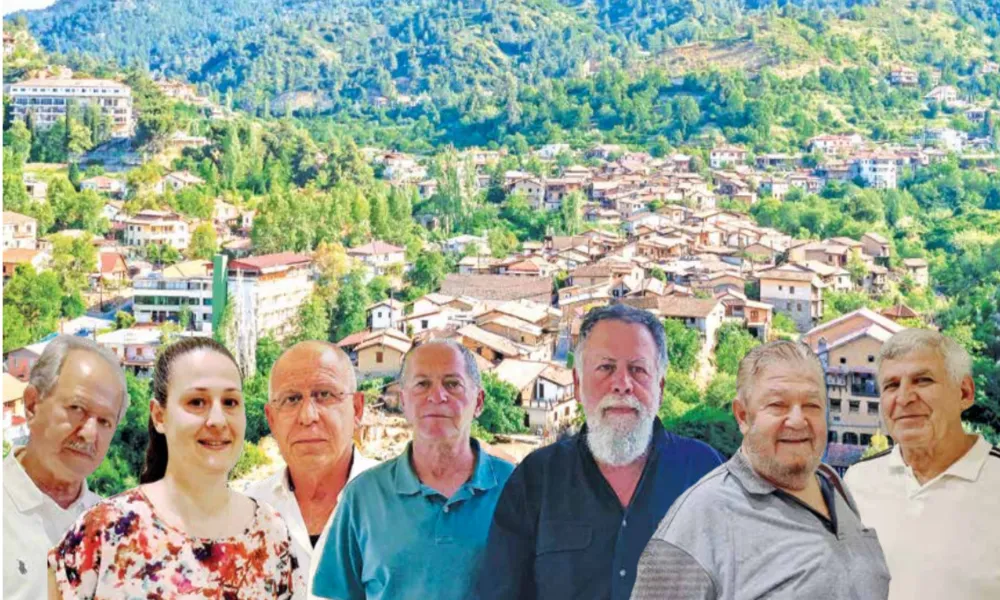
Community leaders across the Solea and Marathasa regions told Politis that while government incentives are encouraging people to return to the mountains, many essential services remain difficult to access and administrative obstacles continue to hinder development.
When one pupil can determine a school's future
Education remains one of the most important factors in maintaining village life.
Across the 161 communities covered by the Troodos strategy, there are:
- 25 kindergartens serving around 560 children;
- 26 primary schools with about 1,380 pupils;
- Eight secondary schools with approximately 1,290 students.
In total, about 3,230 children and students attend schools in the mountain areas.
However, the differences between communities are stark.
In Kambos, both the local kindergarten and primary school have just two pupils each. By contrast, the largest kindergarten, in Kivides, has 49 children, while the largest primary school, in Trimiklini, serves 136 pupils.
At secondary level, the Mitsis School in Lemythou has 97 students, compared with 327 at the Lefkara Gymnasium-Lyceum.
Community leaders argue that applying uniform criteria to urban and rural schools creates difficulties. Evrichou community leader Ioannis Cheimonidis cited a case where a difference of just one student determined whether a third secondary school class could operate.
Mountain communities are calling for more flexible rules, similar to those already applied to small upper-secondary classes.
"Education is managed as if we are Nicosia. But we are a mountain region," said Miltos Ierides, community leader of Spilia and president of the Solea cluster.
For small villages, residents argue, even a handful of pupils can represent the difference between growth and decline.
Extracurricular activities often require long journeys
Families also struggle to access after-school activities such as sport, dance and music.
Katerina Christodoulou, community leader of Oikos Marathasas, said she travels to Akaki every weekend so her daughter can attend dance classes.
"I take my daughter to Akaki on Saturdays and wait two hours while she attends dance lessons," she said.
At the same time, local leaders point to positive developments. The Marathokosmos childcare centre, established in 2020 with five children, now serves 23.
Healthcare facilities exist, but staffing remains a concern
The Troodos strategy includes health centres in:
- Agros
- Evrichou
- Kambos
- Kellaki
- Omodos
- Palaichori
- Panagia
- Pachna
- Pedoulas
- Platres
- Salamiou
- Fyti
In addition, Troodos Hospital in Kyperounta provides services to residents of 84 communities across Pitsilia, Solea, Marathasa and surrounding areas.
Community nursing services are also available.
Nevertheless, local leaders say staffing remains inadequate.
Residents in Evrichou complain that a paediatrician visits only once a week.
"A child apparently cannot get sick on any day other than the one when the paediatrician is there," Ierides remarked.
Ageing facilities raise concerns
Community leaders also criticise the condition of some health centres.
In Evrichou, they point to outdated facilities and accessibility problems.
"There is a toilet that requires you to go down 30 steps," they said, arguing that the building is not suited to the needs of an ageing population.
Kalopanayiotis tries to fill healthcare gaps
In Kalopanayiotis, community leader Lambros Lamprou is attempting to bring healthcare closer to residents.
The village has created facilities for medical and physiotherapy services aimed at attracting specialists and reducing the need for travel to Nicosia.
Demand has already proven significant, with physiotherapy services reportedly serving as many as 16 people per day.
Local leaders stress that while upgrades to Kyperounta Hospital are welcome, they do not eliminate the need for properly staffed primary care facilities throughout the region.
Elderly care facilities exist, but carers do not
The mountain regions have six residential facilities for older people located in:
- Agros
- Vasa Koilaniou
- Evrichou
- Kyperounta
- Palaichori Oreinis
- Foini
A new facility is also planned in Silikou.
Additional home-care services operate in several communities, and an adult centre functions in Salamiou.
Yet social workers say many elderly residents still struggle to obtain assistance.
A social worker serving Solea and Marathasa said some residents qualify for subsidies for home care but cannot find carers willing to travel to their villages.
"We do not have carers willing to come up and look after them," she said.
As a result, approved financial assistance often fails to translate into actual care.
Families seeking occupational therapy, speech therapy or other specialist services face similar difficulties and frequently must travel to urban centres.
Licensing problems trap businesses
Local authorities argue that economic development remains impossible without resolving long-standing licensing and planning issues.
Representatives in Solea highlighted problems linked to so-called "isolation strips", which restrict legal access to properties and commercial premises.
According to community leaders, existing businesses, including workshops, shops and restaurants, are affected.
One proposed solution is the development of an organised industrial area in Atsas, which has reportedly attracted interest from around 60 businesses.
Until such projects materialise, however, many business owners remain unable to:
- expand;
- transfer ownership;
- sell their businesses;
- access state subsidies and incentive schemes.
Calls for tax incentives
Community leaders say mountain businesses should not be treated in the same way as those in urban centres.
"They treat us as if we are based in the cities. Nothing changes for us," Ierides said.
Communities are seeking tax incentives, special support measures and easier access to subsidy programmes.
Similar problems have been reported in Marathasa, where older businesses and restaurants often struggle to access grants because their premises lack the required planning permits.
Marios Charalambous, community leader of Gerakies, noted that even buildings funded by the state were later found to be missing the necessary planning and building permits, requiring years to regularise.
Villages with almost no residents left
Many mountain communities continue to battle severe depopulation.
According to community leader Elias Avraam, just 13 permanent residents were recorded in Milikouri during the most recent census.
In Gerakies, the permanent population is estimated at only 55 to 60 people, though numbers rise to around 200 at weekends.
The village once sent dozens of pupils to Pedoulas Secondary School. Today, there are no children living there.
Elsewhere, communities have lost basic services. Villages such as Spilia and Tembria no longer have grocery shops.
Residents warn that declining populations and disappearing services reinforce each other in a vicious cycle.
Heating support 'not enough'
Community leaders say the cost of heating places an additional burden on mountain residents.
While they welcome the government's €500 heating allowance, they argue it falls far short of actual needs.
A representative from Milikouri said the subsidy does not cover even two weeks of heating during winter, particularly given high fuel prices and the colder climate of the Troodos mountains.
Local government reform criticised
Community leaders also voiced frustration over the implementation of local government reform.
Representatives from Northern Marathasa say service clusters have been given additional responsibilities without the staff required to carry them out.
Shortages of administrative employees and labourers have affected everything from cleaning public spaces to advancing development projects.
"We inherited responsibilities and costs, but received zero support," Lamprou said.
Community leaders say greater cooperation between villages is essential, but insist that meaningful collaboration requires sufficient staff, resources and government support.
Marios Charalambous also criticised delays within the District Local Government Organisation, saying understaffing has resulted in lengthy waits for routine cases.
"They are still looking for files. They cannot serve us," he said.