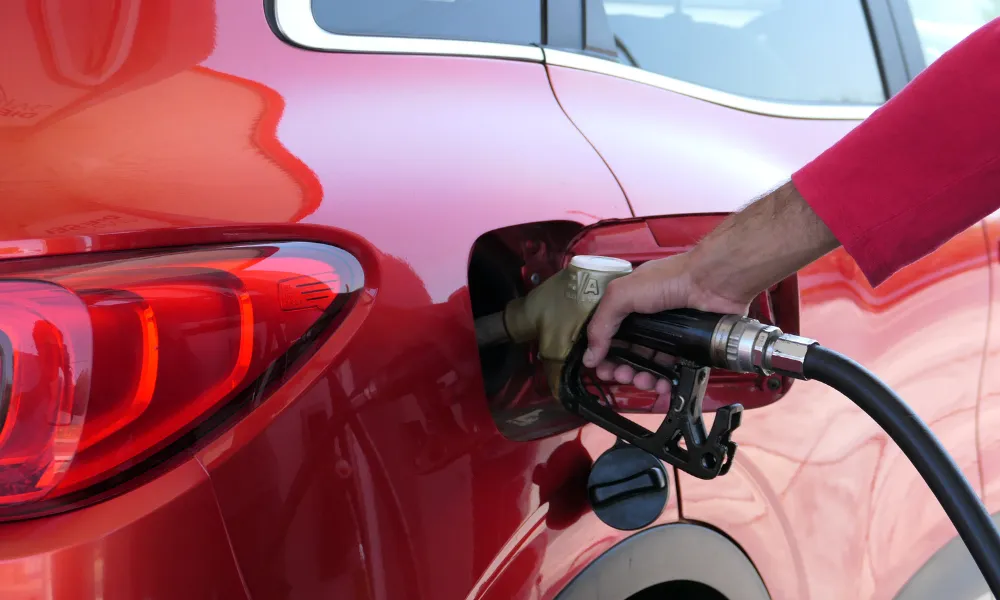

Low-income pensioners will be able to use their €200 prepaid card for any product sold at fuel stations, not only fuel. Christos Diomidous, Benefits Management Officer A at the Deputy Ministry of Social Welfare, said beneficiaries without a car can buy LPG cylinders or even give the card to their children. Letters explaining how to obtain the card will be sent to beneficiaries next week.
How the card can be used
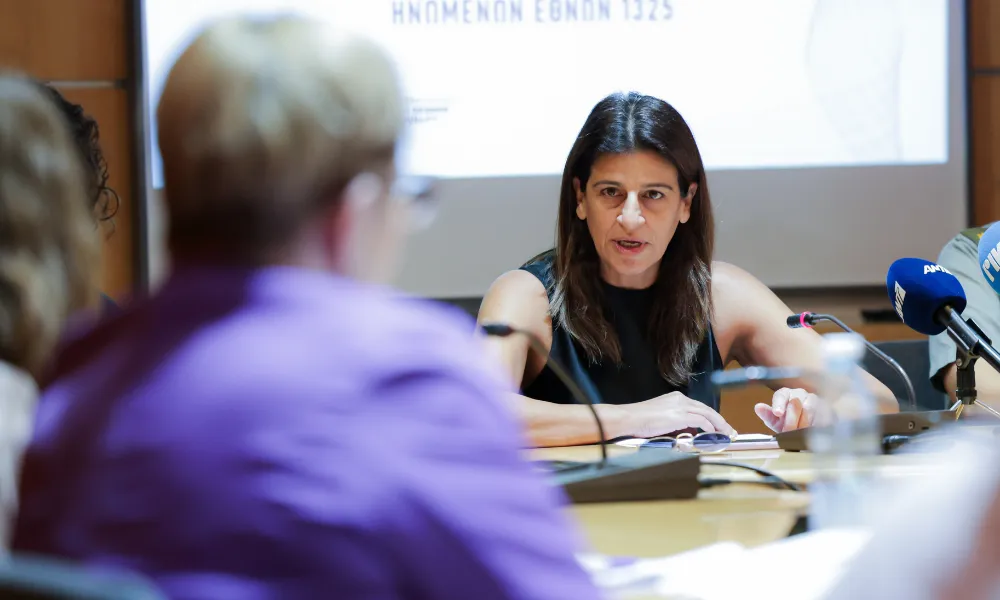
Speaking on the Politis 107.6 & 97.6 radio programme Proini Epitheorisi with Katerina Iliadi, Mr Diomidous said the prepaid card can be used for any product available at fuel stations, not only for fuel.
He said beneficiaries who do not own a car can use it to buy LPG cylinders, or can pass the card on to their children.
Mr Diomidous did not say whether all beneficiaries will receive the card before Christmas.
How beneficiaries will obtain the card
According to Mr Diomidous, beneficiaries will receive different letters depending on the bank that holds the account where their low-income pensioners' allowance is paid.
Beneficiaries must then apply to their bank, either online or in person. The banks will send the card details to the competent service so that the €200 can be paid. Beneficiaries will receive the card by post or collect it from a bank branch.
On the difficulties facing elderly people in rural areas, he said most banks will allow online applications. He suggested that elderly beneficiaries ask their children for help.
He added that the process is ongoing, and applications can still be submitted in January.
Possible extension to other groups
Mr Diomidous described the card as a targeted social benefit. He said it is additional financial support and does not replace any existing allowance.
He argued that, until now, benefits policy did not ensure that money was used for the purposes it was granted for. He said the Welfare Benefits Management Service, which pays out about half a billion euros in benefits a year, receives dozens of reports that Guaranteed Minimum Income (GMI) money may be used for other purposes, including betting.
He said that in future, if the Council of Ministers decides so, the measure could be extended to single-parent families, large families and GMI recipients. The card could then also be used at other businesses, such as supermarkets.
One-off support for families with children
Mr Diomidous said the one-off financial support for families with children and a family income of up to €100,000 covers more than 90,000 families. Eligibility will be based on income from the 2024 tax year.
Payment will be made automatically, with no application required. Work is under way to collect beneficiaries' bank account details.
Beneficiaries who have not yet registered their IBAN are asked to do so immediately through the Insured Person Profilee-service of the Social Insurance Services or the Tax Department's Tax For All platform.
For divorced parents, the payment will initially go to the mother. Mr Diomidous said it has not yet been decided how cases of joint custody will be handled. He also confirmed that the €100,000 income threshold applies to single-parent families as well.
Payment dates for benefits and Christmas bonuses
According to Mr Diomidous, payments are scheduled as follows:
- 9 December: Child benefit for single-parent and large families who receive it monthly.
- 11 December: The Guaranteed Minimum Income and its Christmas bonus. The bonus equals 80% of the basic needs amount, whatever the size of the monthly allowance.
- 14 December: A Christmas bonus of €100 per family for single-parent, three-child and large families.
- 16 December: The monthly low-income pensioners' allowance, and a €100 Christmas bonus for recipients of the honorary allowance for mothers of large families.
- 17 December: Disability allowances, and the Christmas bonus for low-income pensioners. The bonus equals their monthly allowance, with a minimum of €100.
Monthly checks on GMI recipients
On checks of Guaranteed Minimum Income recipients, Mr Diomidous said their incomes are checked every month. He said everyone currently receiving the allowance is entitled to it.
He said the service had found cases of overpayment and had asked for the money to be returned. He explained that, under certain conditions, the law allows people with significant bank deposits to receive the GMI, for example when the deposits come from compensation for an accident.