Cyprus is taking a significant step to tackle pollution from cigarette butts and tobacco product filters, following the official licensing of the first collective system for managing this type of waste. The company CPC Rethink Filters Ltd received a six‑year licence on April 4 from the Ministry of Agriculture, Rural Development and Environment, under the Regulations K.D.P. 53/2024. This means that for the first time in Cyprus there is an official body that undertakes the organised management of cigarette butts at a national level.
According to an announcement, the new system, which operates under the umbrella of Green Dot Cyprus, aims to change the logic: from uncontrolled disposal to organised collection and producer responsibility.
The objectives are:
- less cigarette butts/tobacco product filters in the environment
- compliance with European targets
- change in mindset and behaviour among smokers
The next steps
Green Dot Cyprus said that, starting this month, procedures will begin for concluding agreements between Rethink Filters and local authorities for the placement of special waste collection infrastructure.
Rethink Filters is already planning:
- special infrastructure (bins) in public spaces such as parks, squares, coastal promenades and beaches
- a major two‑year awareness and information campaign
- other actions aimed at changing smokers’ behaviour
The problem everyone sees but few understand
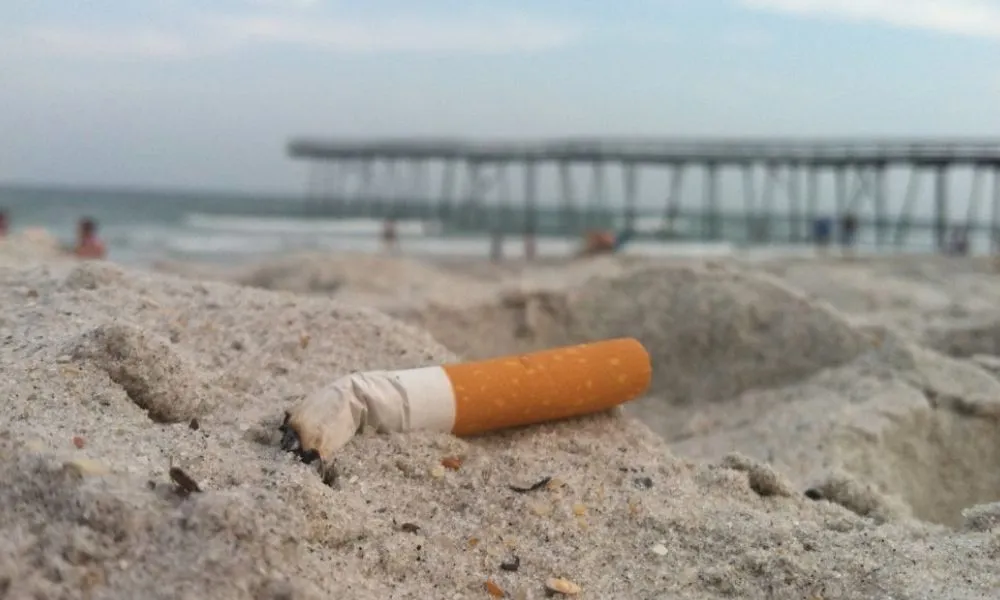
Cigarette butts and tobacco product filters are among the most common types of litter on streets and beaches, but also among the most toxic.
According to data considered within the framework of the new system:
- many smokers do not even consider them “waste”
- they end up everywhere in the environment without control
- they have a serious impact on cities, beaches and seas
However, what is most worrying is that their filter contains plastic that does not easily decompose.
Two years of consultations preceded
According to a meeting of the Parliamentary Environment Committee on February 18, 2026, where the issue was discussed, approximately two years of consultations preceded between the relevant stakeholders, namely producers and importers of tobacco products and local authorities.
The relevant regulations, which were passed by Parliament and incorporated into the Waste Laws in order for Cyprus to comply with a European directive, were published on February 23, 2024 in the Official Gazette of the Republic, giving tobacco producers a six‑month margin (until August 23, 2024) to proceed with organising the collective waste management system.
Article 7 of the Regulations provides that the Management Body is required, among other things, to conclude agreements with the competent local authorities, in which, among other things, the roles of the parties, the collection points for such waste, the geographical scope and the timetable for expansion will be defined.
Cigarette butts and tobacco product filters are among the most common types of litter on streets and beaches, but also among the most toxic, while their filter contains plastic that does not easily decompose. According to data, many smokers do not consider them… “waste”.
Fuel use
When the issue was discussed in November 2023 in the Parliamentary Environment Committee, producers stressed that this waste would be promoted as fuel, because the increased cost of sending it to specialised processing units abroad, combined with the small quantities, estimated at 320–350 tonnes annually, makes recycling prohibitive.
During the discussion, the Department of Environment stated that the action would concern only public spaces, where increased littering is observed, such as beaches, squares, parks and commercial streets.
According to the regulations, which were subsequently incorporated into legislation, producers and importers will cover at least:
- the cost of awareness measures
- the cost of cleaning waste from these products in public spaces and its subsequent transport and processing
- the cost of collection (including infrastructure and operation), transport and processing of the waste from these products disposed of in public collection systems
- the cost of data collection and reporting
5,647 cigarette butts in one hour, yet… “a drop in the ocean”
An indication of the scale of pollution from cigarette butts in Cyprus was given during that 2023 session by Maria Panayiotou in her then capacity as Commissioner for the Environment.
She said that during a beach clean‑up campaign organised by her office with students, on a section of the Finikoudes beach in Larnaca, 5,647 cigarette butts were collected in one hour.
“It was a drop in the ocean,” she noted, as upon leaving, they realised that countless cigarette butts still remained on the beach.