The total area burned by wildfires globally in 2025 may have been among the lowest in recent decades, but a new study shows that fires are becoming increasingly destructive in wealthier regions of the world.
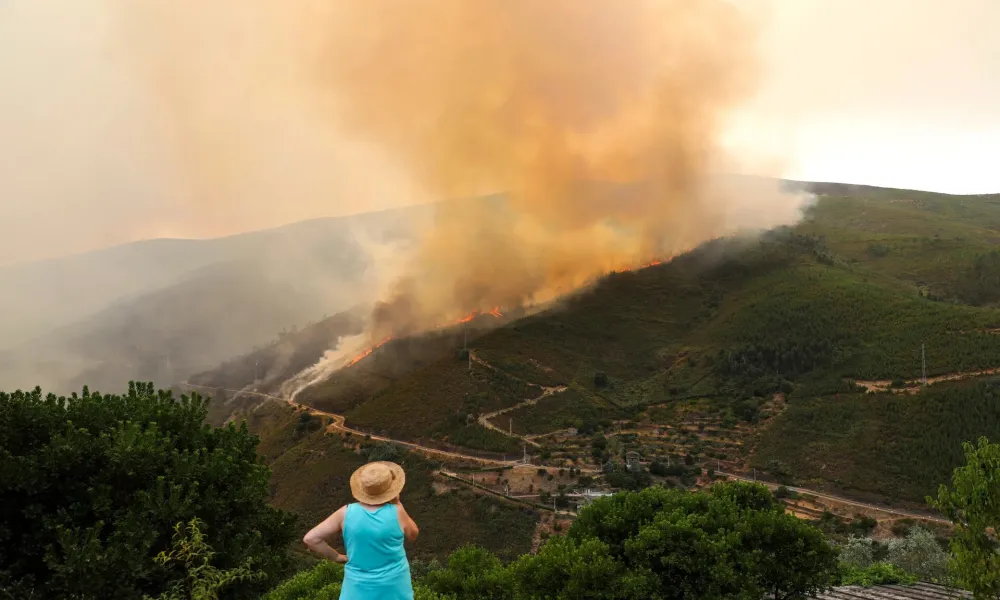
According to the research, large wildfires caused extensive damage last year in California, Canada, South Korea and several European countries, leaving behind fatalities, destroyed homes and significant economic losses.
At the same time, the total area burned worldwide reached approximately 3.35 billion stremmas (350 million hectares), marking the second lowest level since 2002. Scientists attribute this decrease mainly to changes observed in parts of Africa.
Wildfires devastating richer areas but fewer hectares burned globally
— ECIU (@ECIU_UK) June 1, 2026
Wildfires caused more financial damage in 2025 than in any other year, with 'megafires' in California, Canada, South Korea and Europe.https://t.co/VlepIExlPY
Fragmented landscapes but natural barriers to fires
The expansion of agricultural land across the African continent has fragmented landscapes, creating natural barriers that limit the spread of large savannah fires, which historically accounted for vast burned areas every year.
However, researchers stress that the reduction in the total burned area does not translate into a “decline of the problem.” On the contrary, so‑called “mega‑fires” are becoming more frequent in areas with high population density and significant infrastructure, resulting in disproportionately greater social and economic impacts.
Fires recorded in 2025 across parts of North America, Europe and Asia demonstrated that the risks linked to the climate crisis remain particularly intense. High temperatures, prolonged droughts and extreme weather conditions are creating increasingly favourable conditions for the outbreak and rapid spread of wildfires.
Scientists warn that the size of a wildfire is no longer the only indicator that should be considered. The impact on human lives, homes, infrastructure and local economies is equally important.
According to the study, the emerging picture suggests that while the planet may be burning less in purely numerical terms, the fires that break out near cities and populated areas are becoming increasingly dangerous and destructive.
Source: The Guardian