
Upgrade works at the Platania campsite continue to face delays as a number of occupants remain on the site despite repeated eviction notices, while the Department of Forests warns that their presence poses a significant forest-fire risk.
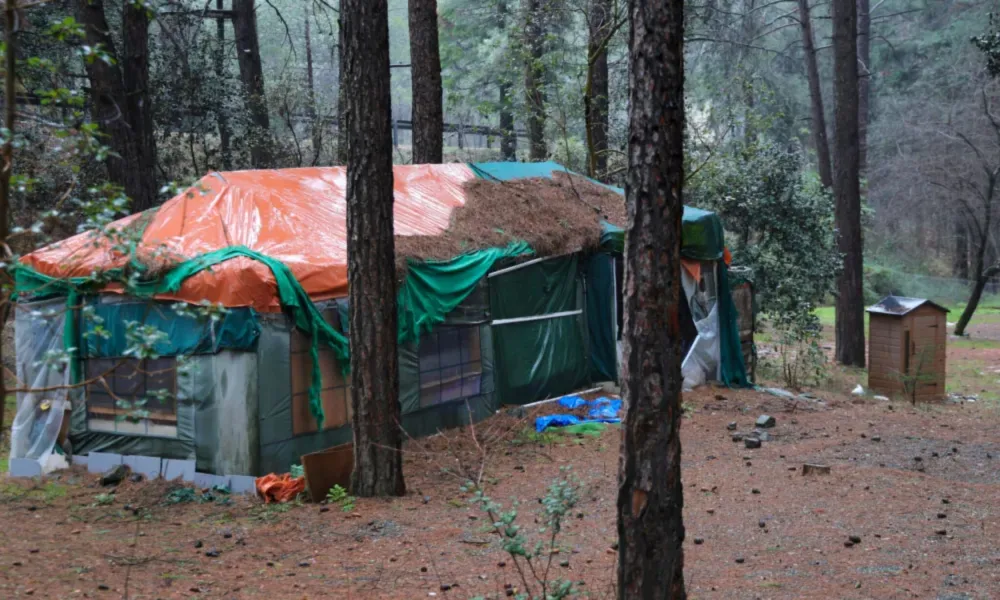
According to the department, a minority of owners of permanent caravans and other unauthorised occupants continue to use structures on the site, despite notices issued since November 2025 ahead of planned redevelopment works.
While the campsite entrance has been blocked, some occupants reportedly continue to access the area by parking outside and using permanent installations they previously constructed.
Department officials say some individuals have even erected shelter structures and fencing using concrete, despite the department's announcement at the end of July that the area would no longer operate as a campsite.
"We are waiting until everyone has moved out so that we can proceed with the upgrade works," a Department of Forests source told Politis.
According to the department, the continued refusal by some occupants to leave has delayed procedures to such an extent that completion of the project by summer 2027, the original target date, is no longer considered possible.
Officials said some owners were still dismantling unauthorised structures as recently as last weekend, though a minority remain on site.
Forest fire concerns
The Department of Forests says there is an ongoing danger of a forest fire.
Several fire incidents have reportedly been recorded in the area, linked to makeshift structures and photovoltaic systems installed by occupants.
Officials warn that as long as the structures remain, they pose a risk not only to their owners but also to approximately 200 children hosted each week at the neighbouring Scout campsite, as well as thousands of visitors to the forest area during the summer months.
"Some people appear not to understand this. They consider it an acquired right to remain there because they settled in the area years ago," the source said.
The department said it raised these concerns during meetings last winter with a campers' association representing users of the site.
Officials also argued that redevelopment is necessary to improve safety, particularly as rural depopulation has led to increased vegetation growth around forested areas.
According to the department, a fire starting anywhere in the surrounding communities could develop into a major forest fire and place campers and visitors at risk.
Lack of regulations
Officials attribute part of the problem to the absence of operating regulations for campsites managed by the Department of Forests over the past three decades.
New regulations prepared by the department are currently undergoing legal review at the Law Office of the Republic.
The planned upgrade project includes:
- Improvements to existing infrastructure.
- Designated areas for parking, caravans and tents.
- Enhanced fire-protection measures.
- New sanitary facilities.
- Facilities suitable for infants and persons with disabilities.
- Laundry facilities.
Authorities considering intervention
The Department of Forests hopes all remaining structures will be removed by the end of August.
If not, officials say further action may be required to prevent additional delays.
Under Article 42 of the Forest Law, forestry officials have the authority to demolish and remove unauthorised structures themselves and subsequently recover the costs from their owners.
Authorities may also seek assistance from the police.
Auditor-General report
The unauthorised structures at the Platania campsite were also highlighted in a special report by the Audit Office published in January.
The report referred to complaints regarding caravans remaining stationary for more than a year and permanent structures, including pergolas and fences, that altered the character of the forest area.
It also noted concerns that the site appeared to be under informal occupation and that there was no systematic recording or charging of entry fees for ordinary tents, raising questions about its management.