
Concerns over the operation of the Council for the Study of Planning Deviations (Symepa) have prompted calls for legislative reform, with lawmakers and the Cyprus Scientific and Technical Chamber (Etek) seeking clearer limits on its powers, stricter criteria for membership and stronger safeguards against abuse.
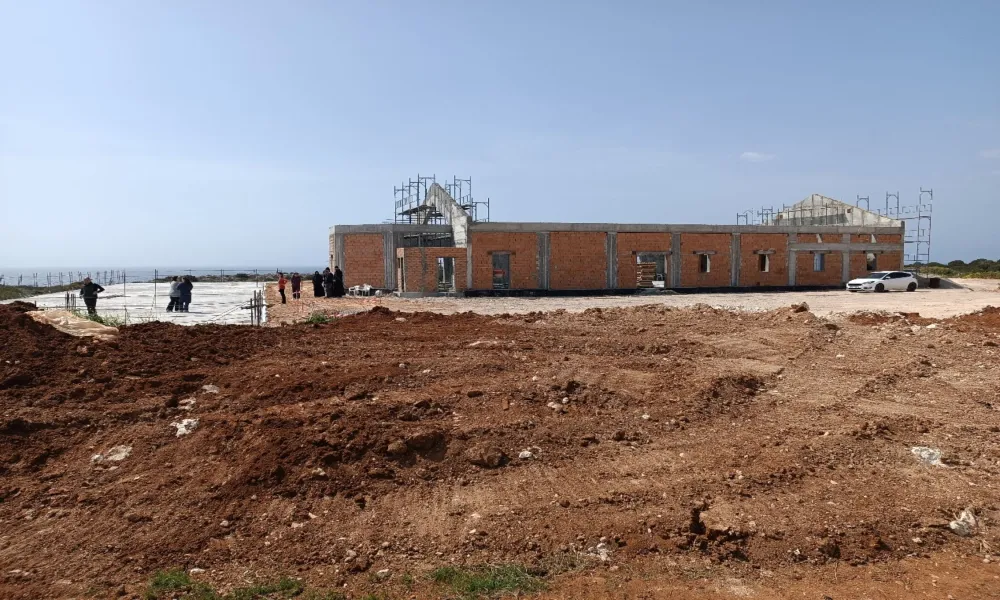
The debate was triggered by the council's initial decision on October 16 to support the retrospective legalisation of an unauthorised monastery built within the environmentally sensitive Natura 2000 area of Cape Greco. The matter was raised in parliament by Akel.
Despite criticism of the body's operation, all parties involved in the discussion, including MPs, Etek representatives, council members and government technocrats, agreed that the council should not be abolished but instead strengthened through legislative changes.
Calls for limits and red lines
The concerns were outlined by Elena Christodoulou, vice-chair of the council and Etek's representative on the body.
She said Etek intends to prepare a memorandum proposing legislative amendments and received assurances from MPs that reforms would be pursued.
"At one stage, abolition crossed my mind when I saw certain things," she admitted.
However, she argued that the council remains necessary because existing local plans do not adequately cover many forms of development. She noted that similar deviation bodies exist in countries including Malta, Canada and Italy.
Christodoulou called for clear limits on the council's authority and decision-making powers, arguing that certain developments should simply be excluded from the possibility of obtaining exceptions.
"There should be a red line beyond which development is not allowed, even if a case reaches the Deviations Council," she said.
While stressing that she was not referring specifically to the Cape Greco monastery case, she argued that developments illegally constructed in protected coastal zones should be ruled out from the outset.
"The momentum must be stopped from the beginning," she said.
Concerns over mass approvals
Christodoulou also referred to periods during which the council effectively carried out a procedural role when the state introduced development incentives.
She cited a previous term on the council when incentives were offered for hotel developments, particularly in the Famagusta district.
According to Christodoulou, the council was then required to approve large numbers of deviations, including cases where developments changed their intended use to become hotels.
She said many such approvals were criticised by the Audit Office at the time.
"Many of these deviations became a purely procedural exercise, perhaps even intended to generate revenue for public finances," she said.
Acting as referee in local disputes
Christodoulou further argued that the council frequently acts as a referee when disagreements arise within the district local government organisations.
She cited cases in which a licensing director opposes a development application while elected representatives within the same authority support it.
Etek is now planning a meeting involving current and former council members with the aim of drafting proposals for changes to the legislation governing the body.
The discussion is expected to address both the qualifications required of council members and the extent of their decision-making authority.
Cape Greco monastery under review
During the discussion, attention also focused on the Cape Greco monastery case itself.
Participants noted the absence of representatives from the Ayia Napa municipality, despite the local authority having been invited to attend.
Council chairman Sotiris Ktorides said the matter remains under review and that no final decision has been reached because new information has emerged, including correspondence and updates from the Metropolis of Constantia regarding changes to development plans.
He noted that any positive recommendation could ultimately be accompanied by strict conditions, potentially including demolition requirements or the adoption of positions put forward by government departments.
"Developments that stand out"
Speaking during the discussion, parliamentary committee chairman and Akel MP Aristos Damianou argued that the council's role should not be to retrospectively legitimise developments that were known from the outset to be illegal.
"Granting retrospective approval to an illegality that was clearly known to be illegal from the beginning is not the mission Symepa should have," he said.
"There are developments that stand out as obvious cases, and this is only one example among many."
Damianou also warned against further development pressure in environmentally sensitive areas.
"This country is too small to cover entirely in concrete," he said.
"With Cape Greco, we already face enough environmental distortions. We should not be shooting ourselves in the foot when alternatives exist outside the heart of Natura areas. And this issue has nothing whatsoever to do with religious sentiment."