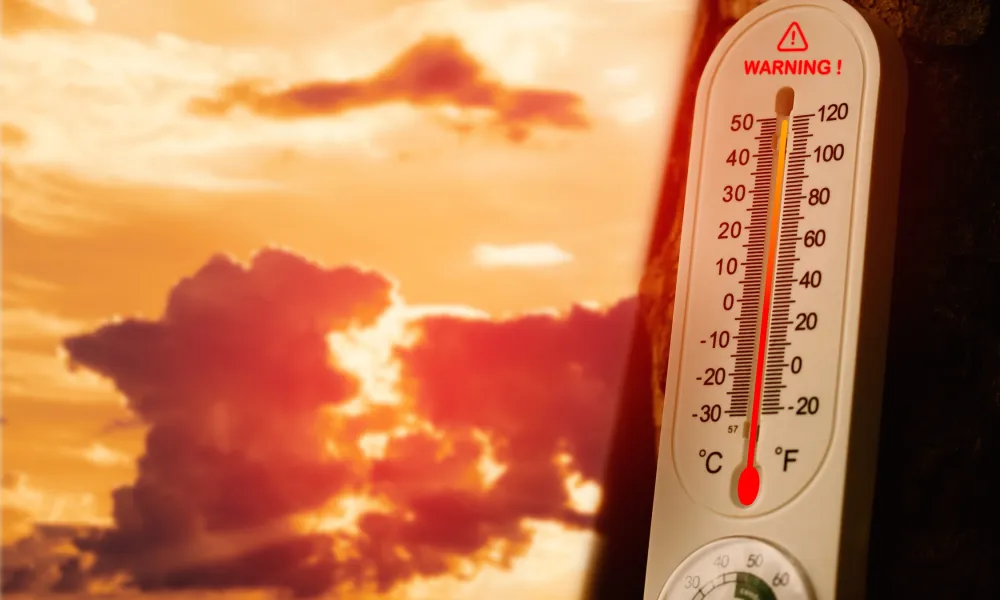

2026 is likely to become one of the hottest years ever recorded, according to Laurence Rouil, director of the Copernicus Atmosphere Monitoring Service (CAMS), who says climate data leave little room for doubt about the reality of global warming.
Speaking on the sidelines of the COP31 climate summit in Antalya, Rouil said final figures will only be confirmed at year-end but described 2026 as "a very, very warm year" that is expected to rank among the hottest on record.
Record-breaking October
The warning follows data from the Copernicus Climate Change Service, which reported that last month was the warmest October ever recorded globally.
Average global surface air temperatures reached 15.35°C, which was:
- 0.90°C above the 1991-2020 average.
- 1.75°C above estimated pre-industrial levels (1850-1900).
October also marked the third consecutive month during which global temperatures exceeded pre-industrial levels by more than 1.5°C.
Response to climate sceptics
Rouil rejected claims that current climate trends can be explained solely by natural variations.
"We have the data, we have the evidence," she said, noting that atmospheric and climate variables have been monitored for decades.
She stressed that rising greenhouse-gas emissions are directly linked to global warming and that the science is supported by thousands of peer-reviewed studies.
"Data are data and not something we have invented," she said.
Wildfires remain a major concern
Rouil also pointed to the growing impact of wildfires across Europe.
More than one million hectares burned across Europe during the 2025 wildfire season, more than double the average recorded over the previous 18 years. Much of the damage occurred on the Iberian Peninsula.
The 2026 fire season was also among the worst of the century, with around 275,000 hectares burned.
Copernicus continues to monitor wildfires in real time and works closely with national meteorological services and civil protection authorities to improve forecasting and preparedness.
Rouil said scientific advances have strengthened authorities' ability to anticipate risks, but warned that prevention also requires better land and forest management.
Success stories remain important
Despite the concerns, Rouil highlighted examples where international cooperation has delivered environmental progress.
She pointed to the recovery of the ozone layer following the Montreal Protocol as evidence that coordinated global action can work.
She also cited significant reductions in harmful particulate pollution and nitrogen dioxide emissions across Europe following stricter air-quality regulations.
However, challenges remain, including ground-level ozone pollution and the environmental impact of increasingly severe wildfires in countries such as Spain, France and Greece.
"Emission reductions, mitigation strategies and international agreements produce positive results," Rouil said. "They work."
Source: CNA