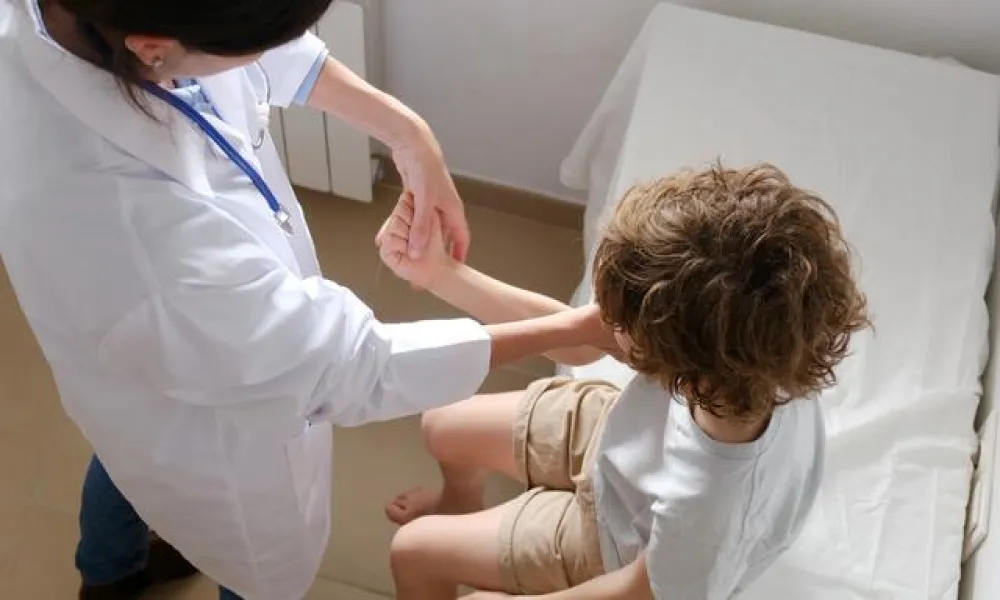
A mother of an infant with orthopaedic conditions approached the Patients’ Rights Observatory of the Cyprus Federation of Patient Associations (OSAK) to find out whether she could obtain financial support for medical equipment needed by her child.
According to the complaint recorded in May, the infant must use special shoes with a brace until the age of one, costing approximately €240 per pair, which need to be replaced every two months. At the same time, the child requires a special helmet to treat plagiocephaly, costing around €2,000. Until the moment the family sought guidance, they had been covering all expenses privately.
The response given, following OSAK’s intervention, was that this specific equipment can be covered by the Ministry of Health, provided that a relevant request is submitted together with medical reports from the treating physicians.
The cost comes first
The case highlights not only the financial burden faced by families with children requiring specialised care, but also the information gap that often precedes access to such support. In other words, the problem is not always the absence of coverage, but that beneficiaries do not know in time how to activate it.
A similar picture emerges in another complaint involving the father of a minor with a rare and serious neurodevelopmental genetic condition. As he reported to OSAK, the child requires intensive and continuous early intervention, mainly speech therapy.
However, the prescribed limit of 36 sessions per year is considered insufficient for the child’s actual needs. The father believed there was no possibility of applying for additional sessions, as he had not received the necessary information. Following communication between OSAK and the competent authority, he was informed that an exceptional request or an application for extension of therapy sessions could be submitted by the speech therapist.
According to the clarifications provided, the approval of such requests is not based solely on diagnosis, but on individual therapeutic goals and the degree to which they are achieved. This is an important detail, which the parent did not know until turning to the Observatory.
The two cases are included among the 46 complaints received in May by the Patients’ Rights Observatory of OSAK and reveal a more hidden aspect of access-to-healthcare challenges. Beyond waiting lists, shortages and delays, there are families who are effectively required to act as managers of the system itself, identifying which authority is responsible, which application is needed, what medical documentation is required and what exceptions may be requested.