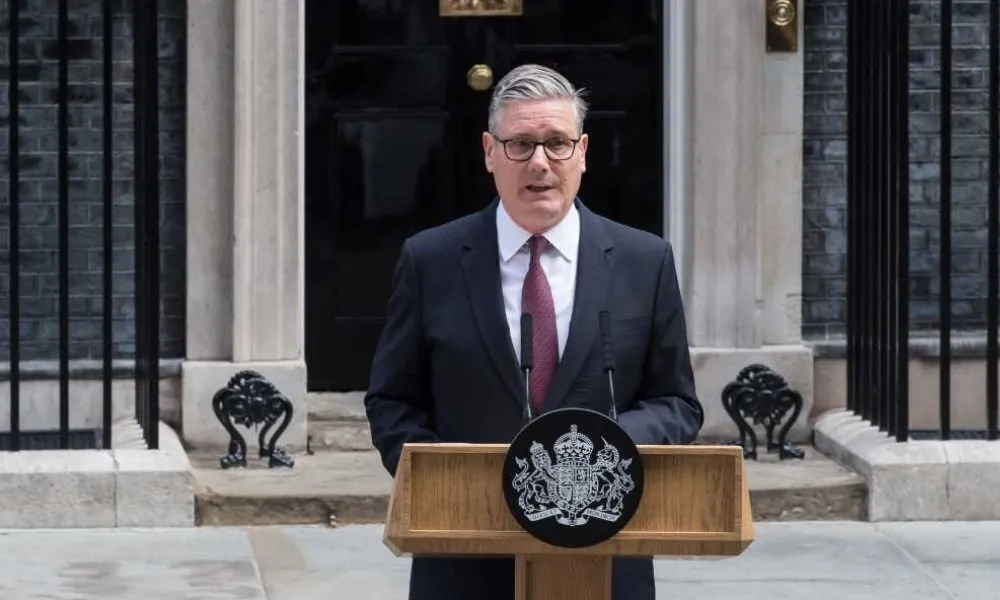

After 23 months in power, Keir Starmer announced his resignation as leader of the Labour Party and as UK prime minister, in a statement outside Downing Street that marked a faster collapse than any previous Labour prime minister after a sweeping election victory.
The resignation came immediately after Andy Burnham’s victory in the Makerfield by-election, on the outskirts of Manchester, which allowed the former mayor of Greater Manchester to return to the House of Commons. Burnham, who was sworn in as an MP the same day amid helicopters following his train from Manchester to Euston, immediately declared his candidacy for the leadership. Former health secretary Wes Streeting, who was also considered a potential contender, backed him.
Starmer’s downfall
Starmer came to power in July 2024 with a sweeping electoral result, bringing Labour into government after 14 years of Conservative rule. However, his popularity quickly declined.
The cut to winter heating benefits for pensioners, the scandal over the appointment of Lord Peter Mandelson as ambassador to the United States, who was dismissed due to links with Jeffrey Epstein, and his failure to present a clear government plan eroded his authority.
Labour slid in the polls, with Nigel Farage’s Reform UK overtaking them from early 2025. Heavy losses in the May local elections, followed by the resignation of health secretary Streeting and then defence secretary John Healey, accelerated developments.
More than 100 MPs in the party openly called for his replacement. He remained in office for some time because there was no agreement on a successor. Burnham’s election resolved this deadlock.
The path for Burnham
According to party rules, the nomination process opens on July 9 and must be completed before the summer recess of Parliament on July 16.
If Burnham remains the sole candidate, something that appears likely following Streeting’s withdrawal from the race, he will assume the premiership as early as July 17.
Starmer will remain in the meantime as caretaker prime minister, including for the NATO summit on July 7 and the EU-UK summit in Brussels on July 22.
Burnham, known as the “King of the North” for his success in managing Greater Manchester’s urban region, is considered the only figure capable of effectively confronting Reform UK in electoral areas Labour is losing.
However, the problems he inherits are significant: high debt, weak public services, rising cost of living, and an increasingly fragmented electorate.
Britain is now awaiting its seventh prime minister in a decade.