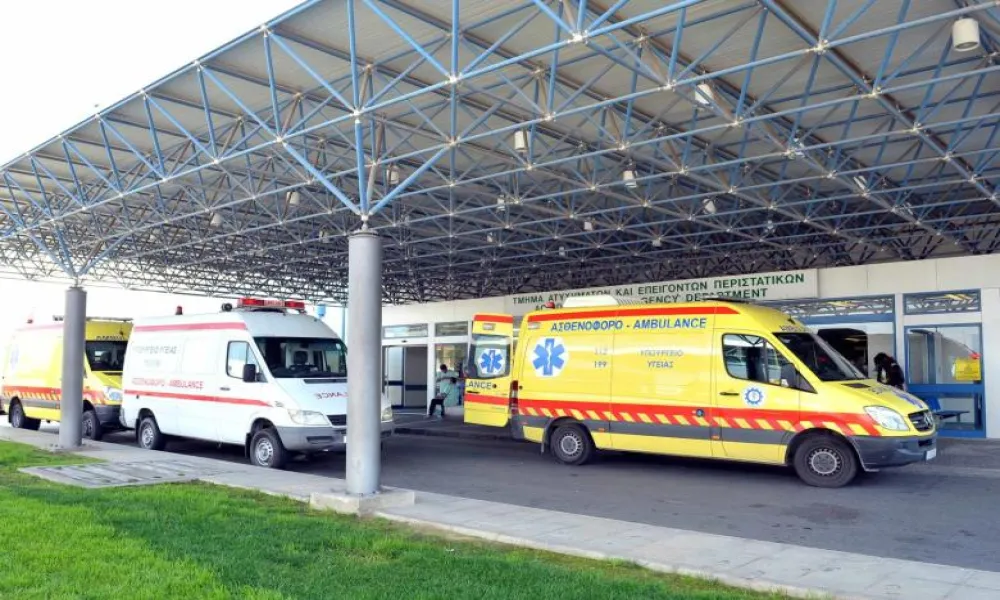

Public A&E departments in Cyprus are seeing increased demand amid very high temperatures and the summer holiday period. The State Health Services Organisation (Okypy) says staff are treating heat-related illness, sunburn and minor accidents, while hospital admissions are also increasing. No patients are currently hospitalised with heatstroke.
Hospitals and ambulance crews on standby
All public hospitals and the Ambulance Service have the necessary plans in place for the August 15 holiday, according to Okypy spokesman Charalambos Charilaou.
Charilaou told CNA that the organisation has the experience and expertise required to respond to any emergency.
“Through the General Healthcare System, we have the capacity to deal with any situation that may arise,” he said, adding that public hospitals and ambulance crews remain on standby throughout the summer, when patient numbers can increase.
A&E departments and the Ambulance Service are always staffed with the necessary doctors and support personnel, he said, as serious incidents can occur without warning.
These can include road traffic collisions, strokes, heart attacks and other medical emergencies.
Road accidents under close watch
Charilaou said road traffic accidents are dealt with throughout the year, although heavier traffic during the summer can lead to an increase in collisions on certain days.
“We are on alert for anything that may happen,” he said, while expressing hope that people would reach their destinations safely.
The organisation records patient data daily, with no significant change observed compared with previous years.
Cases remain broadly similar in both number and nature, according to Charilaou, who said Okypy was prepared to respond to any situation.
Heat-related cases increase demand
Attendance at A&E departments is currently higher than usual, partly because some personal doctors and private-sector specialists are on summer leave.
“There is increased activity at A&E departments, and admissions are also rising,” Charilaou said.
Very high temperatures are contributing to the increase, with patients presenting with heat exhaustion, heatstroke and sunburn. Minor accidents occurring in the mountains or at sea are also being recorded.
Although no patients are currently hospitalised with heatstroke, A&E departments are treating several cases of heat stress.
These mainly involve vulnerable groups, including children, older people and those with cardiovascular or respiratory conditions.
Charilaou said patients presenting with heat stress are examined and subsequently discharged, without requiring hospital admission.
Source: CNA