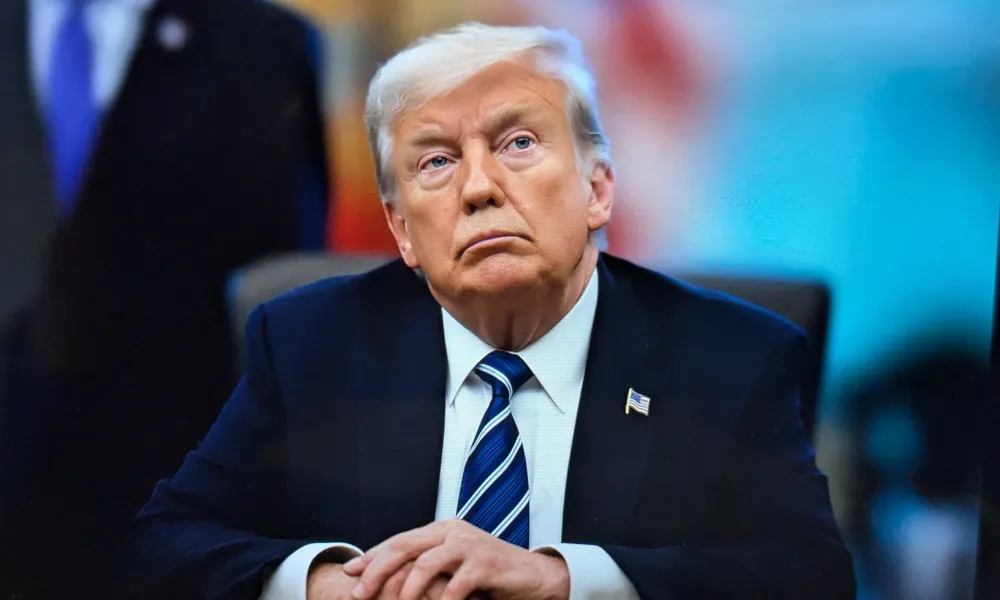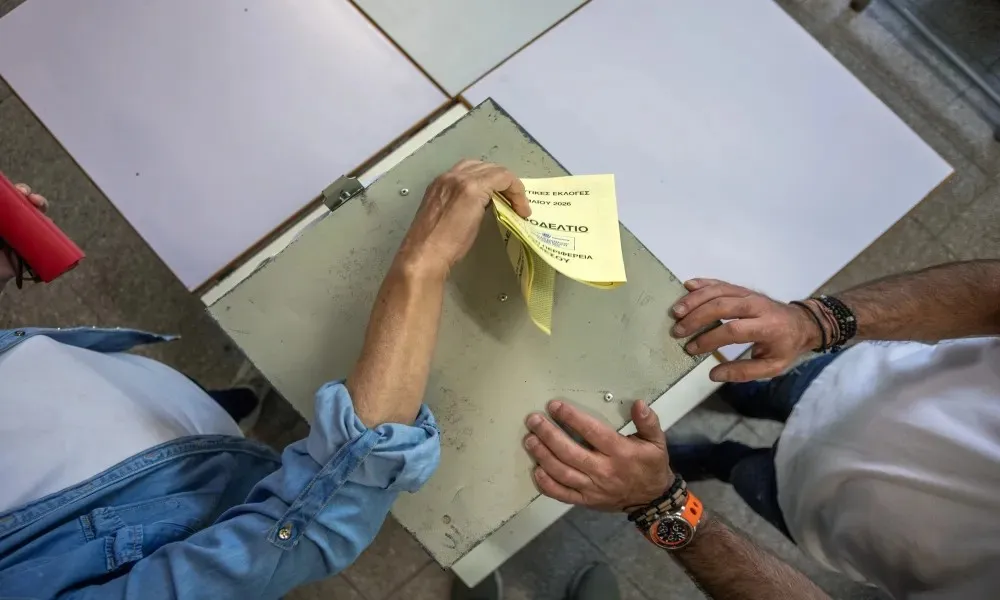
Nicos Christodoulides, after casting his vote yesterday, told journalists that he voted “based on his ideological and political identity.” It remains unclear which party received the President’s vote. In any case, the result of the parliamentary elections is already creating new political dynamics and directly affecting the President’s plans ahead of the 2028 presidential election. The outcome concerns not only the distribution of power in parliament, but also acts as a political barometer for the stability of the current governing arrangement, the balance within the party system and the President’s re-election prospects.
Presidential pressures
The key takeaway from the elections is the resilience of DISY. Despite internal turbulence following the 2023 presidential elections and the loss of power, the party maintained strong support, close to its 2021 levels. This development carries particular political weight, as within the Presidency there had been expectations that a significant drop would trigger internal pressure and potentially open the way for a future political alignment with Nicos Christodoulides.
Instead, DISY’s electoral strength has reinforced its autonomy and confidence. The party now appears capable of playing a leading opposition role and planning its return to power in 2028. This significantly limits the President’s room to pursue political outreach towards the traditional right or to exploit internal party divisions that had emerged after the first round of the 2023 presidential election.
At that time, DISY’s failure to reach the runoff had deepened divisions within the party. The leadership’s decision to allow voters to act “according to conscience” enabled Christodoulides to draw support from its base. That dynamic has now changed. A politically solid DISY is unlikely to accept political coexistence with the current President, let alone allow internal imbalances to develop.
Shrinking allies
At the same time, the parties that formed the core support base for Christodoulides’s candidacy have weakened. In the 2021 parliamentary elections, DIKO, EDEK and DIPA together secured around 26%. Following the latest vote, only DIKO has remained in parliament.
The political alliance that propelled Christodoulides to the second round in 2023, and ultimately to the presidency, has lost much of its momentum. While DIKO has maintained a notable presence, smaller parties such as EDEK, DIPA, as well as other minor political forces, now face serious challenges to their political survival.
A difficult path
This means that Nicos Christodoulides is effectively entering a new political phase in which his main party backing remains DIKO, but without a broader and stable governing bloc. This development raises concerns within the Presidency, as it faces what could be described as an unfavourable political environment.
Within this context, the strengthening of ELAM is also notable. The party appears to be consolidating its role as a significant player in the political system and, despite not meeting some expectations, is gaining influence in public debate. It is also emerging as a more prominent interlocutor with the President.
However, questions remain over whether ELAM will reassess its own strategy. There is a possibility that its attempts to attract figures from DISY, reportedly encouraged by the Presidency, may have diluted its identity and weakened its core characteristics. A stronger ELAM may now seek greater political autonomy rather than acting as a supplementary partner.
Final assessment
In conclusion, early assessments suggest that the election result represents a setback for Nicos Christodoulides in implementing his strategy ahead of the 2028 elections. Based on the outcome, the President may be counted among the political losers.
The result does not provide the conditions for the political dominance he may have sought. How he will attempt to address this disadvantage remains to be seen in the coming period.
“By a few votes”
In his post-election remarks, the President expressed regret that DIPA and EDEK failed to enter the new House, noting that their absence was decided by a few votes. “They deserved to be there,” he said.
This acknowledgement also reflects the political isolation now facing the Presidency, as DIKO effectively remains its only formal governing partner.
At the same time, Christodoulides said the electoral process had been conducted smoothly and thanked all those involved for their professionalism. He stressed that elections belong to democracy and the citizens, and that the verdict of the Cypriot people is fully respected.
He congratulated all candidates and political forces for their participation, as well as those elected, and conveyed a message of cooperation to the new parliament. Referring to government policy, he said the administration would continue implementing its programme, focusing on strengthening the economy, advancing reforms and improving citizens’ daily lives, while building a resilient and credible Cyprus.
He added that the government would work institutionally with the new House, in a spirit of dialogue and responsibility where there is common ground, noting that the period ahead requires collective responsibility and respect for the public mandate.