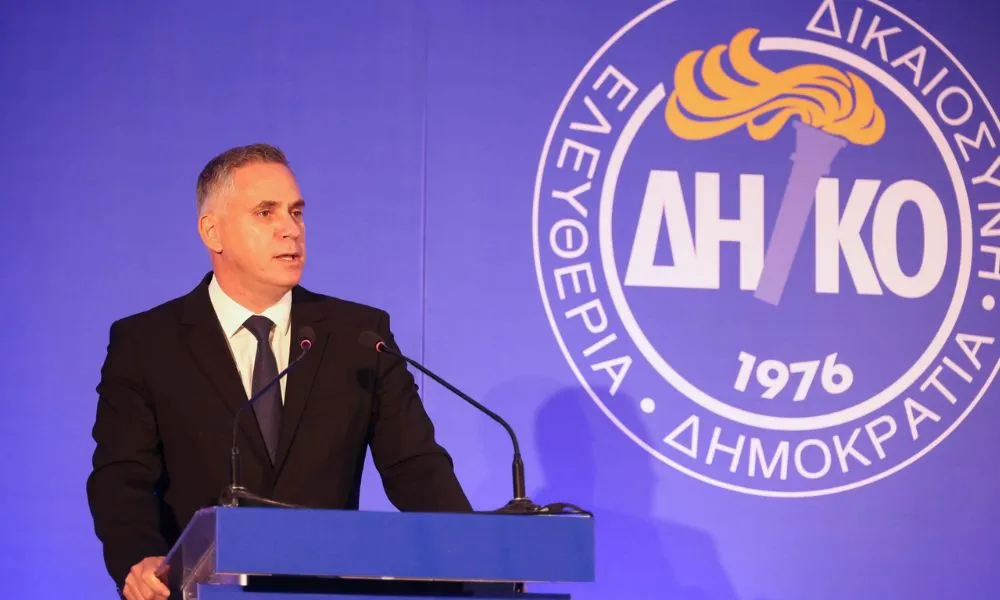
Despite a further, albeit slight, drop in its vote share, the Democratic Party (DIKO) has “survived” the latest electoral contest. The party lost ground in the political hierarchy, falling from third to fourth place for at least the next five years. A second setback is the reduction in parliamentary representation, securing eight seats compared with nine previously. Despite these changes, DIKO is still expected to retain a balancing role in the new House.
For many, the election was seen as a battle for political survival for both the party and its leadership. The primary aim was to maintain support levels as close as possible to the 2021 parliamentary result, when DIKO secured 11.29% and held nine seats, later rising to eleven through defections. The latest vote gave DIKO 10%, marking a drop of around 1.3 percentage points compared with 2021.
The outcome also reflects DIKO’s role in government, as the largest party supporting President Nicos Christodoulides. There had been expectations that participation in government would translate into electoral gains. However, it remains to be seen whether broader dissatisfaction with the administration contributed to the party’s decline.
Ongoing concerns
A key concern for DIKO is the continued downward trend in its electoral performance. In 2011, the party secured 15.75% and nine seats. In 2016, it dropped to 14.49%, maintaining nine seats. In 2021, it fell further to 11.29%, and now stands at 10% with eight seats. Over the past decade, the party has lost close to five percentage points.
Governing position
Another significant element is that DIKO is now the only party participating in the governing arrangement that remains represented in parliament, following the failure of EDEK and DIPA to secure seats. Although the election was parliamentary, some observers noted that this effectively elevates DIKO’s position within the governing framework.
Rebuilding the centre
DIKO leader Nikolas Papadopoulos said the party remains the main representative of the centre in the new House and continues to hold a decisive role in the political landscape. He stressed the need to regroup the centre ground and address voter abstention.
He acknowledged the high level of abstention as a warning signal, and pledged initiatives aimed at uniting and rebuilding the centrist space. “The party remains the only stable force of the centre,” he said, adding that efforts would begin immediately to bring together centre voters who have grown disillusioned.
Papadopoulos said internal party bodies would meet in the coming days to carry out a measured assessment of the election result and to define the next steps.