

Iran and Israel moved to de-escalate on Monday after a night and morning of strikes that shattered their two-month ceasefire and briefly threatened to drag the region back into all-out war. Iran's Revolutionary Guards declared they had concluded their military operation against Israel. Netanyahu, after pushback from President Donald Trump, instructed the Israeli military to halt preparations for a further attack on Iran. By mid-morning local time, a fragile calm had returned, though both sides left themselves room to resume fighting if the other acted first.
The de-escalation came with explicit conditions. Iran's Central Headquarters of Khaatam al-Anbiya, the Guards' top command, warned in a statement carried by state broadcaster IRIB that "if aggression and hostile acts continue, including in southern Lebanon, much harsher and more forceful actions than before will follow."
The sequence began on Sunday when Israel struck Dahiya, the southern suburbs of Beirut and a Hezbollah stronghold, after the Iran-backed group fired rockets into northern Israel. Iran retaliated that evening with at least 11 ballistic missiles at Israel, the first such direct attack since the April ceasefire. The Israeli military said its air defences intercepted the barrage, and citizens were cleared from shelters by 11pm. Schools were closed nationwide on Monday.
In the early hours of Monday, Israel launched two waves of airstrikes across Iran, focusing on air defence systems that had been rebuilt since the February war, as well as the Mahshahr petrochemical complex in Khuzestan province, Iran's largest such facility and the first energy site struck inside Iran since the April ceasefire. Tens of thousands of workers were evacuated from the complex; no casualties were reported. Explosions were heard in Tehran, Tabriz, Isfahan and nearby Najafabad, with Iran's state broadcaster reporting Israeli drones intercepted over the capital. All flights to and from Tehran's Mehrabad airport and Kermanshah airport were suspended.
Iran's Revolutionary Guards said they subsequently struck Israeli air bases Nevatim and Tel Nof in retaliation, and also claimed to have targeted an industrial site in the Israeli coastal city of Haifa, which Israeli authorities did not immediately confirm. A Houthi missile was also fired at central Israel from Yemen on Monday, the group's first such attack since April, as the Iran-aligned militia simultaneously announced a naval blockade against Israeli shipping in the Red Sea. In total, Iran launched nearly 30 ballistic missiles at Israel across the entire exchange, according to the Israeli military, which said all were intercepted.
Trump caught between Netanyahu and the deal
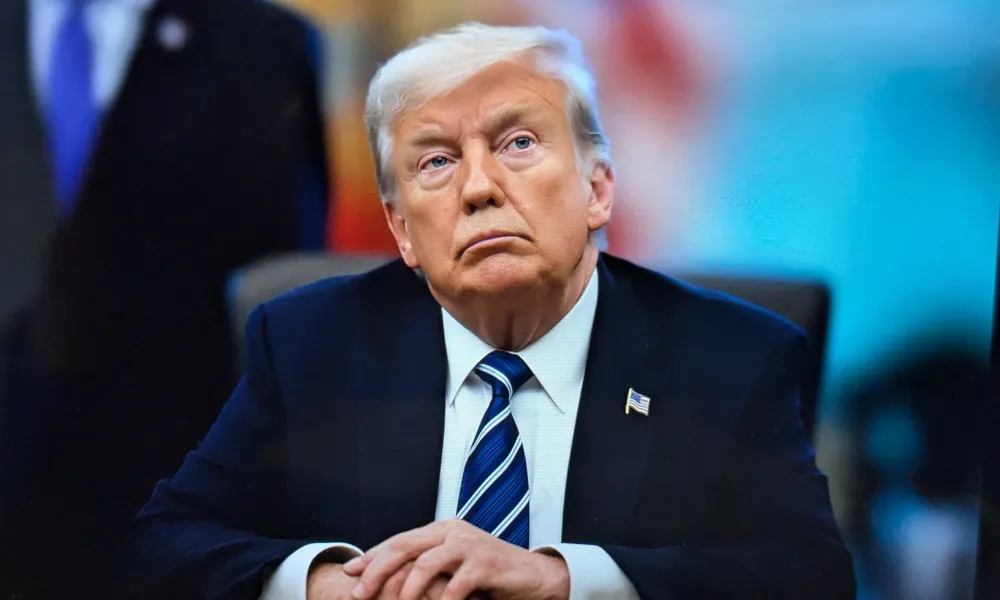
Trump spent Monday caught between his frustration with Netanyahu and his insistence that a peace deal with Iran remained alive. He had told Netanyahu by phone on Sunday night to refrain from retaliating, according to an Axios report citing a US official, because "we are close to doing something good in terms of a deal." He posted on social media on Monday urging both sides to "immediately stop shooting," and claimed that both Israel and Iran were "looking to do an immediate ceasefire" and that final peace negotiations were "proceeding." That last claim was not immediately supported by anything either government said publicly.
Netanyahu's decision to strike Iran's petrochemical complex hours after that phone call was, by any reading, a direct defiance of Trump's request. For Netanyahu, facing elections in the autumn and trailing in the polls, the domestic calculus was clear: showing his base that he would stand up to Washington and hit Iran hard was politically valuable, whatever the diplomatic cost. Israeli analysts noted that a few days of strikes could also strengthen Israel's hand in any eventual peace negotiations by inflicting fresh damage on Iranian infrastructure. Whether Trump absorbs the defiance or eventually pushes back harder is now one of the central questions hanging over the region.
Iran's strategic logic
For Tehran, the decision to retaliate so forcefully for an Israeli strike on Beirut carried its own strategic reasoning. Iranian officials had warned for weeks that any Israeli expansion of strikes to Beirut's southern suburbs would cross a line. When Israel crossed it, failing to respond would have signalled weakness and undermined Iran's entire posture of deterrence, particularly after its new leadership had staked its credibility on being more aggressive than its predecessors. "Failure to respond would signal weakness," Ali Vaez, a senior Iran analyst at the International Crisis Group, said. Iran also believes, analysts say, that Trump, facing a deepening economic crisis and midterm elections, has limited appetite to re-enter full-scale war, giving Tehran confidence it can absorb Israeli strikes without triggering a catastrophic US response.
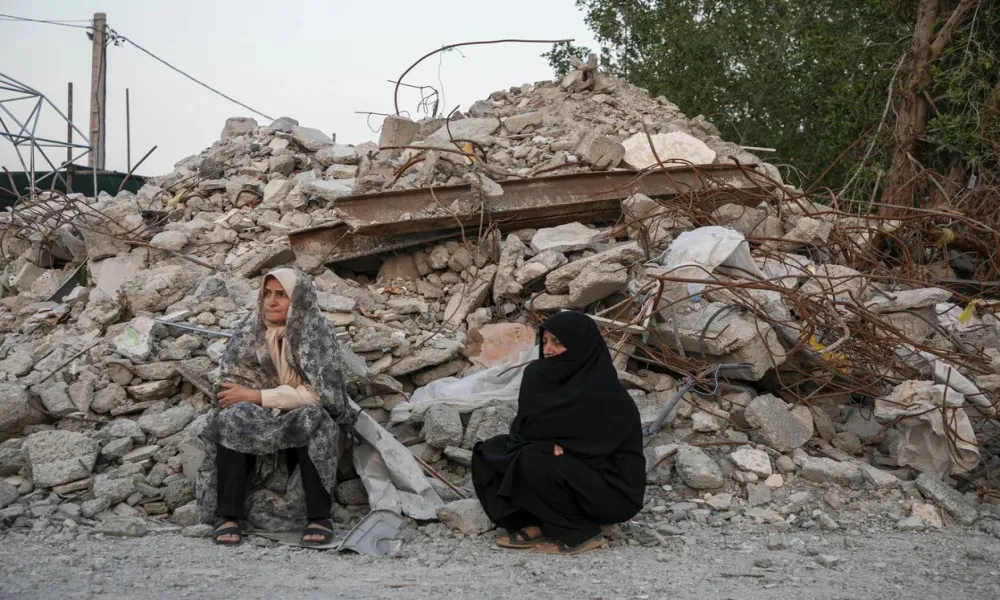
In Tel Aviv, Israelis described a familiar, exhausting rhythm. "We're in a never-ending loop of war," said Eugene Koval to the New York Times, a hospitality worker in the port city of Jaffa. "The only way out is through a political deal, but this government is incapable of getting on board with one." In Tehran, residents who had been cautiously rebuilding a sense of routine woke in the early hours to massive explosions and the now-habitual scramble through family WhatsApp groups to piece together what was happening. "We were just starting to get back to some level of normalcy," said Keivan, a 46-year-old business owner. "It's all up in the air again."
Markets and the broader fallout
Oil prices swung sharply through the day. Brent crude jumped above $97 a barrel in early Monday trading before paring gains as the de-escalation signals emerged, settling around $95, up roughly 2% on the day. Analysts remained focused on the Strait of Hormuz, which has been effectively closed since February and through which roughly one-fifth of the world's oil and gas normally flows. The Houthi threat to the Red Sea added another layer of concern: the waterway has been a critical alternative route for Saudi Arabian oil exports since the Hormuz closure, and even the threat of Houthi action there is enough to drive up insurance premiums and deter shipping. "They can just send a signal and only one attack has to happen, and that will send a shock across insurance companies," said Farea Al-Muslimi, a research fellow at Chatham House focused on Yemen.
Britain and Canada renewed calls for de-escalation. The European Union urged all parties to return to negotiations. Netanyahu was scheduled to convene a full security cabinet meeting on Monday evening. Whether the day's fragile quiet holds overnight, or whether the next Hezbollah rocket into northern Israel triggers another cycle, remains the defining uncertainty of a conflict that has now lasted 100 days with no end clearly in sight.
Source: The New York Times