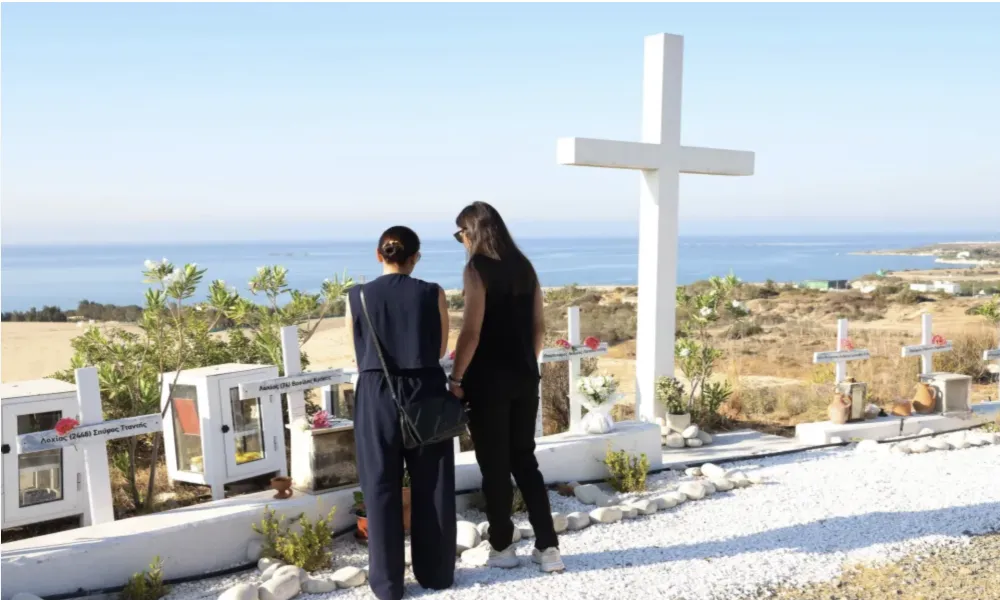
Fifteen years have passed since the explosion at the Evangelos Florakis Naval Base in Mari, one of the darkest days in the history of the Republic of Cyprus. The blast on 11 July 2011 claimed the lives of 13 people and caused extensive damage, making it the country's deadliest peacetime disaster since the 1974 Turkish invasion.
The tragedy exposed failures in the handling of a highly sensitive political and diplomatic issue involving confiscated military cargo, while raising enduring questions over decision-making, accountability and whether sufficient priority had been given to protecting human life.
In the years since the explosion, public debate has centred on the criminal prosecution of public officials, the extent to which political responsibility should carry criminal liability, and the separate legal proceedings conducted in Cyprus and Greece.
On 9 July 2013, the Larnaca Assize Court convicted former Defence Minister Costas Papacostas of manslaughter and causing death through a reckless, negligent or dangerous act.
The court also found Fire Service Director Andreas Nicolaou, Deputy Fire Service Director Charalambos Charalambous and EMAK commander Andreas Loizides guilty of causing death through reckless, negligent or dangerous conduct.
Former Foreign Minister Markos Kyprianou and former National Guard Deputy Chief Savvas Argyrou were acquitted of all charges.
No military convictions in Cyprus
One of the most debated aspects of the legal proceedings remains the absence of any convictions of serving military officers in Cyprus, despite the fact that responsibility for storing the seized ammunition rested with the National Guard.
The only National Guard officer to stand trial in Cyprus was former Deputy Chief Savvas Argyrou, who was acquitted.
The Larnaca Assize Court's judgment traced events from the seizure of the cargo through the meetings and assessments that followed, culminating in the fatal explosion.
The court found that in March 2009, 98 shipping containers—most containing explosives and propellant powder seized from the Monchegorsk after it was intercepted while transporting military material from Iran to Syria—were placed in an open storage area at the Evangelos Florakis Naval Base.
The containers remained exposed to the elements for more than two years before exploding on 11 July 2011. According to the court, the explosion was caused by the ignition of propellant materials after prolonged exposure to high temperatures inside the containers.
Greek military court examined chain of command
Questions over the role of then National Guard Chief Lieutenant General Petros Tsalikidis were addressed through separate proceedings before the Five-Member Military Court of Athens.
As a Greek officer seconded to serve as Chief of the National Guard, he fell under the jurisdiction of the Greek military justice system rather than the Cypriot courts.
In its 2016 judgment, the Athens military court found Lt Gen Tsalikidis guilty of 13 counts of negligent homicide by omission and sentenced him to seven years' imprisonment.
The court concluded that the military leadership was aware of the growing danger posed by the prolonged outdoor storage of the containers and that the method of storage failed to comply with recognised safety standards for explosives.
It also found that after a swollen container was identified in early July 2011, and despite the military leadership being informed of the increased risk, no adequate measures were taken to address the danger.
According to the ruling, no orders were issued to implement immediate safety precautions or to evacuate personnel from the naval base, even after a fire broke out among the containers in the early hours of 11 July.
The military court held that, by virtue of his position, the National Guard chief had a specific legal duty to protect the lives and physical safety of military personnel, and that his omissions contributed directly to the fatal outcome.
At the same time, the judgment stated that responsibility did not rest solely with the defendant. It found that the decision to store the ammunition in an unsuitable location and the manner in which it was kept were significant factors that led to the self-ignition of the explosives and that responsibility for those decisions was shared by others.
Fifteen years on, the Mari explosion remains a defining moment in Cyprus' modern history, both for the lives that were lost and for the continuing debate over institutional responsibility, crisis management and the lessons that should have been learned.