
By Dan Jørgensen, European Commissioner for Energy and Housing
Can we honestly say that in Europe we are free and independent?
Yes, in the sense that freedom is clearly enshrined in our fundamental declarations, our constitutions and our Treaties.
Yet if we look closely at the energy bills we pay, a different picture is revealed.
In recent months, events unfolding in a strait 33 kilometres wide in another part of the planet have limited our ability to heat our homes and to buy everyday essentials.
The time has come for Europe to change course.
One lesson we must draw from today's crisis is that Europe cannot be truly independent if it does not have energy independence.
Every genuine independence movement begins with the people. That is happening now too.
Across Europe, we are seeing the first sparks of an electrification revolution.
In the first quarter of 2026, more than 500,000 electric cars were registered across the EU.
In the same period, the combined sales of domestic heat pumps in France, Germany and Poland exceeded 400,000.
The peoples of Europe are choosing electric power, and the explanation is simple.
Recently, for example, I was in Finland where, according to our figures, the cost of driving an electric vehicle is 2.60 euros per 100 kilometres, while the cost of petrol is 9.20 euros per 100 kilometres.
According to the think tank CONCITO, through the combination of electric vehicles and heat pumps, European households can save between 1,700 and 3,000 euros a year.
Europe's citizens are reading the signs of the times. They are not simply ready for the clean transition but are also ready to lead it.
Now, the only question is this: how will the EU's governments be able to keep pace with the citizens?
Producing more electricity in Europe
First, we must produce more electricity in Europe, drawing on our own resources.
We must build more wind farms. We must install more solar panels. In the countries that choose nuclear energy, we must develop the next generation of power stations and electricity-generation technologies.
In this way, we will be able to free our economies from costly fossil fuel imports and give them a boost with our own, clean and affordable energy.
Moving electricity across the continent
Second, we must make it easier to transmit electricity across our entire continent.
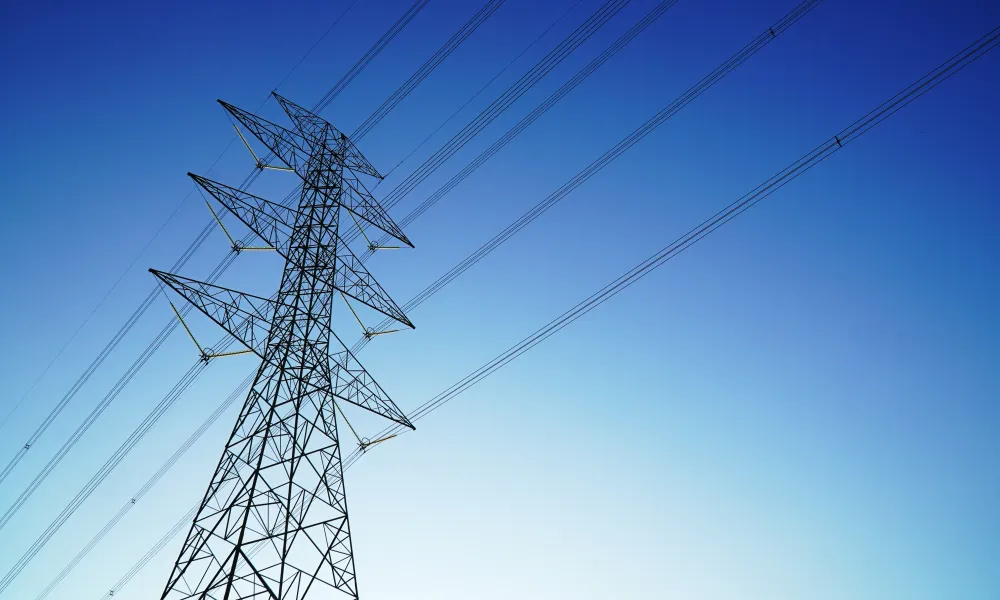
For this purpose, we will need to upgrade the power lines and transmission cables. We will need to strengthen cross-border connections, and also to build more battery installations so that we can flexibly store electricity and channel it where it is needed.
For all this, we must make investments. These are, however, investments that make sense and will help us save money.
By 2040, we will need to invest 1.2 trillion euros in the electricity transmission and distribution networks. And yet, by that year, for every euro we invest in the electricity grid we will save more than two euros in system costs.
If we work together as Europe, investing collectively and planning strategically, we will be able to reduce costs and multiply the benefits.
Leaving no one behind
Finally, we must support the parts of our economy and society where electrification is lagging, in particular industry, transport and buildings.
There are solutions. Electric furnaces in factories. Electric vehicles and charging stations on our roads. Smart meters, solar panels and heat pumps in our homes.
This is what an electric Europe means. And we must make sure that no one is left out.
For example, Austria is helping vulnerable citizens replace fossil fuel boilers with clean alternatives.
France has a social leasing scheme for electric vehicles, thanks to which low-income households can lease new electric vehicles at affordable prices.
If we make the right choices, the wave of electrification will benefit everyone.
The European Commission will present the Electrification Action Plan for Europe, which will include the above, as well as other practical steps that will bring us closer to our ultimate goal, which is for Europe to emerge as the planet's first electric continent.
This is an ambitious but necessary goal, because we must free our future from the shackles of fossil fuels.
By harnessing domestic energy and electrifying Europe, we can usher in a new era of freedom for our citizens in every home and factory, in every town and village, for every worker and every entrepreneur.
It is time for all of us together to join forces and to secure European independence, leading the electrification revolution.