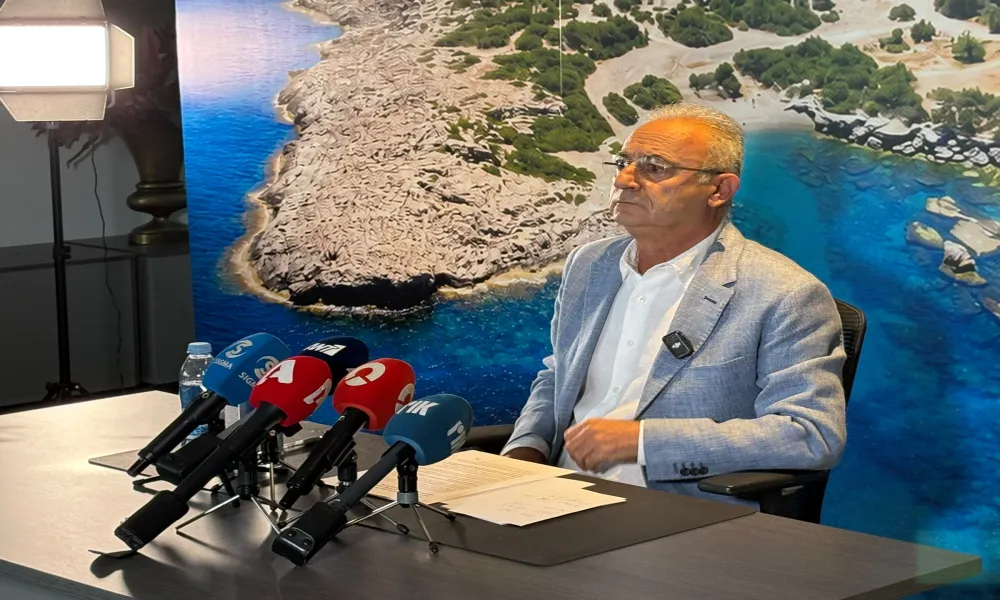

Former DISY leader Averof Neophytou stopped short of clarifying whether he intends to seek the party's nomination for the 2028 presidential election, telling reporters that he would address the issue next week.
Speaking at a press conference in Strovolos on Friday, Neophytou said: "I will not hurt my fellow party members. I gave my word of honour and I will not go back on it."
No announcement on DISY nomination
Asked about internal party matters, Neophytou declined to reveal his intentions regarding the DISY nomination race.
"I am responsible for what I say and what I mean, but I am not responsible for how others perceive or interpret it," he remarked.
He added that, while he respected media interest in DISY's internal affairs, the country's pressing social and economic challenges should take precedence.
Focus on cost of living
Much of Neophytou's intervention centred on the rising cost of living and the impact of the energy crisis.
He warned that households and businesses were facing mounting pressure, noting that diesel prices in Cyprus had exceeded €2 per litre, while staple goods such as bread and milk continued to become more expensive.
According to Neophytou, temporary relief measures are insufficient and should be replaced by long-term policies targeting the root causes of inflation, particularly energy costs.
Call to review Russia sanctions
Neophytou called on President Nikos Christodoulides to raise the issue of lifting sanctions on Russia at the next European Union summit as part of efforts to tackle the energy crisis and rising living costs.
He also stressed the need for greater use of renewable energy sources to reduce costs for households and businesses.
While advocating what he described as a pragmatic approach, Neophytou said this did not diminish his condemnation of Russia's invasion of Ukraine, which he described as unacceptable.
Warning of economic pressures
The former DISY leader warned that Cypriot households could face further economic hardship during the winter months due to rising energy prices.
He predicted higher inflation, further increases in the prices of essential goods and higher loan repayments.
"I do not want to be a prophet of doom," he said, warning of a potential cycle of rising costs and growing financial strain on households.
He also criticised the government's handling of economic policy, arguing that while public finances may have improved, many citizens continued to struggle.
"We are celebrating higher fiscal surpluses and lower public debt at a time when the debt burden of the average citizen is increasing," he said.