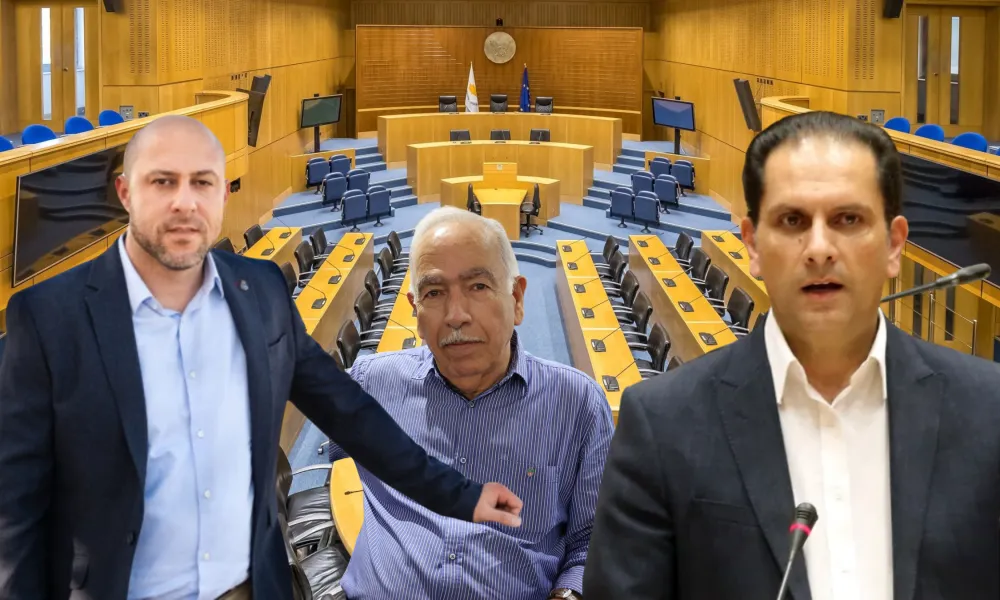

Allegations by MP Zacharias Koulias concerning around 160 public service appointments and promotions are set to be examined by Parliament, after Akel MP Aristos Damianou raised concerns about possible preferential treatment during oral interviews.
Speaking on Politis 107.6 & 97.6 radio programme Morning Briefing, hosted by Katerina Eliadi, Damianou and Disy MP Giorgos Lysandridis also highlighted serious staffing shortages in district administrations and called for a review of recent staff transfers.
The discussion focused on the recruitment and promotion allegations, as well as the transfer of experienced employees away from district administrations.
Damianou: Allegations cannot be dismissed
The Chairman of the House Interior Committee, Aristos Damianou, said Koulias's allegations could not simply be dismissed, adding that he had been informed of specific cases in which candidates may have received preferential treatment.
He explained that the allegations concerned procedures involving oral interviews, through which some candidates may have been given an advantage.
The matter is expected to be examined by either the House Institutions Committee or the House Audit Committee, where the relevant evidence should be presented.
"There is also an ethical dimension," Damianou said, adding that compliance with the letter of the law did not rule out the possibility of unfair treatment.
He also argued that the administration should have taken action following the allegations rather than dismissing them.
Staffing in some departments falls to 25%
Addressing staff transfers, Damianou said the House Interior Committee had been examining the issue since September 2025, but had yet to receive convincing answers.
He said that, despite a request for the organisational chart to be submitted, no supporting documentation had been provided. Meanwhile, experienced employees were transferred during the summer.
According to Damianou, staffing levels in some key departments of the Nicosia District Administration had fallen to 25% of their actual capacity.
He stressed that employees with 10, 20 or even 25 years of service were being asked to leave positions in which they had built up considerable experience, without sufficient explanation of why the transfers were necessary.
Lysandrides calls for staff transfers to be reviewed
Disy MP Giorgos Lysandrides explained that a specific organisational structure had been approved for the Ministry of Interior, with the aim of retaining specialised personnel.
However, he said a decision was taken in August to transfer approximately 25 to 30 officers, mainly from district administrations, against their wishes.
He clarified that decisions to revoke secondments fall under the Department of Public Administration and Personnel, rather than the Ministry of Interior, which had already made representations on the matter.
Lysandridis stressed that district administrations continued to oversee more than 100 pieces of legislation and therefore needed adequate staffing.
He proposed reviewing the transfers, particularly in the case of employees due to retire within the next one or two years. This would allow sufficient time to recruit and train replacements before their departure.
Promotion procedures and District Local Government Organisations
Regarding Koulias's allegations, Lysandrides said that procedures for positions on the A13 and A15 salary scales were provided for under the law.
He revealed that he had also been a candidate for a senior management position on the A15 scale, saying he had not encountered anything that led him to question the process. However, he did not rule out the possibility of problems in other cases.
He added that final decisions on appointments and promotions were taken by the Public Service Commission, while some decisions were subsequently overturned by the courts because of procedural issues or incorrect administrative decisions.
Turning to the District Local Government Organisations (EOAs), Damianou said the Ministry of Interior was examining specific complaints concerning recruitment.
He also reiterated Akel's opposition to excluding EOA budgets from parliamentary scrutiny, arguing that this restricted the House's ability to exercise oversight.
Lysandrides agreed that oversight issues required examination, noting that the EOAs were still not fully staffed despite having been in operation for approximately two and a half years.