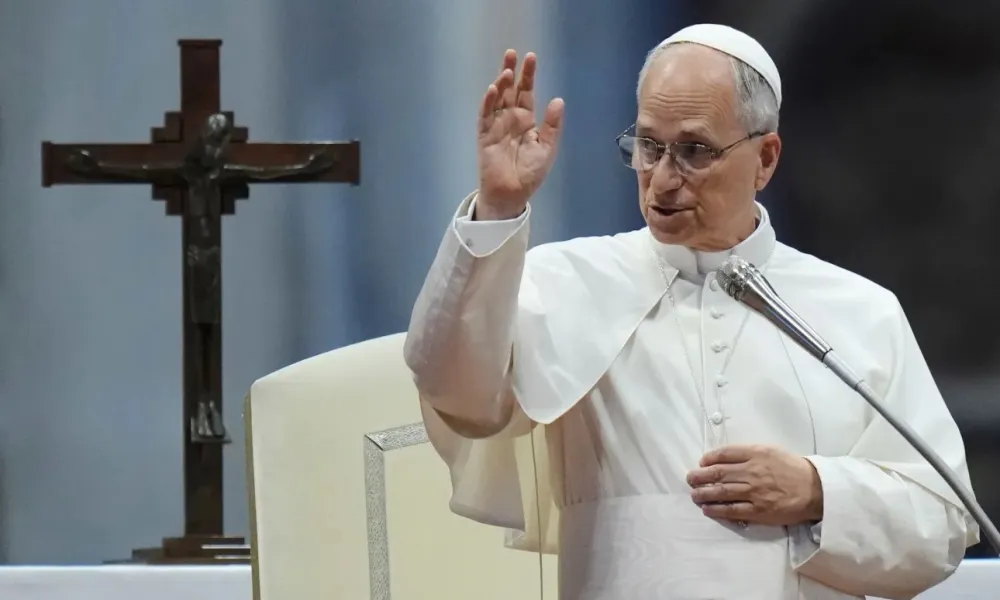



Pope Leo XIV made history on Monday by becoming the first pope to address the Spanish parliament, delivering one of his most politically pointed speeches to date in a 30-minute address that drew a standing ovation lasting nearly seven minutes, with lawmakers shouting "Long live the Pope" from the floor of the chamber.
The address, given before roughly 700 guests at the Palace of the Congress of Deputies in Madrid on 8 June, was the centrepiece of the third day of Leo's apostolic journey to Spain, which runs until 12 June. Speaking in Spanish, the American pontiff covered the central questions weighing on contemporary politics: migration, war, artificial intelligence, human dignity and what he described as a world sinking into deep spiritual and cultural crisis.
A world in crisis
At the heart of the speech was a call for moral renewal in public life. Leo said that a "moral renewal" was necessary in legislatures and in public life to ensure respect for the inherent dignity of all people, including migrants, the unborn and the most vulnerable. He warned lawmakers not to subordinate human dignity to "shifting social consensus or the whims of the majority at any given moment," insisting that "every truly just society is built upon the recognition of the inviolable dignity of the human person."
His words carried particular political weight in Spain, where the socialist-led government has been advancing efforts to enshrine abortion protections in the constitution. "Every human life must be recognised and safeguarded from conception to its natural end, in every circumstance of its existence," Leo said.
On war and rearmament
Leo repeated his firm opposition to the increase in European military spending, which he had described last month as "a betrayal of diplomacy." He called for strict ethical vigilance over the use of artificial intelligence in warfare, warning that technology must never be allowed to make lethal decisions beyond human accountability. "Weapons can impose a temporary silence, but they can never build an authentic and lasting peace," he said.
Migration was the speech's most prominent theme, delivered with particular resonance given that the visit will culminate in the Canary Islands, where Leo is to meet migrants who crossed the Atlantic. "The moral greatness of a nation is manifested, above all, in its capacity to accompany, protect and love those lives that are most fragile," Leo said. He called for solutions that go beyond the management of flows, framing the treatment of migrants as a measure of civilisational seriousness. More than 3,000 people died crossing the Atlantic to reach the Canaries in 2025 alone.
Leo also cited the 16th century Spanish intellectual tradition known as the School of Salamanca, which gave rise to foundational concepts of international law and inherent human rights following Spain's colonial conquests of the Americas, grounding his appeal in a distinctly Spanish historical conscience.
After the parliamentary address, Leo met with Spanish bishops and called on the Church to listen to victims of sexual abuse and to make reparations. The Vatican announced that the pontiff would also meet with a group of survivors during the visit, though no further details have been released.
The visit continues through 12 June, with stops in Barcelona, Gran Canaria and Tenerife still ahead.
Sources: Vatican News, NPR, National Catholic Register, America Magazine