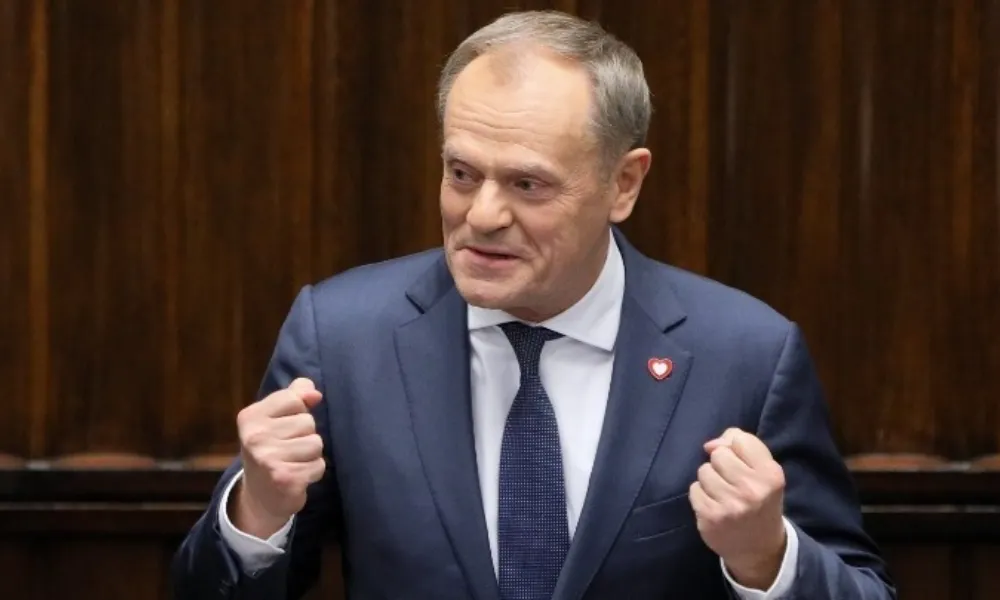
The fatal shooting of a Russian cartoonist and critic of President Vladimir Putin in eastern Poland bears all the hallmarks of a politically motivated killing, Polish Prime Minister Donald Tusk said on Tuesday.
Speaking about the death of 44-year-old cartoonist Robert Kuzovkov, who worked under the artistic pseudonym Semyon Skrepetsky, Tusk said that all available indications pointed towards a political assassination.
"If it was ordered by Russia, then it is also a very serious matter with an international dimension," he said.
Multiple shots
According to Polish authorities, Skrepetsky was shot dead on Monday morning in the town of Biała Podlaska. Investigators said the attacker fired three shots from a revolver before approaching the fallen victim and shooting him twice at close range.
Tusk revealed that both the Polish police and the country's domestic intelligence service had previously offered protection to the cartoonist, but that he had declined the assistance for reasons that remain unclear.
Two Belarusian nationals were arrested in connection with the case but were later released, judicial authorities announced. Investigators continue to search for the gunman.
Controversial cartoons
The case is likely to draw significant attention given longstanding tensions between Poland and neighbouring Russia, which have intensified in recent years amid broader regional security concerns.
Skrepetsky became known for provocative and often controversial cartoons depicting prominent Russian political figures, including Vladimir Putin, Joseph Stalin, Ramzan Kadyrov and opposition leader Alexei Navalny.
He relocated to Poland in 2021, saying he feared political persecution in Russia. From exile, he maintained his outspoken stance and participated in events organised by members of the Russian opposition.
The cartoonist had also criticised the Ukrainian government on social media on several occasions. Following those comments, the controversial Ukrainian website Myrotvorets reportedly published his home address.
Ongoing investigations
The killing has revived discussion about previous attacks against critics and opponents of the Russian state abroad. Among the most prominent cases was the 2006 death of former FSB officer Alexander Litvinenko in the United Kingdom after poisoning with radioactive polonium.
In 2018, former Russian intelligence officer Sergei Skripal and his daughter Yulia survived a Novichok poisoning attack in the English city of Salisbury. A British woman later died after being exposed to the same nerve agent.
Moscow has consistently denied any involvement in those incidents.
Polish authorities have not publicly identified a motive for the latest killing and investigations remain ongoing.