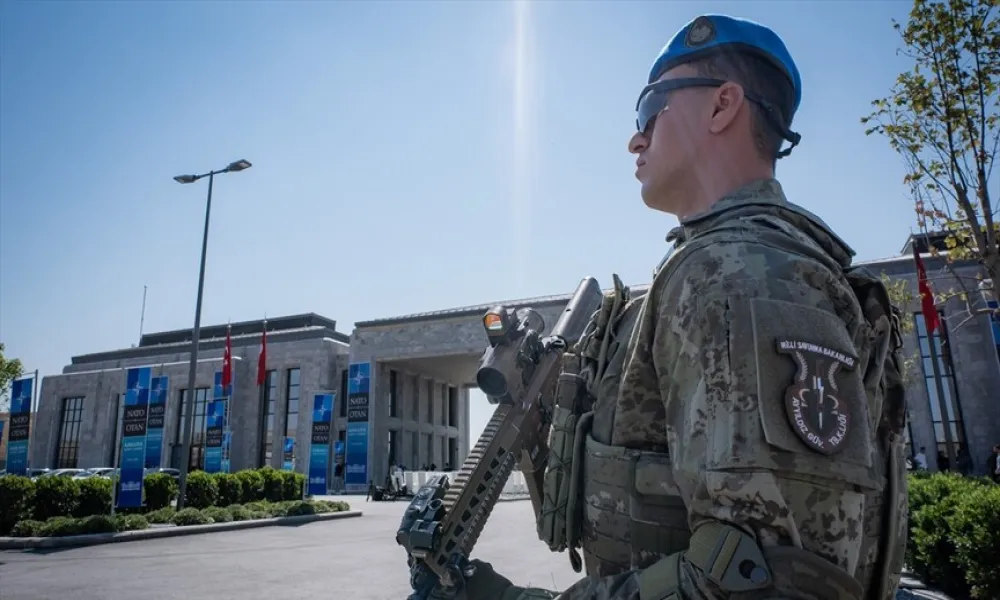

Ankara is undergoing an extensive facelift and sweeping security clampdown ahead of the NATO summit on 7 and 8 July, prompting accusations that residents are being pushed aside to accommodate visiting leaders.
Along the route from the airport to the city centre, municipal crews have planted flowers, repaired roads and installed giant billboards concealing dilapidated homes and poorer neighbourhoods. The preparations are intended to present a polished image of the Turkish capital to leaders from NATO’s 32 member states, including US President Donald Trump.
The cosmetic work has been accompanied by major restrictions affecting daily life in the city of almost six million people. Roads around the presidential complex, airports, delegation hotels and official motorcade routes will be closed or subject to strict controls, while residents have been advised to use alternative routes.
Public demonstrations, marches, press statements, rallies and similar gatherings have also been banned across Ankara from 28 June until 10 July. Businesses along some of the affected routes are preparing to close temporarily because customers, employees and deliveries will struggle to reach them.
City brought to a standstill
Tuncer Bakırhan, co-chair of the pro-Kurdish Peoples’ Equality and Democracy Party, or DEM Party, accused the authorities of turning Ankara into an “open-air prison” to allow official motorcades to move through the city.
He also criticised reports that parks could be closed to allow French President Emmanuel Macron to go jogging during the summit. The claims have since been denied, but they intensified complaints that Ankara’s residents were being treated as outsiders in their own city.
The summit preparations, which reportedly include the renovation of a former military airfield and the construction of new roads, have cost around 11 billion Turkish lira, or more than $235 million. Turkish authorities have defended the projects as long-term investments that will modernise the capital’s infrastructure.
For many local businesses, however, the immediate impact has been lost income.
Ümit Orkan, who manages a convenience store partially blocked by summit billboards, said customers could no longer reach the entrance and that the business would be forced to close for a week without compensation.
Florist Kadir Kokus said the advertising panels had cut his sales by about 95 per cent because passing motorists could no longer see his plants. Cem Özbek, the owner of a bakery and café near one of the roads due to close, warned that unclear diversion plans would make it difficult for customers, suppliers and employees to reach the area.
Turkish delight and mounted police
While businesses count the cost, Ankara’s taxi sector has launched its own charm offensive. Drivers have been encouraged to wear grey trousers and white shirts and to offer passengers bottled water, Turkish delight and cologne as a display of Turkish hospitality.
The city has also introduced mounted police patrols for the first time, while workers have filled potholes, repainted pavements and adjusted manhole covers to sit level with the road surface.
The scale of the makeover has become a source of satire on social media. Users have joked about beauty salons offering “NATO treatments” and suggested that any unusually elaborate welcome for guests could now be described as “hosting NATO”.
Others questioned why similar attention was not given to the city throughout the year.
Many residents have decided to leave Ankara during the summit, with outbound trains and buses reportedly filling up. One student summed up the frustration with a joke circulating online: had Macron planned to use public transport, Ankara’s buses might finally have been fitted with air conditioning.
Source: AMNA