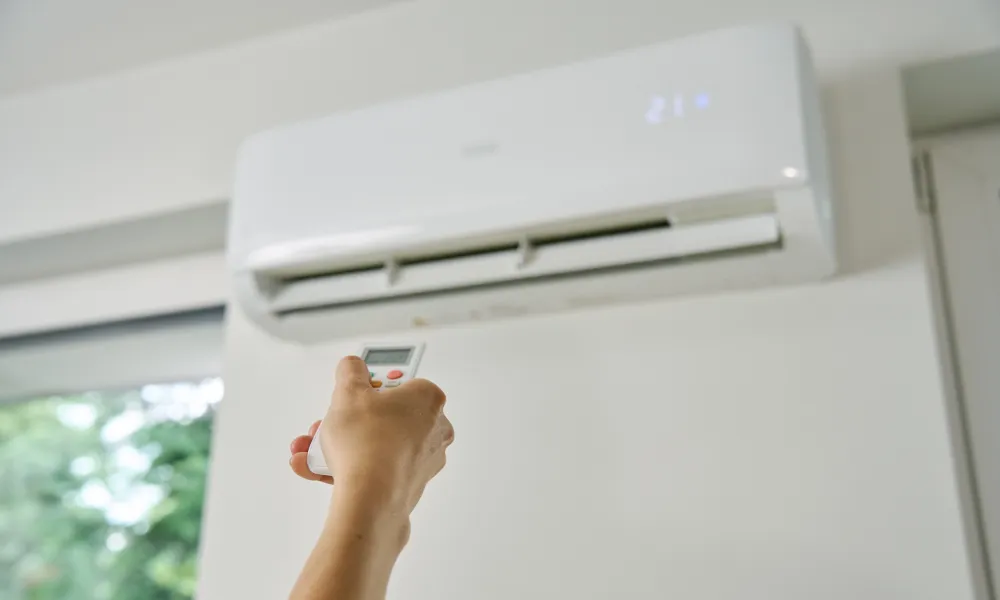

Protection from increasingly severe heatwaves is taking precedence over cutting carbon emissions for many Europeans, according to a YouGov survey across six major countries.
Respondents in Britain, France, Germany, Poland and Spain were more likely to support encouraging wider use of air conditioning than prioritising reductions in carbon dioxide emissions. Italy was the only exception.
The poll, whose findings were published by The Guardian, followed four periods of extreme heat linked to thousands of excess deaths across Europe. Between 30% and 52% of respondents said they had worried about the health of someone in their household when temperatures approached or exceeded 40°C.
Meanwhile, 27% of respondents in Spain, 41% in France and 53% in Germany said they had been unable to keep their homes sufficiently cool.
Air conditioning in all new homes
Support for wider access to air conditioning was particularly strong. Between 61% and 73% of respondents backed making it standard equipment in all new homes.
An even larger proportion, ranging from 65% to 75%, said installing an air-conditioning system should be made easier, without requiring permission from local authorities or landlords.
Between 52% and 66% also supported government subsidies to help homeowners purchase and install air-conditioning systems.
In every country except Italy, between 41% and 48% prioritised encouraging the use of air conditioning to protect people during heatwaves. By comparison, between 20% and 33% placed greater importance on reducing carbon dioxide emissions.
Differences between northern and southern Europe
Air-conditioning use remains far less widespread in Europe than in the United States, where 93% of the population has either a central or portable system.
According to the YouGov findings, 63% of respondents in Italy and 58% in Spain have air conditioning. The figure falls to 30% in France, 23% in Poland, 16% in Germany and just 11% in Britain.
Its limited use does not appear to reflect widespread opposition. Across the six countries, between 46% and 60% expressed a positive view of air conditioning, while 31% to 39% were neutral.
France was an exception, with 20% expressing a negative view. Reservations were particularly common among voters who identified with the political left.
Cost remains the main barrier
The leading reason European households do not have air conditioning is financial. Between 51% and 75% of those without a system cited the cost of purchasing, installing and operating it as the main obstacle.
By contrast, only 6% to 17% cited the effect on the climate. France recorded a higher figure of 27%.
Energy costs also affected those who already had air conditioning. In Italy, France and Spain, between 14% and 17% said they could not use it as much as needed. A further 28% to 38% said frequent use would force them to reduce spending elsewhere.
Alternatives to mechanical cooling
Despite broad support for air conditioning, many respondents believed homes could also be protected from extreme heat through other measures.
Between 35% and 46% said most problems experienced during heatwaves could be addressed without mechanical cooling.
When asked what their governments should prioritise, between 27% and 42% selected measures such as external shading, improved insulation and reflective roofs. Only 12% to 20% chose the installation of more air-conditioning systems as the first priority.
The effectiveness of air conditioning was nevertheless clear in the results. Between 79% and 85% of those with a system said they had maintained a comfortable temperature at home during recent heatwaves. Among those without air conditioning, the figure ranged from 35% to 47%.
YouGov conducted the survey in mid-July in France, Germany, Italy, Poland and Spain, and in early August in Britain. Samples ranged from 1,028 to 2,105 adults in each country.
Source: The Guardian