


Since fighting between Washington and Tehran began in February, China has avoided any step that would constitute a genuine escalation of its own involvement, stopping well short of open alignment with Iran at forums like the United Nations. Yet its economic support for Tehran has been substantial enough to function as one of the more consequential outside factors determining how long the war can continue, sustaining an Iranian economy that would otherwise be struggling considerably harder under the weight of sanctions and blockade.
The oil trade at the centre of the relationship
China buys more than 80%, and by some estimates close to 90%, of Iran's seaborne oil exports, according to the US Treasury Department's statements. Much of that oil moves at a steep discount because of the sanctions risk attached to it, and continues reaching Chinese refineries even amid the war, often through ship-to-ship transfers in waters near Indonesia and Malaysia before continuing on to smaller Chinese refineries, according to reporting from the Foundation for Defense of Democracies, a Washington think tank.
Treasury sanctioned a Shandong-based refinery in April 2025 for receiving more than $1 billion in Iranian oil shipments, some of it traced to a front company for Iran's Revolutionary Guard, according to the department's own announcement. OFAC, Treasury's sanctions enforcement arm, has since issued formal guidance to industry describing the evasion tactics it considers now standard in this trade, including front companies based across Asia and the UAE, intermediary brokers, and a shadow fleet of tankers relying on ship-to-ship transfers, falsified documentation and vessel identity manipulation to obscure where the oil originated.
The payment infrastructure behind the purchases
Much of the money underpinning these transactions moves through China's Cross-Border Interbank Payment System, built by the People's Bank of China starting in 2012 and known as CIPS. The system today lists 210 direct participating institutions globally, according to official Chinese figures, with transaction volumes that have grown steadily since Russia's invasion of Ukraine in 2022 accelerated a broader shift of international trade away from Western-controlled payment channels. Washington has targeted this kind of infrastructure before, having sanctioned the smaller Chinese lender Bank of Kunlun over Iran-linked transactions the same year CIPS construction began.
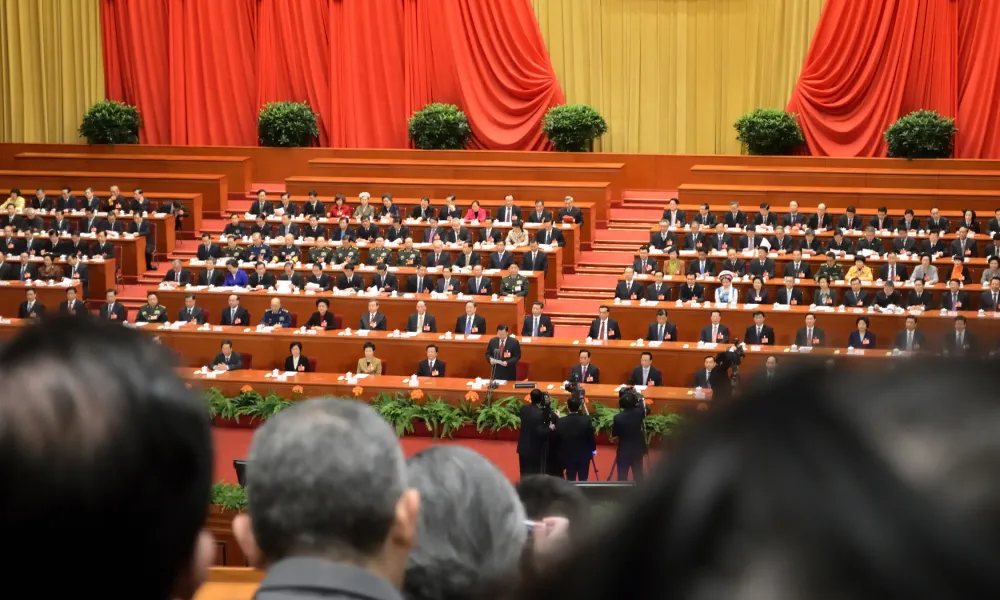
As of 2025, CIPS had 1,766 participating institutions across 124 countries and regions, according to People's Bank of China data, and processed more than 8.4 million transactions worth ¥180.15 trillion, or roughly $25.5 trillion, over the year, figures reported by China's central bank and carried by Chinese state media including Xinhua and Global Times. Deputy PBoC governor Lu Lei said in 2024 that the central bank would continue supporting qualified banks from different jurisdictions in joining the system, part of a broader Chinese policy effort to reduce reliance on the dollar-based financial system that extends well beyond any single trading partner.
Restraint on both sides
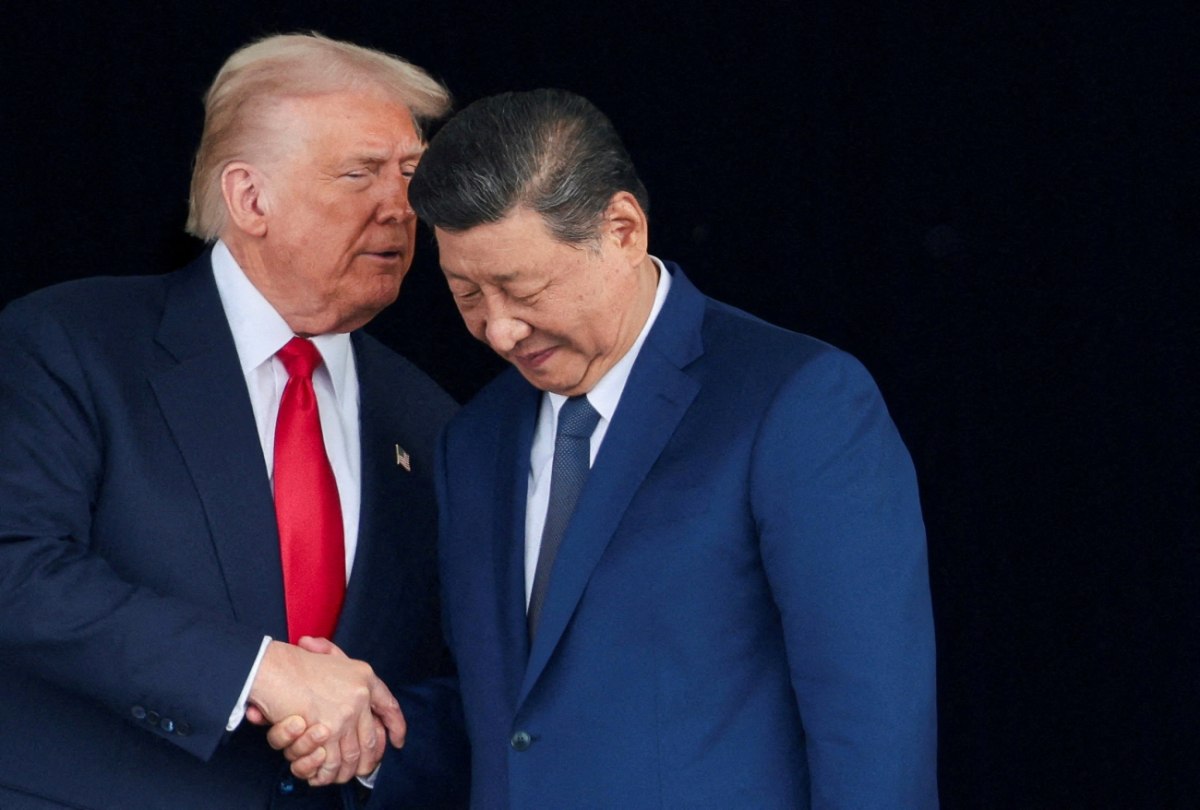
On 24 August, Treasury Secretary Scott Bessent warned of what he called an "economic D-Day" for Iran's remaining trading partners, telling reporters that any entity "facilitating money laundering or sanctions evasion on behalf of Iran risks being cut off from the U.S. financial system." The sanctions round that followed days later targeted brokers, shipping intermediaries and shadow-fleet vessels connected to the Iranian oil trade, yet notably avoided the major Chinese banks that would be needed to disrupt that trade at meaningful scale, according to reporting from Fortune and CNBC. Analysts attributed that restraint to President Donald Trump's preparations to host Chinese President Xi Jinping next month in an effort to preserve a fragile trade truce between the two countries, though Treasury itself has not confirmed any such connection.
China's Foreign Ministry Spokesperson Lin Jian said in August that Beijing would take all necessary measures to safeguard its own interests should Washington broaden its sanctions to cover Chinese entities, describing China's cooperation with Iran as conducted within the framework of international law. At the UN Security Council, China has abstained rather than voted against resolutions concerning the conflict, including Resolution 2817, maintaining a posture of calculated distance.
A relationship bounded by China's own exposure
Beijing is Iran's largest trading partner and holds a direct financial interest in keeping the oil trade flowing, yet it depends heavily on continued access to the American-dominated financial system and shares Washington's underlying interest in the Strait of Hormuz reopening for the sake of its own regional trade. CNN has reported that Chinese analysts have in recent weeks pointed to this overlap of interests, and that Beijing has stepped up its own messaging urging restraint around the strait even as it continues absorbing the bulk of Iran's sanctioned oil exports.
Sources: US Department of the Treasury, Office of Foreign Assets Control, CNBC, Fortune, CNN, Al Jazeera, Foundation for Defense of Democracies, US-China Economic and Security Review Commission