
Russia secretly assisted Iran in the development of advanced hypersonic cruise missiles in what the Financial Times describes as one of the most significant known transfers of strategic military technology from Moscow to Tehran.
According to the newspaper's investigation, a multi-year covert programme, codenamed C430L, enlisted some of Russia's most experienced missile specialists to help Iran develop a new class of weapons capable of threatening US aircraft carriers and other naval assets operating in the Middle East.
The investigation states that the programme began in 2023 and continued during the US-Israeli war against Iran. It is based on leaked Russian correspondence, travel records and analysis of military patents.
Focus on ramjet technology
The primary objective of the C430L programme was reportedly to help Iran develop a ramjet propulsion system, an engine capable of allowing a cruise missile to sustain flight at speeds several times faster than the speed of sound.
Missile and military specialists told the Financial Times that the technology is almost certainly intended for:
- Anti-ship cruise missiles.
- Long-range strikes against land targets.
"This represents the transfer of extremely sensitive strategic military technology from Russia, which the Iranians have been seeking for decades," Fabian Hinz, an expert on Iranian missiles and senior analyst at Conflict Armament Research, told the newspaper.
According to Hinz, a programme of this nature would likely require approval from the highest levels of the Russian leadership.
Hypersonic cruise missiles combine extreme speed with low-altitude flight, significantly reducing the reaction time available to advanced air-defence and missile-defence systems.
The capability is particularly relevant for Iran in the Persian Gulf, where the United States and its regional allies maintain sophisticated land-based and naval defence networks.
What Iran has reportedly achieved
According to the Financial Times, Iran has already built and flight-tested a ramjet propulsion system.
However, there is no evidence that an operational Russian-assisted hypersonic cruise missile has yet entered service.
"For the Iranians, this would represent a qualitatively new strategic weapons system capable of threatening US Navy vessels," said Jim Lamson, a former CIA military analyst specialising in Iran and now affiliated with the James Martin Center for Nonproliferation Studies.
Growing Russia-Iran strategic partnership
The leaked correspondence reportedly indicates that discussions regarding the programme continued into the summer of 2026.
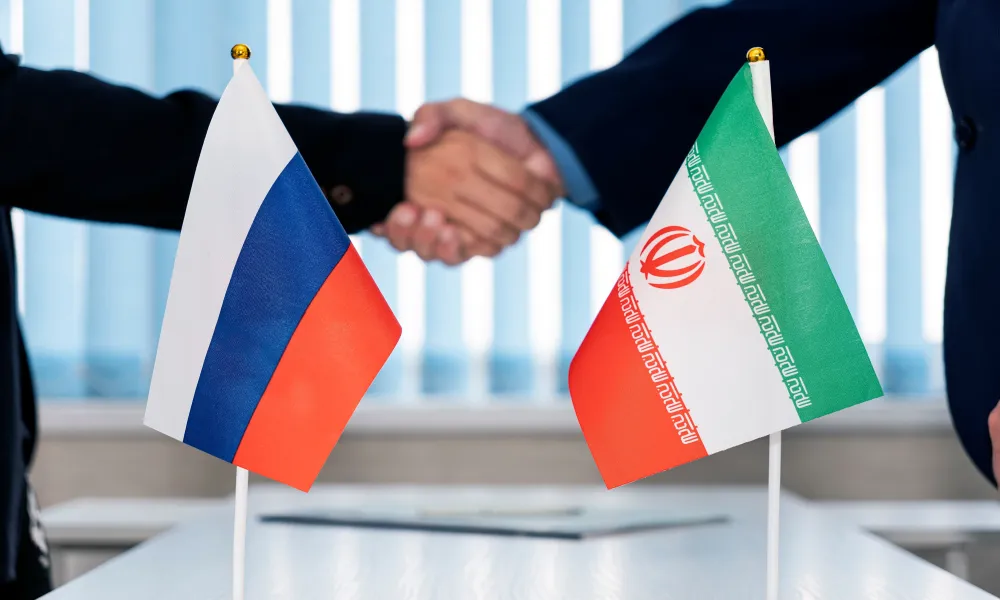
The project is described as part of the increasingly close military relationship between Russia and Iran.
Tehran supplied Moscow with Shahed attack drones, which became an important component of Russia's war effort in Ukraine, while also assisting in the creation of domestic production lines inside Russia.
Ukrainian and Western officials have also accused Russia of providing Iran with support during its conflict with the United States and Israel, including:
- Satellite imagery.
- Drone-related assistance.
- Weapons-system components.
According to the Financial Times, C430L represents a deeper level of cooperation because it provides Iran with the expertise needed to develop an advanced strategic weapons system of its own design.
Nicole Grajewski of Sciences Po in Paris said the secret ramjet project demonstrated that Russia was attempting to broaden the conflict surrounding Ukraine and draw the United States into multiple fronts.
"Russia is no longer particularly concerned about red lines in the region," she said.
Rosoboronexport and NPO Mashinostroyenia
The programme was reportedly organised by Rosoboronexport, Russia's state arms export agency, working in coordination with NPO Mashinostroyenia.
The United States sanctioned NPO Mashinostroyenia in 2014, describing it as one of Russia's most important missile-technology companies.
The firm is involved in the development of cruise missiles launched from:
- Ships.
- Submarines.
- Ground-based platforms.
It is also linked to projects supporting Russia's strategic nuclear forces, including intercontinental ballistic missiles.
Russian specialists' trips to Tehran
Travel records reviewed by the Financial Times allegedly show that Russian arms-export officials and senior NPO Mashinostroyenia engineers made repeated visits to Iran before a formal contract was signed with Iran's Ministry of Defence and Armed Forces Logistics in November 2023.
By 2025, NPO Mashinostroyenia had reportedly received extensive Iranian technical data relating to the ramjet system.
Russian engineers subsequently analysed data from an Iranian flight test and sent Tehran a detailed list of questions regarding:
- Fuel-system modifications.
- Combustion stability.
- Air intake performance.
- Engine-nozzle design.
They also reportedly asked whether the engine continued operating after telemetry data supplied by Iran ceased less than one minute into the test.
According to the newspaper, these exchanges suggest Russian engineers were evaluating a system that Iran had already built and tested, using Russian expertise to identify problems and improve the design.
In April 2025, Rosoboronexport reportedly proposed sending a delegation of approximately 24 Russian specialists to Iran for technical consultations under the C430L programme.
No official response
The Kremlin, Rosoboronexport and NPO Mashinostroyenia reportedly did not respond to requests for comment from the Financial Times.
The Iranian government also did not respond to questions submitted through its embassy in London.
On Tuesday, Russian President Vladimir Putin told Iranian President Masoud Pezeshkian that Moscow was:
"Trying to provide you with the assistance you need during this difficult period"
and was supplying Iran with the goods it required, although he provided no further details.
Broader cooperation with Russia and China
The Financial Times says the C430L programme forms part of a wider pattern of covert technological cooperation pursued by Iran with both Russia and China.
Earlier this year, the newspaper reported that Moscow had agreed to provide Tehran with Verba portable air-defence systems, while Iran's Revolutionary Guards reportedly acquired a high-resolution Chinese satellite later used to monitor US military bases in the Middle East.
The United States subsequently imposed sanctions on the Chinese company Earth Eye, alleging that it supplied satellite imagery to Iran during the war and that the imagery contributed to Iranian attacks on American forces.
According to the report, these programmes illustrate how Tehran has attempted to use Russian and Chinese technology to address weaknesses in:
- Air defence.
- Intelligence gathering.
- Advanced offensive weapon systems.
Strategic significance
During the US-Israeli military campaign launched in February, Iran used drones and precision missile strikes to inflict significant damage on US military bases and other fixed targets across the Middle East.
However, it has not succeeded in inflicting comparable losses on US naval forces.
According to missile specialists cited by the Financial Times, mastering ramjet technology could eventually allow Iran to develop multiple new weapons systems, improve future generations of missiles and reduce its dependence on foreign suppliers.
Hinz noted that relatively few countries possess the expertise required to develop operational ramjet-powered weapons.
"Many people think technology transfer means blueprints, components or complete missiles. But sending a group of engineers with decades of experience to solve technical problems brings enormous value," he said.
Lamson added:
"If the Russians succeed in helping the Iranians solve the technical challenges they face, this will be one of the most important forms of military-technical assistance Russia has provided Iran in recent years, with long-term benefits for the country's defence industry."
Programme reportedly continues in 2026
According to correspondence cited by the Financial Times, the C430L programme remains active in 2026, after the outbreak of the US-Israeli war against Iran.
Russia is reportedly preparing further technical assessments for Tehran, while both sides continue discussions regarding the next phase of development.
A Rosoboronexport letter dated June 2026 allegedly shows that negotiations on elements of the next phase were still under way and that additional discussions on Russian technical reports were being planned.
It remains unclear, however, whether the next phase of the programme has already begun.