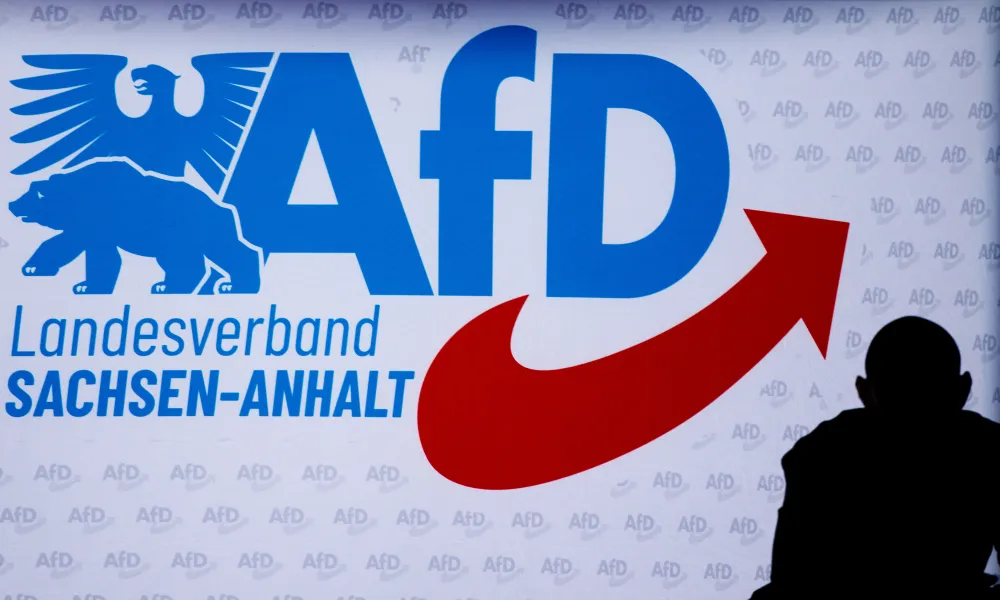

French and Polish officials have expressed concern following the victory of the far-right Alternative for Germany (AfD) in the regional election in Saxony-Anhalt, where the party emerged as the largest political force and moved closer than ever to governing at state level.
The result has sparked debate across Europe, with supporters describing it as a political breakthrough and critics warning of the growing influence of nationalist and populist movements.
French concerns
French Economy Minister Roland Lescure described the result as a "very, very worrying message".
Speaking to RTL radio, he said the outcome highlighted the challenge posed by a populist wave spreading across Europe and beyond.
"This shows that we are facing a major challenge in the form of a populist wave that is spreading throughout the world and against which we must resist," he said.
Lescure added that German business leaders had expressed deep concern to him about the political direction of the country.
Similar remarks had been made earlier by French Minister for European Affairs Benjamin Haddad, who described the AfD's success as a "grave moment for Europe".
Writing on X, Haddad said:
"We must listen with humility to anger, fears and concerns and respond appropriately. But nationalism and xenophobia will never be the answer."
C’est un moment grave en Europe de voir l’extrême-droite l’emporter dans une élection régionale en Allemagne.
— Benjamin Haddad (@benjaminhaddad) September 6, 2026
Nous devons entendre avec humilité les colères, les inquiétudes, les peurs et y répondre.
Mais le nationalisme et la xénophobie ne seront jamais une solution. Nous ne…
Poland also alarmed
Polish Foreign Minister Radoslaw Sikorski also characterised the result as worrying.
Speaking to Vox FM radio, he noted that the AfD had come close to securing an outright parliamentary majority.
"They appear to be only a few votes short of an absolute majority. That is indeed a very worrying message," he said.
His comments followed criticism from Polish Prime Minister Donald Tusk, who had earlier condemned celebrations of the AfD's victory by elements of the Polish opposition.
Orban welcomes AfD breakthrough
In contrast, former Hungarian prime minister Viktor Orban welcomed the result, describing it as a major victory for both Germany and Europe.
Writing on X, Orban congratulated AfD co-leader Alice Weidel, Saxony-Anhalt leader Ulrich Siegmund and the party's supporters.
"A huge night for Germany and Europe! Congratulations to @Alice_Weidel, @UlrichSiegmund and the entire @AfD on their landslide victory in Saxony-Anhalt! Buckle up. This is just the beginning!"
A huge night for Germany and Europe!
— Orbán Viktor (@PM_ViktorOrban) September 6, 2026
Congratulations to @Alice_Weidel, @UlrichSiegmund and the entire @AfD on their landslide victory in Saxony-Anhalt!
Buckle up. This is just the beginning! 💪
Orban maintained close ties with conservative and populist movements across Europe during his 16 years in power, including the AfD. Weidel visited him in Budapest on several occasions while he was prime minister.
A milestone for the German far right
The AfD's first-place finish in Saxony-Anhalt has fuelled discussion about the future of German politics, with the party now closer than ever to participating in government at state level.
Despite the victory, uncertainty remains over government formation, as most mainstream parties continue to reject cooperation with the AfD under Germany's long-standing political "firewall" against the far right.