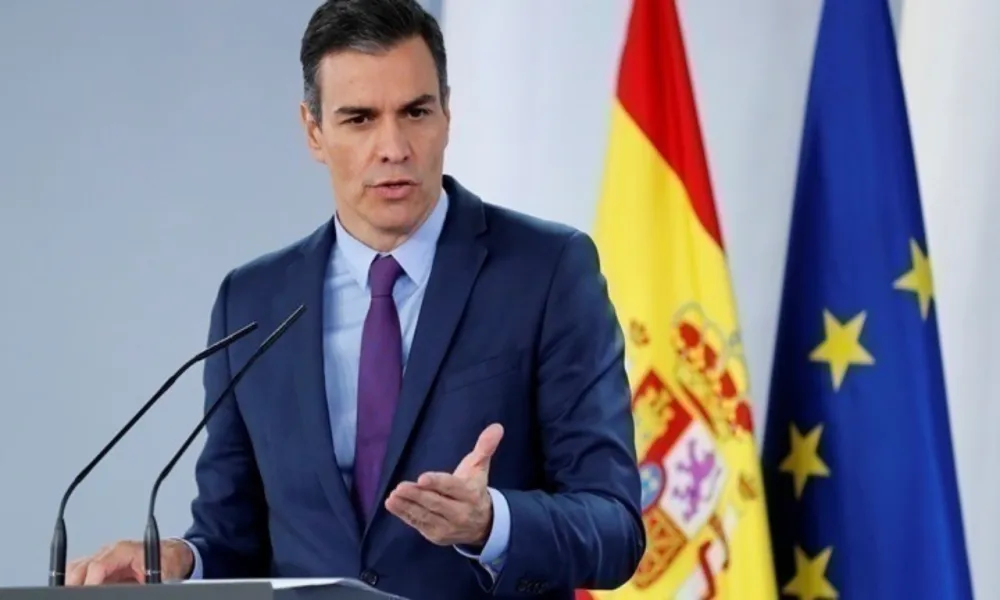

Spanish Prime Minister Pedro Sánchez has called for a woman from Latin America to become the next UN Secretary-General, arguing that the organisation has a “historic debt” to address as António Guterres prepares to leave office.
Speaking at the UN General Assembly on Wednesday, Sánchez questioned how an organisation intended to represent all humanity had never had a woman at its helm.
“How can an organisation that is supposed to speak on behalf of all humanity never have had a woman leading it?” he asked.
He also questioned how the UN could claim to represent every continent when Latin America had not held the position for three decades.
Four women among seven candidates
António Guterres is due to complete his second five-year term at the end of December.
Seven candidates, four women and three men, are competing to succeed him, with Latin American candidates featuring prominently in the race.
Under an informal tradition of geographical rotation, which has not always been followed, Latin America is widely regarded as the region in line to provide the next UN chief.
Sánchez described the absence of a female secretary-general as a “historic debt” that should now be addressed.
He argued that the issue was particularly important at a time when, in his view, feminism is under attack and thousands of women continue to experience sexism, violence and xenophobia.
Warning over international rules
The Spanish prime minister also mounted a strong defence of the multilateral system and the principles underlying the United Nations.
Without naming individual leaders, Sánchez criticised politicians who, he said, seek to take the international system back to a “dark past”.
He accused some leaders of first questioning international rules and then violating them in the knowledge that no one would dare demand accountability.
Sánchez also criticised governments that reduce their contributions to multilateral institutions, attack their leaders and officials and obstruct their ability to function before subsequently declaring them ineffective.
Calls to strengthen international institutions
Rather than weakening multilateral bodies, Sánchez called for international institutions including the International Criminal Court (ICC) to be strengthened.
He argued that such bodies must be capable of conducting investigations, bringing prosecutions and imposing penalties on those who violate international law.
“Humanity took centuries to replace the law of the strongest with the rule of law, and we must not become the generation that allows it to retreat,” Sánchez said.
Source: ANA-MPA