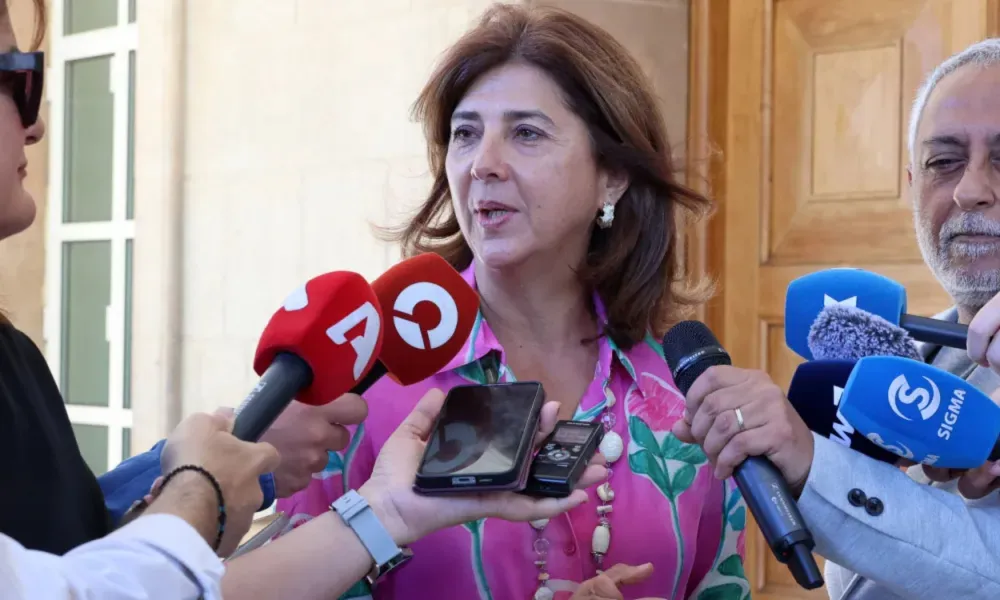

Rebeca Grynspan retained her lead in the sixth informal United Nations Security Council straw poll to select the next UN secretary-general, while speculation continues over possible new candidates, including María Ángela Holguín, the UN secretary-general's personal envoy on Cyprus.
No candidate managed to secure the support of all five permanent members of the Security Council, leaving the succession race wide open.
Grynspan still ahead
Grynspan received nine encouragement votes, five discouragement votes and one no-opinion vote.
However, two of the negative votes came from permanent members of the Security Council, highlighting continuing obstacles to her candidacy.
The vote was conducted under the Greek presidency of the Council using different-coloured ballots for permanent and elected members, allowing diplomats to gauge the position of veto-holding states without identifying them publicly.
According to the leaked results, none of the seven candidates escaped discouragement votes from permanent members.
Although such votes do not constitute a formal veto, they indicate objections that could ultimately block a candidate's recommendation to the General Assembly.
Other contenders
Rafael Grossi and Caroline Rodrigues-Birkett both received eight encouragement votes, six discouragement votes and one no-opinion vote.
Among permanent members, Grossi secured two positive votes, two negative votes and one no-opinion vote, while Rodrigues-Birkett received three positive votes and two negative votes.
Other candidates performed less strongly:
- Macky Sall: five encouragement and ten discouragement votes.
- Olara Otunnu: four encouragement, ten discouragement and one no-opinion vote.
- María Fernanda Espinosa: three encouragement, nine discouragement and three no-opinion votes.
- Yvonne Aki-Sawyerr: one encouragement and fourteen discouragement votes, including opposition from all five permanent members.
US seeks reform-minded candidate
Speaking after the vote, US Ambassador to the United Nations Mike Waltz stressed the need to select "the best candidate" and called for substantial reform within the organisation.
Asked whether Washington could support one of the seven existing candidates or was waiting for new entrants, Waltz replied: "We'll see."
He also argued that the UN should refocus on its core mission of maintaining peace and security and said the United States would support only a candidate committed to meaningful reform.
New names under discussion
Diplomatic discussions continue about possible late entrants to the race.
Among the names being mentioned are:
- María Ángela Holguín, former foreign minister of Colombia and the UN secretary-general's personal envoy for Cyprus.
- Feridun Sinirlioğlu, former Turkish foreign minister and current secretary-general of the OSCE.
- Lana Nusseibeh, former permanent representative of the United Arab Emirates to the United Nations.
According to diplomatic sources, a future candidacy by María Ángela Holguín cannot be ruled out, although no official announcement has been made.
Path to appointment
The next UN secretary-general will be appointed by the General Assembly following a recommendation from the Security Council.
A candidate must secure at least nine votes in favour and avoid a veto from any of the five permanent members: the United States, Russia, China, France and the United Kingdom.
For now, Greenspan remains the leading candidate, but no contender has yet achieved the combination of broad support and absence of permanent-member opposition required to secure the post.
Source: ANA-MPA