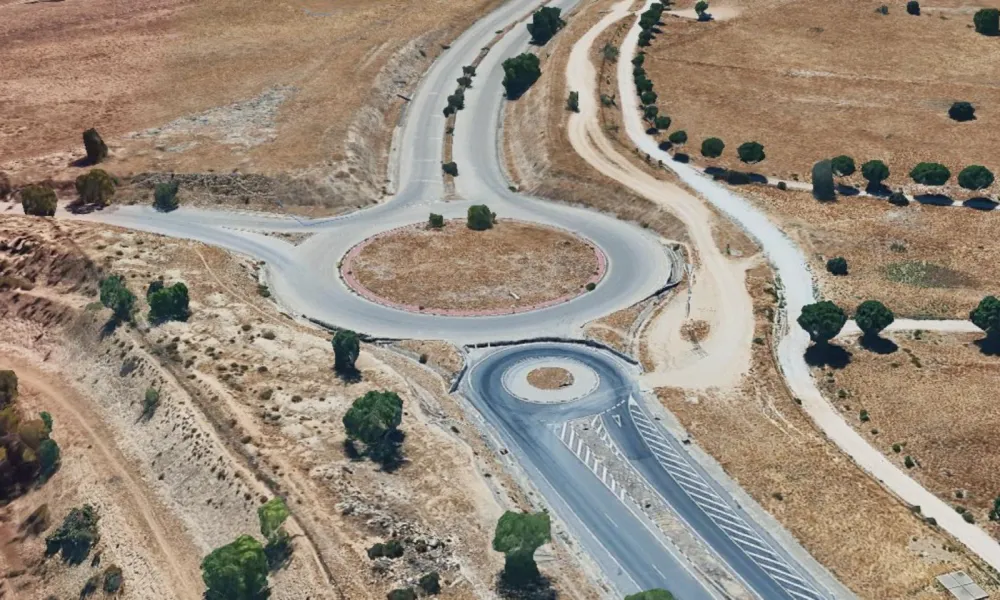

A stretch of road in Madrid that was built to serve thousands of motorists but later blocked off with concrete barriers is set to reopen, reviving what has been described as one of Spain's most striking examples of transport planning failure.
The road in question is the M110, which links areas near Madrid-Barajas Airport and has remained closed to through traffic since 2011.
According to Spanish radio network Cadena SER, Spain's Ministry of Transport has launched a tender worth €780,166 to restore traffic on the route. The project aims to improve connections between Alcobendas, La Moraleja and Valdebebas.
The road that closed while the toll road remained
The story dates back to the expansion of Madrid's airport and the construction of the new Terminal T4.
At the same time, the M12 toll motorway was developed as an alternative route to the airport. Unlike the M12, the older M110 provided access without toll charges.
However, the commercial success of the toll road fell well short of expectations.
According to figures previously reported by Spanish newspaper El País, only 12,000 motorists were paying tolls on the M12 each day, compared with the 50,000 daily users originally forecast.
In 2011, Spanish authorities formally approved the closure of the M110 as an alternative access route to Terminal T4.
Access was blocked using concrete barriers and the construction of a small roundabout, effectively preventing vehicles from passing through the affected section.
More money to remove the barriers
Around 15 years later, authorities have decided to reverse the move.
According to Spain's transport ministry, the project includes:
- Removal of the concrete barriers.
- Elimination of the small roundabout.
- Repairs to the roadway.
- Installation of new road signage.
The main intervention concerns a section measuring just 53 metres, although resurfacing works will also be carried out along a longer stretch of the route.
Officials say the reopened connection should improve mobility, shorten journey times and help reduce vehicle emissions.
Reopening expected in 2027
The tender process is already under way, with bids due by 1 December 2026.
Construction is expected to take approximately three months, making a reopening during 2027 likely, although no official completion date has yet been announced.
The case has attracted additional attention because of the financial difficulties experienced by toll-road operators in Spain.
The company responsible for the M12 concession entered insolvency proceedings in 2013, followed by liquidation procedures and disputes over state liabilities.
As a result, infrastructure originally designed to improve transport links became a symbol of controversial planning decisions, significant public costs and years of inconvenience for motorists.