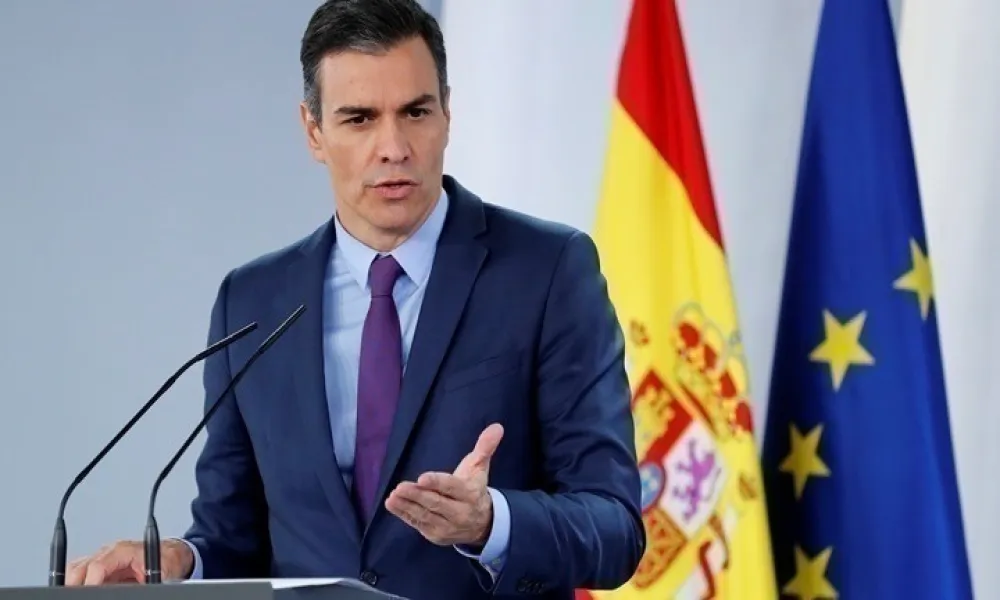



Spanish voters go to the polls on Sunday 29 November in a snap general election that is being watched closely well beyond the country's borders. Socialist Prime Minister Pedro Sánchez is seeking to remain in power, despite the lead held in most polls by Alberto Núñez Feijóo's conservative People's Party (PP). The far-right Vox party could play a pivotal role in forming the next government, and its participation in a governing coalition would mark the first time a far-right party has entered government in Spain since the end of Francisco Franco's dictatorship in 1975.
Sánchez's gamble
After more than eight years as prime minister, the 54-year-old Sánchez called early elections as he faced growing difficulty pushing his reforms through a fragmented parliament. During the campaign he highlighted the performance of the Spanish economy and his government's social reforms, warning that a return of the right to power would set the country back. The housing crisis, judicial investigations into corruption cases involving people in his inner circle and criticism of the government's handling of two rail tragedies have, however, put his government under considerable pressure.
Feijóo's second chance and the role of Vox
The 65-year-old PP leader is making a second bid for the premiership after failing to secure the parliamentary support he needed in 2023, even though his party came first in that election. Sánchez managed to hold on to power at the time, securing among others the backing of the Catalan nationalist party Junts. This time, the parliamentary strength of Vox under Santiago Abascal could prove decisive in building a governing majority. Speaking at his final campaign rally in Seville, Feijóo told supporters: "This time, yes! We will do it! Not just win, but govern."
Migration and housing at the centre of the campaign
Migration was one of the main issues of the campaign, following a rise in arrivals in Ceuta and the Canary Islands. Vox is calling for a tougher migration policy, the repeal of a number of equality laws and the return of powers from the regions to central government. Abascal's party links migration to the housing crisis, insecurity and pressure on public services. Sánchez, by contrast, has stressed the contribution migrants make to the economy and to offsetting the effects of an ageing population. According to Spain's Social Security Ministry, migrants have filled more than half of the jobs created in the country since 2022.
Europe watches Spain
The election carries wider European significance, as it comes ahead of key votes in France, Poland and Italy. Sánchez leads one of the few major European economies governed by the centre-left, and has set himself apart from other Western leaders on issues such as Palestine and relations with the Donald Trump administration.
Source: AFP, AMNA