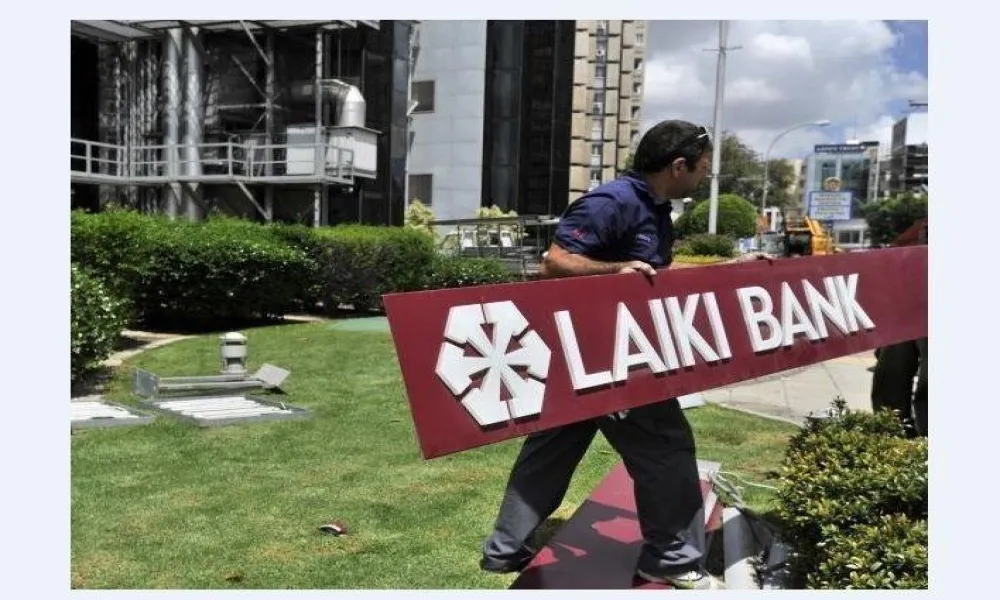

There is no greater populism than compensation handed out without social or income criteria, of the kind paid to holders of Laiki Bank securities and to depositors who took a haircut, at Laiki and, to a lesser extent, at Bank of Cyprus. Those payouts, however, were made when state coffers were full, energy prices were falling and incomes were rising on the back of strong growth. The reversal of the economic climate caused by the war in the Middle East makes repeating last year's payments criminally populist. Someone needs to act like an adult, explain this to the public and do what is right: pay compensation based on socioeconomic criteria, while also setting out where the savings to fund it can be found.
"And why should you care where the state wants to hand out money? Were the holders of Laiki Bank securities and the depositors who lost their money in 2013 victims of injustice, or not? Have we at Politis and on Show me the Money become more royalist than the Troika itself? And why shouldn't the 'ghosts' get their compensation, with the coffers full and debt falling? What does it matter if the government and parliament score a few points? Can't you see that trust in the institutions is already in the gutter, and that you journalists have only reinforced the idea that nothing works? So let them hand out the money. At least if we're going to be sunk by the war in the Middle East, let's go down with cash in our pockets." That logic exists too.
It is the epitome of short termism, and a gift to demagogues. But can we do the right thing? Do we, as a state, still remember what fairness looks like? Fairness means compensating small depositors and small holders of securities based on age, health and income, not on how much money they lost. Because if you lost a few million but still have several million more, it makes sense to wait while the poorest are compensated first, rather than those with the best access to the corridors of power. Can the system bear to see low income pensioners who lost their savings placed first in line for compensation, or would that feel like a breakdown of the established "order," where everyone is expected to know their place? Or should those who lost the most, and likely still have the most, go first instead?
Then there is the fiscal side of the question. Last year went well, a record year for revenue, with growth close to 4%. This year, with half the tourist season lost to the drone strike, growth running at half last year's rate and the state's fixed costs also at a record high, where exactly will the cuts come from to pay for this compensation? Will it touch the public sector wage bill, development spending or social benefits? Will we breach every rule of fiscal discipline just to see whether the markets punish us with higher interest rates, or pretend no one is watching? Perhaps we push fiscal discipline a little further down the list for now, just to see where it lands. After all, it happens in far more serious European economies too.
Except that if we learned anything from 2013, it is that we are not all equal. That some institutions are systemic and will be bailed out, while others have far better access to the markets than we do. That small states, contested ones, on the periphery of the EU, need to be doubly and triply careful. That we cannot afford to break the rules set by the bigger players and by the markets. What part of this did we fail to understand?
And that is more worrying than the €50 million we will hand out this year to those who took a haircut in 2013. We may find out whether that question gets answered on 20 July, at the annual general meeting of Sykata, the bondholders' association, and the Management Committee of the National Solidarity Fund.