
By Stephanos Evangelides
This week, two scenes, with one thread pulled tight between them. In Tirana, tens of thousands fill the boulevards night after night,chanting “Albania is not for sale,” against a multi-billion-euro luxury resort, the project of an investment firm run by Jared Kushner, being carved into a protected coastal wetland where flamingos nest.
And on a resort here in Cyprus, the emissaries of the effort to rebuild Gaza gather to plan, among other things, its homes, an effort whose executive board, on which that same MrKushner sits, does not include a single Palestinian. Between those two scenes runs one question about what a home is actually for.It is the question this island most needs to ask, and most carefully avoids.
The Albanians have named their grievance with precision: a coastline sold over the heads of the people who live on it; natureturned to concrete for capital that will never call it home; permits and ownership no one can quite see through. Read that list again. It is not a foreign story. It is a fairly exact description of our own coast.
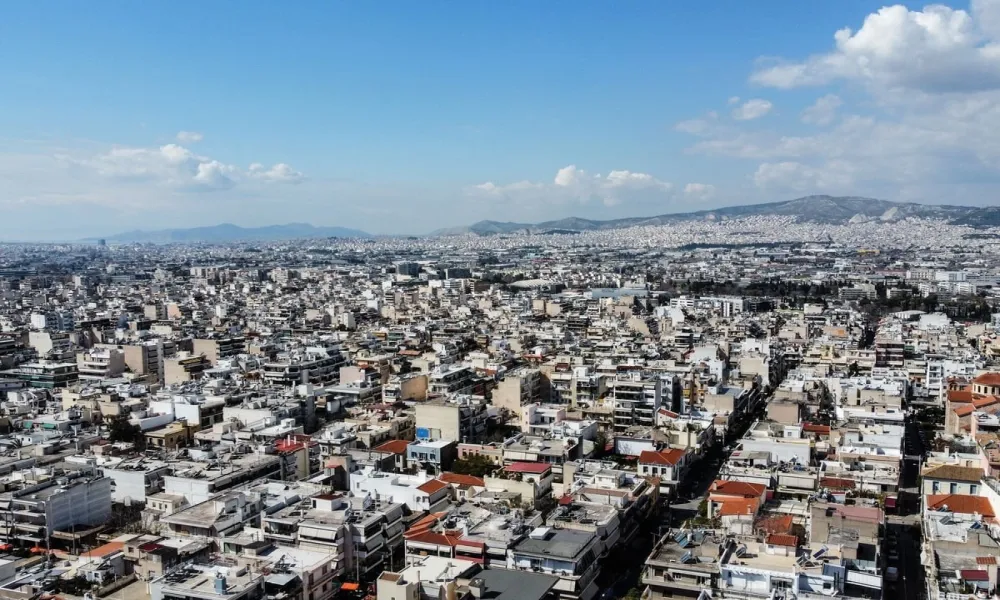
Let me be clear: Cyprus did not run out of homes. It ran out of homes for the people who live in Cyprus. At the last census, morethan one dwelling in four stood empty, 28% of the entire stock to be precise, and nearly half of it is situated in Paphos and Famagusta. Yet rents are sprinting away from wages and salaries: a three-bedroom flat in Nicosia rose from €950 to €1,300 in a single year. Registered short-term lets have multiplied sixfold in under three years, and when the state proposed the mildest ofbrakes, a cap of two such properties per owner, it was waved away by those who are in power, as an unacceptable restriction onthe market. A decade of “golden” passports and visas trained our property to answer to capital that parks here rather than to thepeople who live here.
A roof is not for sale; a home, not a favour. We, of all people, should know the difference.
And then there is the cruellest figure of all, the one that looks like good news. By the European Union’s own yardstick, young Cypriots are among the least burdened by housing costs anywhere in Europe, only 2.8 % of them overstretched, against an EU average more than three times higher. A minister could wave that number and declare the problem solved. It is, in fact, the opposite. The figure is that low only because our young people stay in the parental home into their late twenties and nowadays, in their thirties. The crisis has not vanished; it has been absorbed, silently, and unequally, inside the family flat.
Which means it falls first, and hardest, on whoever has no family flat to fall back on: the young person asked to leave for who they are, the refugee with no kin on the island, the woman leaving a violent home, in essence anyone whose family is the danger ratherthan the safety net. A housing system underwritten by the family is one that abandons the unfamilied first, and then files the silenceas success.
We, of all people, should recognise what we are doing here. We are a nation that knows precisely what a home emptied of its people looks like. A few metres of fence away stands Famagusta: a whole town sealed off and emptied of its inhabitants for half a century, the most literal image in Europe of a home turned into a hostage of politics rather than a place to live. We carry displacement in ourfamily histories. Many of us hold the deeds to houses we cannot enter. And yet, with that wound in our past, we have built aneconomy that manufactures emptiness on purpose, homes without people, by design, for profit.
Which brings us back to the gathering on our own soil this week, and to that single thread. Look closely at how Gaza’s rebuilding isbeing imagined, and it pulls taut. What was unveiled is not a return of homes to the people who lost them; it is a “New Gaza” of beachfront towers and tourist zones, pitched openly to investors as an opportunity, drawn up by an executive board of officialsand financiers, Mr Kushner among them, on which the Palestinians whose ground it is do not sit, and which stays silent on howa single family ever gets its home back. The same logic that turns an Albanian wetland into a resort, turns a razed Gaza into realestate. In each, the land is the asset, and the people who belong to it are incidental.
I have to admit however, that in Cyprus we practise a quieter version of the same creed. But we need to realise that a home is not areward for the well-connected, not a contract for the investor, not a parking space for money in flight, not a line on a masterplan. It is the ground a life stands on, which is exactly why, when the world is honest with itself, it admits there is no dignity and nopeace without it.
We have already proved we can refuse the market when we choose to. We built GESY against the same chorus, too costly, the private sector does it better, not who we are- and today no one would hand it back.
Housing is simply the next thing we must take out of the market: cap the speculation, tax the homes left deliberately empty, build in the tenure people actually need, and protect the tenant by right rather than by mercy or as a favour. The tools are not exotic. One of them, that two-property cap, was already in the state’s hand, and the state let it fall. We should pick it back up.
*Stephanos Evangelides is a human-rights lawyer and Secretary of ACCEPT – LGBTI Cyprus.