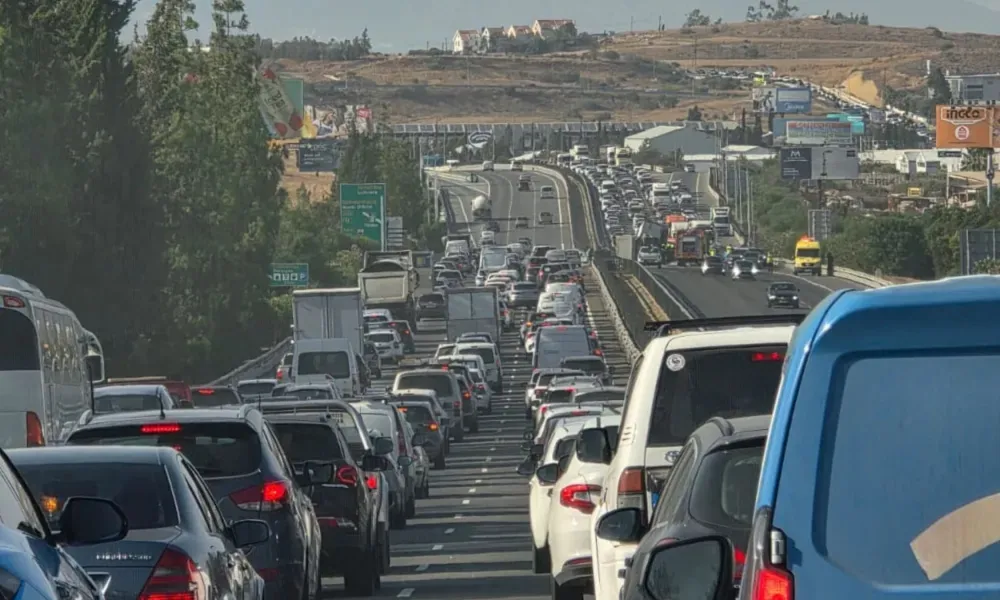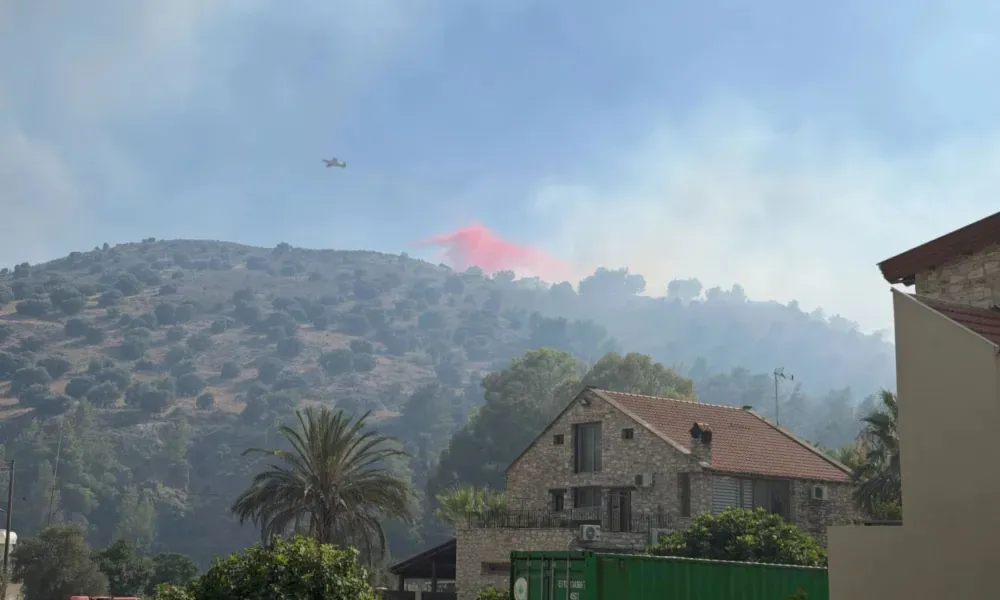

The wildfire that broke out the day before yesterday in Agia Anna, Larnaca, and started from the Kalo Chorio firing range, is nothing more than another illustration of Cyprus' culture of improvisation, indifference and "whatever happens, happens."
There is no other way to explain how military personnel decided to destroy military munitions in the middle of an intense heatwave, on a windy day and, apparently, without taking the necessary protective measures.
And it is not just that. It is also the fact that they informed various authorities through written notices, yet nobody reacted. Nobody stood on the tables and shouted. Nobody stopped them.
But because we live in Cyprus, one mistake neither stops nor gets corrected before a few more are added to it.
According to the community leader of Agia Anna, and apologies to the residents of the similarly named village in mountainous Limassol, because he put them to shame, firebreaks had not been cleared. He went further, claiming that fires are sometimes allowed to burn within the firing range to avoid having to clear wild vegetation afterwards.
So, after making the mistake of detonating the munitions, they then managed to lose control of the fire because, apparently, it never crossed their minds to have the Department of Forests or the Fire Service standing by in case something went wrong.
Something went wrong?
But this is Cyprus. What could possibly go wrong with the National Guard, ammunition, July and wildfires?
And then, fine, the mistake happened. The fire took hold, the wind picked up and things got out of hand.
Fortunately, by 2026 we finally have CY Alert, so villages can be evacuated quickly.
Except it did not work either.
After all the test exercises and the self-congratulation that we had finally succeeded, we have needed it twice.
Once on the motorway, where there was absolute chaos and nobody seemed concerned.
And once during the wildfire, when we suddenly discovered there was a technical fault and the evacuation message was sent almost when the fire had already been extinguished.
Meanwhile, we live in a country where every 15 and 20 July we discover that not all the warning sirens are working.
Maybe I am being pessimistic and maybe I am looking at everything the wrong way, but the only constant in every wildfire seems to be the wind, which is always against us, and church bells, which never let us down.
We lived through last year's deadly wildfire in mountainous Limassol from very close range, yet we still have not learned our lesson, at least not to the extent we should have.
The same mistakes are repeated.
Everybody does as they please.
There is a huge weakness in prevention.
And there is always someone who lets everyone else down. This time, it was the military.
Remember the plan to transform the Ministry of the Interior into a Ministry of Civil Protection and the Interior?
Nothing came of it.
Even though, at the time, everything appeared ready and its creation seemed only a matter of time.
We are good at announcements.
Once again, we avoided the worst through luck and luck alone.
Once again, we prevented disaster by the narrowest of margins, at least the parts we managed to save.
And once again, we know what went wrong but will not fix it.
Once again, we had to mobilise vastly greater resources to avert catastrophe because indifference and complacency remain the dominant mentality.