
In the second half of 2024, the Police supposedly adopted an operational protocol for handling road collisions that cause major traffic disruptions. The aim was for all parties involved, public authorities and private operators alike, to act according to specific rules so that such incidents could be dealt with as quickly as possible.
The decision followed a series of accidents involving heavy goods vehicles on the Nicosia-Limassol motorway in 2023, which triggered strong public reaction because of the lengthy delays experienced by motorists while damaged trucks were being removed.
Only a few months after the protocol was adopted, on 2 September 2024, a serious road collision involving an overturned refuse truck in the Moni area, which a month later became a fatal case, resulted in the closure of two motorway lanes for eight hours. It took a total of 12 hours for the vehicle to be removed and for traffic flow to be fully restored.
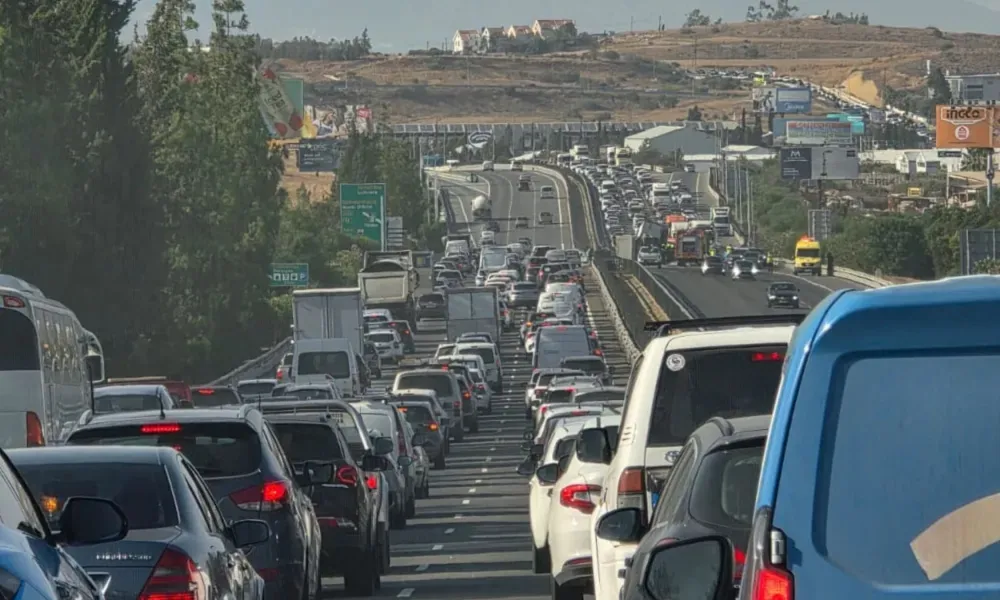
Following last week's incident, when an overturned truck spilled gravel across the motorway and the road reopened only seven hours later, causing unprecedented disruption for motorists, there can no longer be any doubt that the protocol was created for appearances' sake and has effectively been left gathering dust.
The day after the incident, Justice Minister Marios Hartsiotis appeared, almost as a deus ex machina, to announce that, under his instructions, a comprehensive rapid-response programme was being promoted immediately.
As he explained, special teams will be established in every district, bringing together the Police, Fire Service and, where necessary, specialised private-sector operators, with the aim of strengthening operational readiness for the swift removal of obstacles and the fastest possible restoration of traffic on motorways.
In other words, we took the protocol and simply renamed it the "creation of special teams".
In any event, let us hope that Hartsiotis' initiative will produce results this time.
Our suggestion is that Civil Defence should also be included in this mechanism.
It should be remembered that the most recent accident took place in the afternoon, in the middle of a heatwave, leaving thousands of drivers and passengers trapped in their vehicles.
Among them were infants, elderly people and individuals with health conditions who may have needed urgent assistance.
Milk, water, medication, fuel, a defibrillator. Civil Defence was nowhere to be seen.
Not even a message through the 112 emergency system informing stranded motorists where they could seek help if they found themselves in distress.
At the same time, because the issue concerns not only crisis management but also prevention, Transport Minister Alexis Vafeades must finally provide convincing answers.
How many trucks travel daily on Cyprus' roads carrying unsuitable loads, with worn tyres, with speed limiters disabled or tachographs tampered with?
How many inspections are carried out and how many violations are recorded?
The laws exist. Are they being enforced?