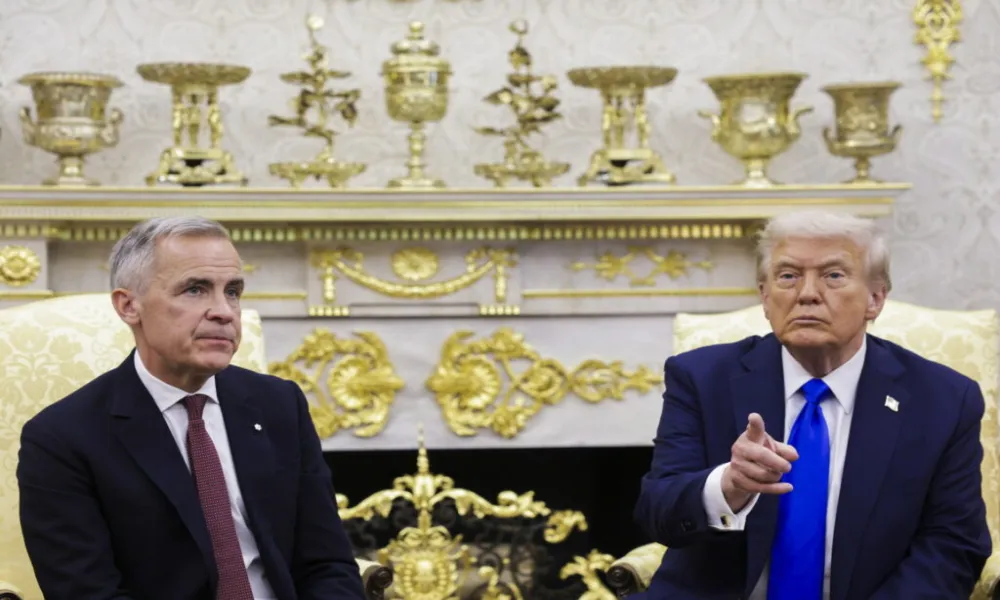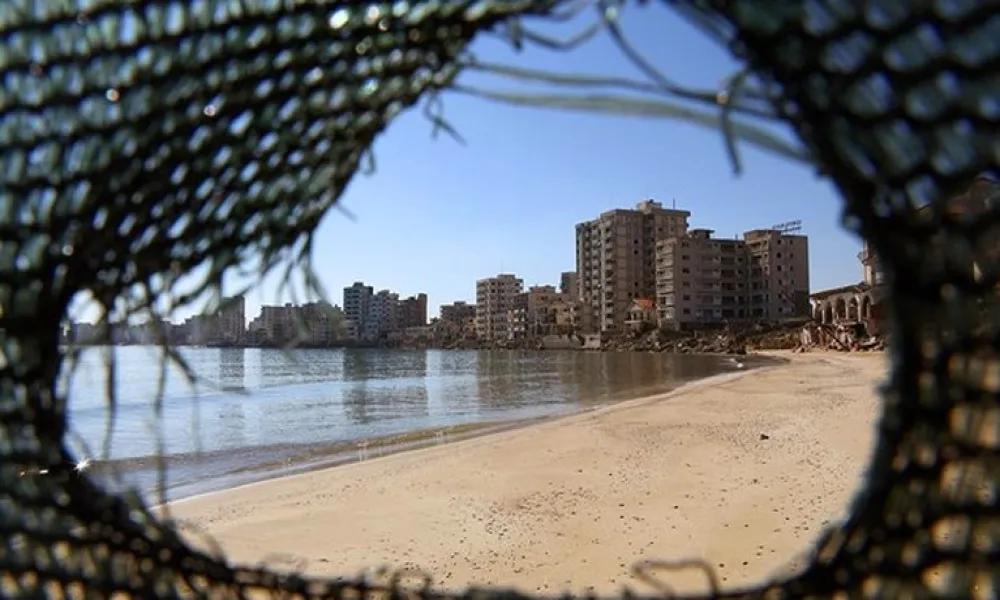

And so, once again, everyone remembered Famagusta. And with the occasion of the 52nd anniversary of the second invasion, they pulled resolutions out of the drawer, along with their concern over the continuing occupation. Together with their determination to overturn the facts on the ground. Nikos Christodoulides, in his message, stressed that "52 years is a long time, but not enough to make us bend," and underlined that "achieving a viable and functional solution remains the highest national priority." Diko noted that "we do not accept the occupation" and that "we continue, with consistency and determination, the struggle for liberation, reunification and return," reminding everyone that "the Cyprus problem remains, above all, a matter of invasion and occupation." Annita Demetriou wrote that "Famagusta is waiting for us" and that "all our occupied land awaits its vindication," explaining that "we do not accept half a homeland" and calling on the President to use every effort to bring Turkey to the table. Elam stated that "the non-negotiable goal and standing position is the liberation of all our occupied territories." And Marios Pelekanos said that "whatever they do, somewhere a gravestone and a cross will bear witness to Greece and to Christ," suggesting that "we do not give away homelands." Those who for 52 years have made the long struggle their banner lined up to explain that "they do not forget, and they keep fighting," calling on everyone to put the Cyprus problem back on its proper footing. And those, past and present, who over the last 13 years have overseen perhaps the longest gap in negotiations, remembered that a lack of mobilisation locks in the facts on the ground.
But what did all these people actually do, every year for 52 years now, on the occasion of the anniversary of the second invasion, proclaiming that "we do not accept" and that "we demand the overturning of the facts on the ground," to actually bring us toward a solution? What did they do to make use of the UN resolutions calling for the return of residents to their city? Are these not the same people who, with slogans like "the Famagustisation of the Cyprus problem" and "legitimising the facts on the ground for five neighbourhoods of Varosha," turned the city from a confidence-building measure into an inseparable part of the territorial issue itself? And are these not the same people who, before every new effort, set preconditions that make any agreement impossible? Is what we are witnessing today not exactly what these same politicians themselves once described, in full, as the consequences of failing to reach a solution? What have we done, all this time, to stop the risks we ourselves once flagged from being confirmed? How did we try to prevent them? What are we still doing today, beyond repeating our determination to secure the city's return, that we do not forget and that we keep fighting? And when, through actual actions, did we pursue the return of Famagusta? Does it matter whether the city magically "waits for us," from the moment we decided we would do nothing to bring about its return?
How can Nikos Christodoulides declare, with such haste, that achieving a solution is the highest priority, at a time when for three years now he has been unable to open a single crossing point? When it takes him a month after the departure of the UN Secretary General to agree to a meeting with the Turkish Cypriot leader? How can Annita call on the President to seize every opportunity to restart the talks, declaring that we do not accept half a homeland, when, with the Secretary General in Cyprus, she was calling her executive office to discuss opinion polls and lay the groundwork for her own candidacy in 2028? And how can those who, for 52 years now, have carried one "struggle" after another, not be troubled by where these struggles have actually led? And still promise new struggles? Can any of those who today express concern and prepare for new demands genuinely claim that we actually fought to overturn the facts on the ground? What did Disy do over the past decade to bring us toward a solution? What is Nikos Christodoulides doing today, beyond repeating what he did alongside Nicos Anastasiades, keeping the Cyprus problem in absolute stagnation? Confined to gestures and statements meant to impress? With the sole target being the domestic audience?
No one is claiming that Turkey's stance made overturning the facts on the ground easy. But this 52 year journey bears, in large part, the signature of our own handling of it too. It is the result of chronic inertia, but also of a deliberate path of preserving stagnation that locked in the status quo. Of an endless hypocrisy that an idealised solution is achievable. And of a political amorality that, from a certain point onward, created the conviction that the Cyprus problem had stopped being a game played solely in Turkey's hands, and became a game in the hands of every Greek Cypriot populist too. Along with the European solution, the "new strategy," the crossing points and the costless slogans. Anything that would keep the long term status quo untouched. Which we still embrace even today. We loudly declare that we do not give away homelands, we insist that we do not accept the occupation, that we do not forget and that we keep fighting, and we ask Famagusta to wait for us. But no one waits. Not Famagusta, not History. Everything, with the passage of time, is forgotten. And homelands are given away when, for decades, slogans serve as pretexts to cover painful realities. And when the return, once a goal for life, turns into a field of hypocrisy.